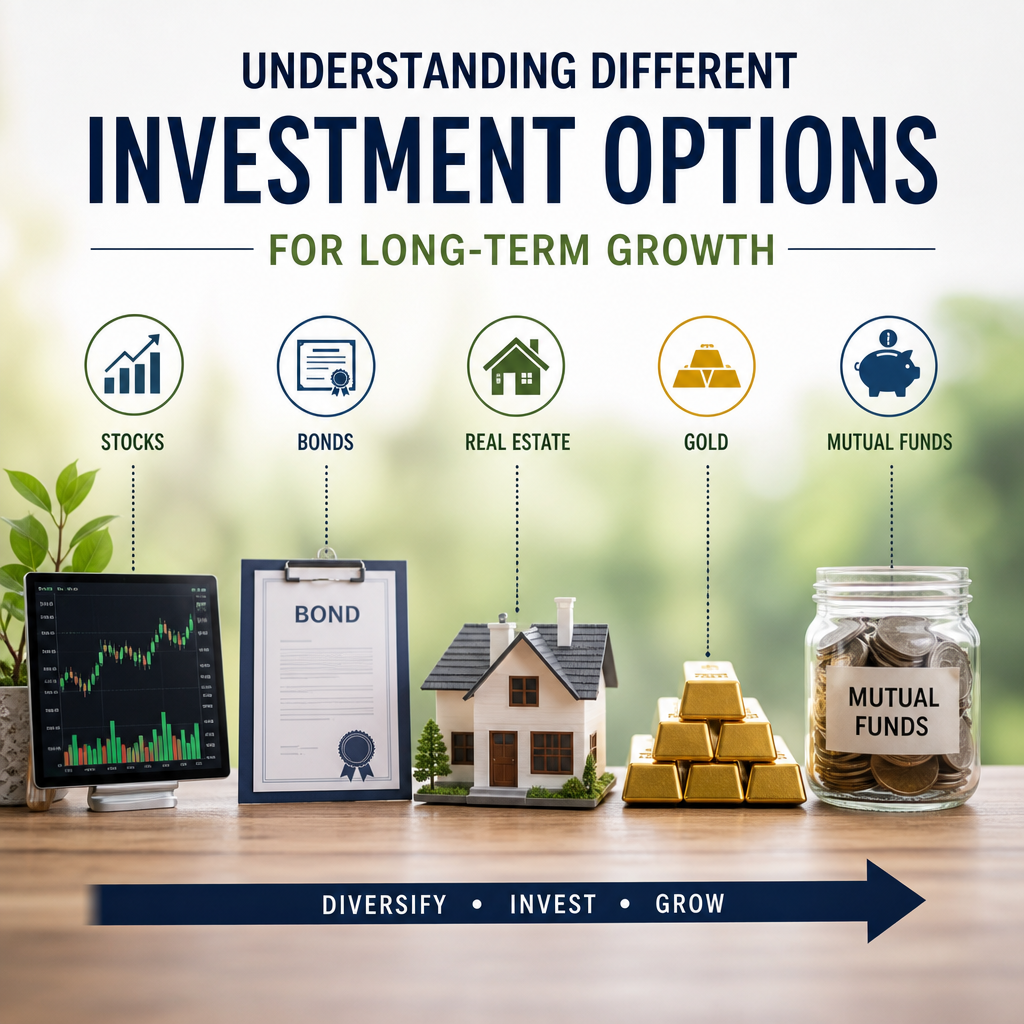
Understanding Different Investment Options for Long-Term Growth
Learning about the right investment options can make long-term growth feel much more manageable. With a thoughtful mix of assets, you can balance risk and reward while staying focused on your financial goals.
By: Mary Mitchell on July 30, 2026
Building wealth over time starts with understanding different investment options for long-term growth and how each one fits your goals, time horizon, and risk tolerance. There is no single “best” choice for every investor. Instead, long-term success usually comes from choosing a mix of investments that can grow steadily, weather market ups and downs, and support your financial plans.
Whether you are saving for retirement, a child’s education, or financial independence, the right investment strategy can make a major difference. The key is not chasing the hottest trend. It is learning the fundamentals, staying disciplined, and aligning your portfolio with your long-term objectives.
What Long-Term Growth Means in Investing
Long-term growth refers to investing money with the expectation that it will increase in value over years or decades rather than weeks or months. This approach often works best when you focus on:
Capital appreciation: the increase in an asset’s value over time
Compounding: earning returns on both your original money and prior gains
Consistency: regularly adding to investments when possible
Patience: staying invested through market fluctuations
Long-term growth investing does not require you to predict short-term market moves. Instead, it relies on time, diversification, and the power of reinvesting returns.
Why Choosing the Right Investment Options Matters
Not all investments behave the same way. Some offer the potential for higher returns but come with greater volatility. Others provide stability or income but may grow more slowly. Understanding the tradeoffs helps you build a portfolio that can support your goals without creating unnecessary stress.
The right mix of investment options for long-term growth can help you:
Reduce risk through diversification
Balance growth with stability
Match your money to your timeline
Stay committed during market downturns
Common Investment Options for Long-Term Growth
1. Stocks
Stocks represent ownership in a company. When you buy shares, you gain the potential to benefit from the company’s growth and profitability. Over long periods, stocks have historically been one of the strongest options for long-term growth, though they can also be volatile.
Why investors use stocks
Strong growth potential
Easy access through brokerage accounts
Can be diversified across industries and regions
Some stocks pay dividends, which can be reinvested
Examples of stock strategies
Individual stocks: Buying shares of specific companies
Dividend stocks: Companies that regularly share profits with investors
Growth stocks: Companies expected to expand faster than the market
Index funds and ETFs: Broad market investments that hold many stocks
For many investors, broad-based index funds or exchange-traded funds (ETFs) are a practical way to invest in stocks without having to pick winners and losers.
2. Bonds
Bonds are loans you make to governments, municipalities, or corporations in exchange for interest payments. They are usually less volatile than stocks and can help stabilize a portfolio.
Why investors use bonds
Regular income through interest
Lower risk than many stock investments
Useful for balancing portfolio volatility
Can preserve capital in certain market environments
Common types of bonds
U.S. Treasury bonds
Municipal bonds
Corporate bonds
Bond funds
Bonds may not deliver the same long-term growth potential as stocks, but they can play an important role in managing risk, especially as you get closer to a major financial goal.
3. Mutual Funds
Mutual funds pool money from many investors to buy a diversified mix of stocks, bonds, or other assets. Professional managers oversee the fund, though passive index funds have become especially popular because they often have lower fees.
Advantages of mutual funds
Built-in diversification
Professional management
Easy to buy and sell
Available in many risk levels and styles
Mutual funds are often a strong choice for investors who want a simple way to access long-term growth investments without needing to manage dozens of separate holdings.
4. Exchange-Traded Funds (ETFs)
ETFs are similar to mutual funds in that they hold a basket of investments. The main difference is that ETFs trade on stock exchanges throughout the day like individual stocks.
Why ETFs are popular
Low cost in many cases
Easy diversification
Flexible trading
Available across many asset classes
ETFs can track broad markets, sectors, industries, bonds, or even specific investment themes. For long-term investors, broad-market ETFs often provide a straightforward, low-maintenance solution.
5. Retirement Accounts
While retirement accounts are not investments themselves, they are powerful vehicles for long-term growth because they provide tax advantages that can boost returns over time.
Common retirement accounts
401(k) plans
Traditional IRAs
Roth IRAs
403(b) plans
These accounts often let you invest in mutual funds, ETFs, or target-date funds. If your employer offers a match in a 401(k), contributing enough to capture it is often a smart first step.
6. Real Estate
Real estate can be a long-term growth asset through property appreciation, rental income, or both. Investors may buy rental homes, commercial property, or invest indirectly through real estate investment trusts (REITs).
Real estate investment options
Direct property ownership
REITs
Real estate funds
Benefits of real estate
Potential for steady income
Long-term appreciation
Diversification away from traditional stocks and bonds
Real estate can be attractive, but it also comes with management responsibilities, financing considerations, and market-specific risks.
7. REITs
Real estate investment trusts, or REITs, allow investors to participate in real estate markets without owning property directly. Many REITs generate income from commercial buildings, apartments, warehouses, or specialized facilities.
Why investors consider REITs
Access to real estate without hands-on property management
Income potential through dividends
Diversification benefits
REITs can be a useful addition to a diversified portfolio, especially for investors seeking exposure to real estate growth and income.
8. Target-Date Funds
Target-date funds automatically adjust their mix of investments over time, usually becoming more conservative as a target retirement year approaches.
Why target-date funds work well for long-term investors
Simple “set it and forget it” structure
Automatic rebalancing
Gradual risk reduction over time
Good fit for retirement savers
These funds are especially helpful for people who want a straightforward investment solution without constantly making allocation decisions.
How to Choose the Right Investment Mix
The best investment options for long-term growth depend on your personal situation. A portfolio that works for a 30-year-old with decades until retirement may not be right for someone nearing retirement.
Consider your time horizon
The longer you plan to invest, the more risk you may be able to tolerate. A longer timeline gives your investments more time to recover from downturns.
10+ years: Often allows for a stronger stock allocation
5–10 years: May require a more balanced approach
Less than 5 years: Usually calls for greater caution
Think about risk tolerance
Risk tolerance is your ability and willingness to stay invested when markets become volatile. If large price swings make you panic, you may prefer a more balanced portfolio.
Ask yourself:
How would I react if my portfolio dropped sharply?
Can I stay invested during a downturn?
Do I need stable income, or is growth my main goal?
Match investments to goals
Different goals call for different strategies.
Retirement: Often suited to diversified stock and bond portfolios
Education savings: May require a blend of growth and stability
Wealth building: Usually benefits from broad market exposure and compounding
Income generation: May use dividend stocks, bonds, or REITs
Diversify across asset classes
Diversification means spreading your money across different types of investments so one weak area does not dominate your results. A diversified portfolio may include:
U.S. stocks
International stocks
Bonds
Real estate exposure
Cash or short-term reserves
Diversification does not guarantee profits or prevent losses, but it can help manage risk.
Practical Example of a Long-Term Growth Portfolio
A sample long-term growth portfolio might look like this for a relatively young investor with a high tolerance for risk:
70% stocks
20% bonds
10% REITs or other diversifying assets
Another investor who is closer to retirement might prefer:
45% stocks
45% bonds
10% cash or short-term assets
These are only examples, not prescriptions. The right allocation depends on your age, income, obligations, and comfort with risk.
Mistakes to Avoid When Investing for Long-Term Growth
Even good investment options can underperform if you make common mistakes.
1. Chasing performance
Buying whatever performed best last year often leads to disappointment. Past performance does not guarantee future results.
2. Ignoring fees
High expense ratios, trading costs, and account fees can reduce long-term returns. Lower-cost funds often give investors a better chance to keep more of their growth.
3. Failing to diversify
Putting too much money into one stock, one sector, or one asset class increases risk.
4. Panic selling during downturns
Market declines are uncomfortable, but selling at the wrong time can lock in losses and derail your plan.
5. Not investing consistently
Regular contributions, even small ones, can be powerful over time. Consistency matters more than trying to time the market.
A Simple Framework for Getting Started
If you are new to investing, keep the process manageable.
Define your goal
Retirement, home ownership, education, or general wealth building
Set your timeline
Decide when you will need the money
Assess your risk tolerance
Be honest about how much volatility you can handle
Choose diversified investments
Consider index funds, ETFs, mutual funds, or target-date funds
Automate contributions
Set up recurring transfers to stay consistent
Review periodically
Rebalance your portfolio and adjust when your life changes
This approach keeps your focus on long-term progress rather than short-term noise.
Frequently Asked Questions
What are the best investment options for long-term growth?
The best options usually include diversified stocks, index funds, ETFs, mutual funds, retirement accounts, and sometimes real estate or REITs. The right mix depends on your goals, time horizon, and risk tolerance. For many investors, low-cost diversified stock funds are a strong foundation for long-term growth.
Are stocks always better than bonds for long-term growth?
Stocks generally offer higher growth potential over long periods, but they also come with more volatility. Bonds can help stabilize a portfolio and provide income. Most long-term investors benefit from holding both, with the balance depending on age, goals, and risk comfort.
Should beginners invest in individual stocks or funds?
Many beginners do better starting with diversified funds such as index mutual funds or ETFs. These funds spread risk across many companies and reduce the need to research individual stocks. Once you gain experience, you may choose to add individual stocks if they fit your strategy.
How important are fees when investing for long-term growth?
Fees matter a great deal because they reduce your net returns over time. Even small differences can add up across many years. Lower-cost funds and accounts can help preserve more of your investment growth, especially when compounded over long periods.
How often should I review my investment portfolio?
A good starting point is to review your portfolio once or twice a year, or when a major life event occurs. You do not need to check daily. In fact, frequent monitoring can lead to emotional decisions. Focus on whether your portfolio still matches your goals and risk tolerance.
Understanding different investment options for long-term growth is one of the most valuable steps you can take toward building lasting financial security. Stocks, bonds, mutual funds, ETFs, retirement accounts, real estate, REITs, and target-date funds each serve a different purpose. Some offer higher growth potential, while others bring stability, income, or simplicity. The smartest strategy is usually not choosing one option in isolation, but combining several in a way that reflects your goals and comfort with risk.
Long-term investing works best when you stay consistent, diversify thoughtfully, keep fees in check, and avoid emotional decisions during market swings. You do not need to predict the future to make progress. You need a clear plan, patience, and the discipline to keep going.
If you are just getting started, begin with a straightforward, diversified approach and build from there. Small, regular contributions can grow significantly over time. The sooner you create a plan that matches your timeline and goals, the sooner your money can begin working for you.
Mary S, CFP®, is a Certified Financial Planner with over 12 years of experience in personal finance, retirement planning, and wealth management. She writes educational content that helps readers understand financial concepts and make informed decisions based on reliable information.