Financial Aid Guide for U.S. College Students: Complete Overview
Paying for college can feel overwhelming, but financial aid for U.S. college students exists to make higher education more accessible. Whether you’re a first-time freshman, a transfer student, or an adult returning to school, understanding how aid works can help you lower costs and make smarter decisions.
Financial aid comes in several forms, and each one has different rules, deadlines, and eligibility requirements. Some aid is based on need, some on merit, and some must be repaid while others do not. The key is knowing where to look, how to apply, and how to compare your options.
This guide breaks down the major types of aid, the FAFSA process, scholarship strategies, borrowing basics, and practical tips for maximizing your college funding.
What Financial Aid for U.S. College Students Really Means
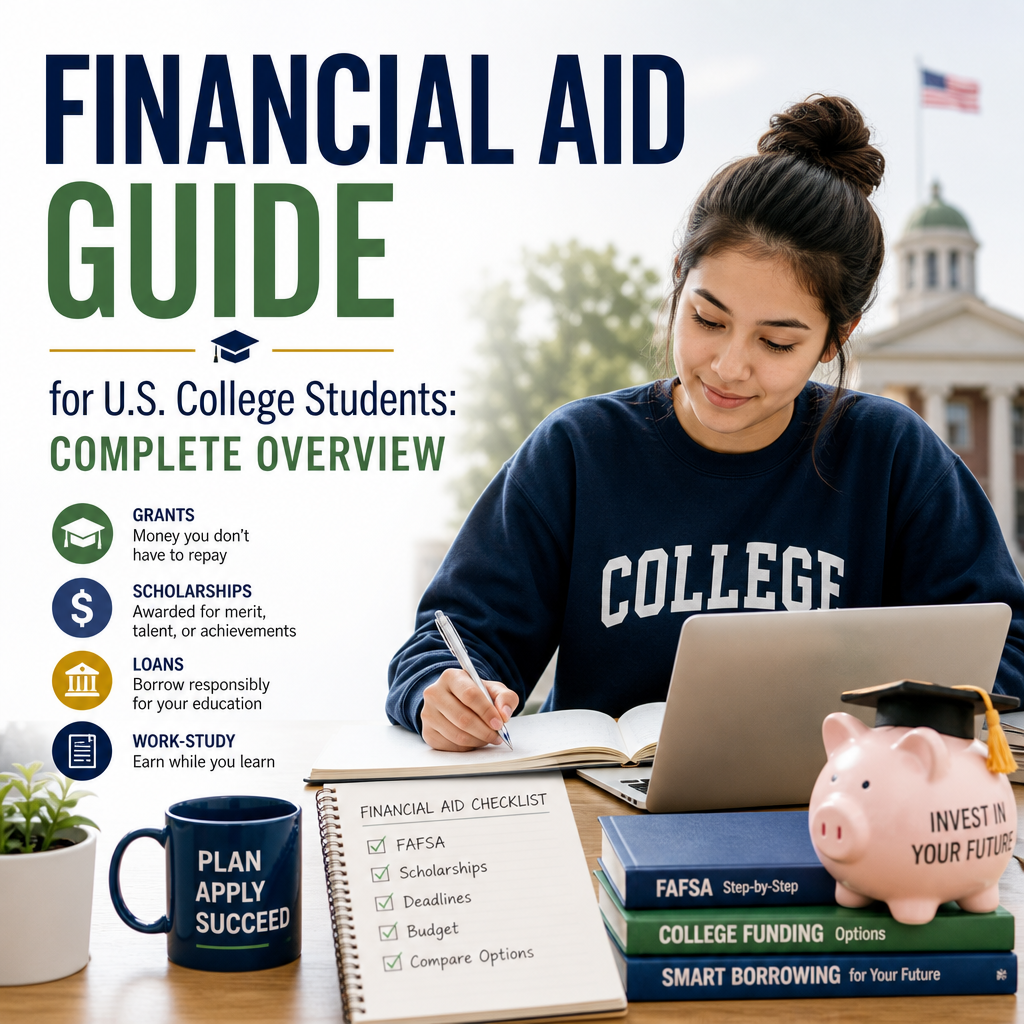
Financial aid is any money that helps cover the cost of college expenses such as tuition, fees, housing, books, supplies, transportation, and sometimes even personal costs. Colleges, state agencies, the federal government, and private organizations all offer aid.
The most common forms of financial aid include:
- Grants
- Scholarships
- Work-study
- Federal student loans
- Private student loans
- Institutional aid from colleges
Not all aid is created equal. Grants and scholarships are usually the best options because they typically do not need to be repaid. Loans, on the other hand, must be paid back with interest.
The Main Types of Financial Aid
Grants
Grants are often awarded based on financial need. They are one of the most valuable forms of financial aid for U.S. college students because they usually do not require repayment.
Common grant programs include:
- Federal Pell Grant
- Federal Supplemental Educational Opportunity Grant (FSEOG)
- State grants
- Institutional grants from colleges
Eligibility often depends on your FAFSA results, family income, enrollment status, and school participation.
Scholarships
Scholarships are awarded for a wide range of reasons, including academic achievement, athletics, leadership, community service, field of study, and personal background. Like grants, scholarships generally do not need to be repaid.
You can find scholarships through:
- High schools
- Colleges and universities
- Employers
- Community organizations
- Professional associations
- Private foundations
A strong scholarship search strategy often includes both large national awards and smaller local scholarships. Smaller awards may receive fewer applicants, which can improve your odds.
Work-Study
The Federal Work-Study Program helps eligible students earn money through part-time jobs, often on campus or with approved nonprofit organizations. These jobs can help cover everyday college expenses while giving you work experience.
A work-study award does not mean you automatically get a job. You still need to find and apply for an eligible position. However, the program can be a helpful way to reduce borrowing and build a resume.
Federal Student Loans
Federal student loans are borrowed funds from the U.S. Department of Education. They often offer more flexible repayment options and borrower protections than private loans.
The main federal loan types are:
- Direct Subsidized Loans: Available to undergraduate students with demonstrated financial need. The government pays the interest while you’re in school at least half-time.
- Direct Unsubsidized Loans: Available regardless of need. Interest starts accruing as soon as the loan is disbursed.
- Direct PLUS Loans: Available to graduate students and parents of dependent undergraduates.
Before borrowing, always consider how much debt you can reasonably repay after graduation.
Private Student Loans
Private student loans come from banks, credit unions, and other lenders. These loans can help fill funding gaps, but they usually have fewer protections than federal loans.
Private loans may require:
- A credit check
- A cosigner
- Variable or fixed interest rates
- Different repayment terms based on lender policies
In general, students should exhaust federal aid options first before turning to private loans.
How to Apply for Financial Aid
Step 1: Complete the FAFSA
The Free Application for Federal Student Aid (FAFSA) is the foundation of most financial aid for U.S. college students. Completing it can determine your eligibility for federal grants, loans, and work-study, and many states and colleges also use it to award their own aid.
The FAFSA asks for information about:
- Income
- Assets
- Household size
- Family members in college
- Citizenship or eligible noncitizen status
If you’re considered a dependent student, you’ll usually need parent information too.
Step 2: Meet Deadlines
Deadlines matter. Some aid is first-come, first-served, especially state grants and institutional funds. Missing a deadline can mean losing out on money you could have received.
To stay organized:
- Check the FAFSA opening date.
- Review your state aid deadline.
- Look up each college’s financial aid deadline.
- Set calendar reminders several weeks ahead of time.
- Submit documents promptly if your school requests verification.
Step 3: Review Your Student Aid Report
After submitting the FAFSA, you’ll receive a Student Aid Report (SAR). This summary shows the information you submitted and may include your Student Aid Index, which colleges use to assess need-based aid.
Carefully review the report for errors. If something looks wrong, correct it as soon as possible.
Step 4: Compare Financial Aid Offers
Once you’re admitted, schools may send a financial aid award letter showing the grants, scholarships, loans, and work-study you qualify for. Don’t focus only on the total amount offered. Look closely at the mix of aid.
A strong award may include:
- More grants and scholarships
- Lower loan amounts
- Clear net cost after aid
A less favorable award may look generous at first but rely heavily on loans.
Understanding Cost of Attendance and Net Price
College pricing can be confusing because the sticker price is not always what you actually pay. Schools calculate a cost of attendance, which may include:
- Tuition and fees
- Housing and meals
- Books and supplies
- Transportation
- Personal expenses
Your net price is the amount left after grants and scholarships are subtracted from the cost of attendance.
For example, a college with a high sticker price may still be affordable if it offers strong need-based aid or merit scholarships. That’s why it’s important to compare net price, not just tuition.
Need-Based vs. Merit-Based Aid
Need-Based Aid
Need-based aid is awarded based on your financial situation. Your FAFSA information helps schools determine need, though each institution may use its own method as well.
Examples include:
- Pell Grants
- Work-study
- Need-based institutional grants
- Subsidized federal loans
Merit-Based Aid
Merit-based aid rewards achievements rather than financial need. Colleges and private organizations may award merit scholarships for:
- High GPA
- Standardized test scores
- Leadership
- Artistic talent
- Athletic performance
- Special skills or talents
Many students receive a combination of both need-based and merit-based aid.
How to Maximize Financial Aid for U.S. College Students
Getting the most aid takes planning. A few simple habits can make a real difference.
Start Early
Begin researching aid options before you apply to college. Early planning helps you identify deadlines, find scholarships, and avoid last-minute mistakes.
File the FAFSA Every Year
You must usually complete the FAFSA each academic year you want aid. Even if your situation hasn’t changed much, your aid eligibility can change from year to year.
Apply to Multiple Schools
Different colleges offer different aid packages. Applying to several schools gives you more options and may improve your ability to compare award letters.
Search for Local Scholarships
Local awards can be easier to win than national competitions. Check with:
- Community foundations
- Rotary clubs
- Parent employers
- Religious groups
- Local businesses
- County organizations
Keep Grades Up
Many scholarships and institutional awards require you to maintain a certain GPA or make satisfactory academic progress. Losing eligibility can be expensive, so stay aware of the rules.
Watch Your Borrowing
Only borrow what you truly need. A smaller loan today can mean more financial flexibility later. Before accepting a loan, ask:
- Is this federal or private?
- What is the interest rate?
- When does repayment begin?
- Are there deferment or forbearance options?
- How much will I repay over time?
Special Situations That Can Affect Aid
Dependent vs. Independent Students
Your FAFSA status matters. Most undergraduates are considered dependent, which means parent information is required. Independent students may qualify for more aid based on their own finances.
You may be considered independent if you meet certain federal criteria, such as being at least 24, married, a graduate student, a veteran, or having legal dependents.
Transfer Students
If you transfer schools, your aid may change. Always update your FAFSA and check whether your new school requires additional forms.
Graduate and Professional Students
Graduate students often qualify for fewer grants than undergraduates but may still access federal loans and some institutional aid. Professional programs can be especially expensive, so careful borrowing matters.
Undocumented or Mixed-Status Families
Aid eligibility can become more complex in mixed-status families. Some students may still qualify for state, institutional, or private aid even if they are not eligible for federal aid. Always check with your school’s financial aid office for guidance.
Common Mistakes to Avoid
Even well-prepared students can make avoidable errors. Watch out for these common mistakes:
- Missing deadlines
- Forgetting to renew the FAFSA
- Entering incorrect income or household information
- Ignoring scholarship opportunities
- Accepting all loan offers without comparing options
- Not reading award letters carefully
- Failing to submit verification documents
A small mistake can delay or reduce aid, so review everything before submitting.
Practical Example: Comparing Two Aid Offers
Imagine two colleges offer admission:
- School A offers a large total aid package, but most of it is loans.
- School B offers less total aid, but the package includes more grants and fewer loans.
At first glance, School A may seem better because the award number is higher. But School B could actually cost less over four years because grants do not need to be repaid. This is why comparing net price and loan burden is so important.
How Financial Aid Fits Into Your Bigger College Budget
Financial aid is one piece of your overall college plan. To stay on track:
- Build a semester budget
- Track expected vs. actual expenses
- Save receipts for school-related purchases
- Reassess your aid package each year
- Use refunds carefully, if you receive one
It also helps to think beyond freshman year. Aid can shift as your family income changes, your enrollment status changes, or you become eligible for different opportunities.
Frequently Asked Questions
1. What is the FAFSA, and why is it important?
The FAFSA is the Free Application for Federal Student Aid. It determines eligibility for federal grants, loans, and work-study, and many states and colleges use it to award their own financial aid. If you don’t complete it, you may miss out on significant funding opportunities.
2. Do I have to repay grants or scholarships?
In most cases, no. Grants and scholarships are considered gift aid and generally do not need to be repaid. However, some awards may have conditions, such as maintaining a certain GPA or completing a service commitment. If you fail to meet those terms, you may have to return some funds.
3. Should I accept all the student loans I’m offered?
Not necessarily. You should borrow only what you need and compare all options carefully. Federal loans usually offer more protections and flexible repayment options than private loans. Before accepting any loan, make sure you understand the interest rate, repayment terms, and long-term cost.
4. Can I get financial aid if my family makes too much money?
Yes. While need-based aid may be limited, you may still qualify for merit scholarships, unsubsidized federal loans, work-study in some cases, and institutional aid from colleges. Many families who think they won’t qualify are still eligible for some form of assistance.
5. How often do I need to apply for financial aid?
Most students must complete the FAFSA every year. Aid eligibility can change based on income, family size, enrollment status, and school policies. Reapplying each year ensures you remain considered for available grants, loans, and work-study.
Official Resources
- Federal Student Aid (U.S. Department of Education)
- FAFSA Information and Application
- National Association of Student Financial Aid Administrators
- College Board: Paying for College
- IRS Tax Information for Students and Parents
Conclusion
Understanding financial aid for U.S. college students is one of the most important steps you can take when planning for college. The right mix of grants, scholarships, work-study, and loans can make higher education far more affordable, but only if you know how to find and compare your options. Filing the FAFSA on time, reviewing each award letter carefully, and borrowing responsibly can help you avoid unnecessary debt and make better long-term choices.
The best strategy is to start early, stay organized, and apply for every type of aid you may qualify for. Even if college seems expensive at first, many students discover that a thoughtful financial aid plan significantly lowers the real cost of attendance. Keep checking deadlines, renew your FAFSA each year, and continue searching for scholarship opportunities throughout college. With the right information and a proactive approach, you can put together a funding plan that supports your education without creating avoidable financial stress.