How Compound Interest Can Help Grow Your Savings Over Time
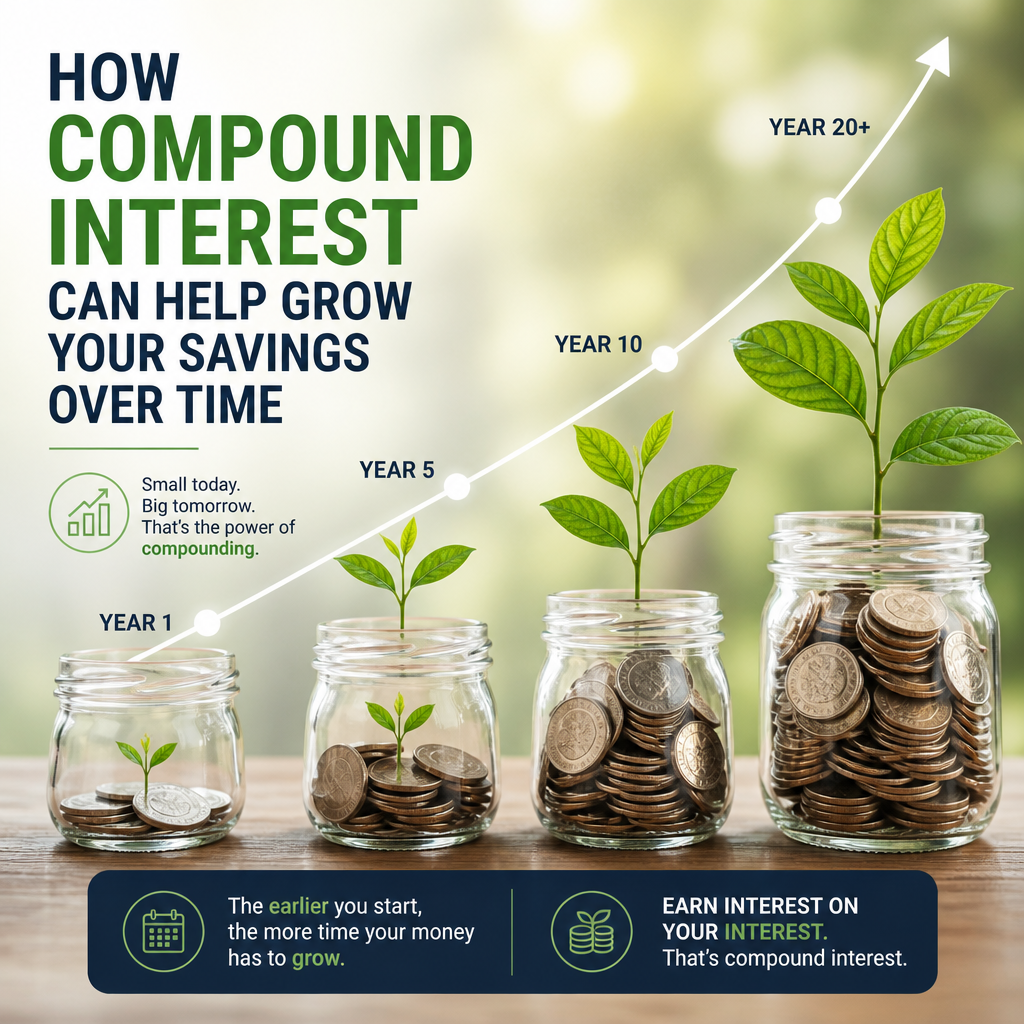
Compound interest can turn steady saving into meaningful growth by letting you earn interest on both your original balance and the interest it already earns. The earlier you start, the more time your money has to build on itself and grow over time.
By: Mary Mitchell on July 30, 2026
If you want your money to work harder for you, understanding how compound interest can help grow your savings over time is one of the smartest places to start. Compound interest is a simple idea, but it can have a powerful effect on your financial future. Whether you are building an emergency fund, saving for a home, or planning for retirement, compound interest rewards patience and consistency.
Unlike simple interest, which is earned only on your original deposit, compound interest lets you earn interest on both your starting balance and the interest already added. Over time, that “interest on interest” effect can make even modest savings grow much faster than many people expect.
What Is Compound Interest?
Compound interest is interest calculated on the initial amount you save plus the interest that accumulates over time. In other words, your money grows, and then the growth itself starts growing too.
A simple example
Imagine you put $1,000 into a savings account that earns interest and leaves the earnings in the account:
In the first period, you earn interest on $1,000.
In the next period, you earn interest on $1,000 plus the interest you already earned.
As this process repeats, your balance can rise faster.
This is the core idea behind how compound interest can help grow your savings over time. The longer your money stays invested or saved, the more noticeable the effect becomes.
Compound interest vs. simple interest
Here’s the difference in plain language:
Simple interest is earned only on the original principal.
Compound interest is earned on the principal and accumulated interest.
That difference may seem small at first, but over months and years, it can become significant.
Why Compound Interest Matters for Savers
Compound interest is one of the most useful financial concepts because it rewards two habits that many people can control:
Saving regularly
Leaving money alone long enough to grow
Time is the real secret
When people hear about compounding, they often focus on the interest rate. While the rate matters, time often matters even more. The earlier you start, the more opportunities your money has to compound.
For example, two people may save the same amount each month, but the one who starts earlier usually ends up with more money because their savings have had longer to grow.
It helps small amounts add up
You do not need a large windfall to benefit from compound interest. Even small deposits can gain momentum when they stay in an account long enough.
That is why compound interest is especially helpful for:
Emergency savings
College savings
Retirement accounts
Long-term certificates of deposit
High-yield savings accounts
How Compound Interest Works in Real Life
Compound interest shows up in several financial products. The exact effect depends on the interest rate, the compounding frequency, and how often you add money.
Common places where compounding happens
Savings accounts
Many savings accounts pay interest monthly or daily, helping balances grow gradually over time.
Certificates of deposit (CDs)
CDs often pay a fixed rate for a set term. If the interest compounds and remains untouched, the balance can increase steadily.
Retirement accounts
Investments inside accounts like 401(k)s and IRAs may grow through compounding, especially when dividends and earnings are reinvested.
Bonds and other investments
Some fixed-income investments also benefit from compounding when earnings are reinvested.
Compounding frequency matters
Interest may compound:
Daily
Monthly
Quarterly
Annually
More frequent compounding can lead to slightly higher growth because interest is added to your balance more often. That said, the interest rate itself and the amount of time invested are still major drivers of growth.
A Practical Example of Compound Interest
Let’s say you save $5,000 in an account that earns interest and compounds annually.
Year 1
Starting balance: $5,000
Interest earned: added to the account
New balance: higher than $5,000
Year 2
Interest is earned on the new balance, not just the original $5,000
Year 3 and beyond
Each year, the account balance continues building on itself
Now compare that with simple interest, where you’d earn the same amount each year based only on the original $5,000. With compound interest, growth can accelerate over time.
This is why financial planners often stress patience. How compound interest can help grow your savings over time becomes much more visible after several years rather than just a few months.
The Main Factors That Affect Compound Growth
Several factors influence how quickly your savings grow.
1. The interest rate
A higher rate usually means faster growth. Even a small difference in rate can matter over long periods.
2. How often interest compounds
Daily or monthly compounding generally grows money a little faster than annual compounding.
3. The amount you save
The more money you put in, the more interest can be earned. Regular deposits also strengthen the compounding effect.
4. Time
Time gives compounding room to work. The longer your money stays invested or saved, the more powerful the effect.
5. Fees and withdrawals
Account fees, early withdrawal penalties, and frequent withdrawals can slow growth. Keeping money in the account helps compounding do its job.
Best Ways to Make Compound Interest Work for You
If you want to benefit from compounding, the goal is not just to save money. It is to create the right conditions for growth.
Start early
The earlier you begin, the better. Even if you can only save a small amount at first, time can help your savings build meaningfully.
Save consistently
Regular contributions matter. Setting up automatic transfers can make saving easier and help you stay on track.
Reinvest earnings when possible
If you earn interest, dividends, or other returns, leaving those earnings in the account allows them to compound too.
Avoid unnecessary withdrawals
Taking money out repeatedly interrupts growth. If possible, treat long-term savings as untouchable except for real needs.
Choose accounts with competitive rates
A higher annual percentage yield, or APY, can improve your results. Comparing accounts can help you find a better place for your cash.
How Compound Interest Can Help Grow Your Savings Over Time in a Financial Plan
Compound interest is not just a theory. It can play a real role in everyday money goals.
Emergency fund
An emergency fund should be safe and accessible, but it can still benefit from interest. A high-yield savings account may help your cash grow while remaining available when you need it.
Home down payment
If you are saving for a future purchase, compounding can help you build a larger down payment without taking on unnecessary risk.
Retirement savings
Retirement accounts are one of the clearest examples of compounding at work. Long time horizons give your money the chance to grow through repeated reinvestment.
Education savings
Whether you are saving for your own education or a child’s future, starting early can make a big difference.
Smart Habits That Support Compound Growth
Compound interest works best when it is paired with good financial habits.
Build automatic savings
Automatic transfers help you save before you spend. This removes guesswork and supports consistency.
Increase contributions over time
When your income rises, try increasing your savings rate. Even small bumps can improve long-term results.
Keep money earmarked for the right goal
Short-term savings should usually stay in lower-risk, liquid accounts. Long-term money may have more opportunities for growth.
Watch for account terms
Read the fine print. Minimum balances, fees, and withdrawal rules can affect how much you actually earn.
Be patient
Compound interest is not a quick fix. It is a steady process that rewards discipline.
Common Misunderstandings About Compound Interest
A few misconceptions often make people underestimate compounding.
“I need a lot of money to benefit”
Not true. Consistent small contributions can grow meaningfully over time.
“Compound interest only matters for investing”
It matters in savings accounts too, though the growth may be slower.
“I can wait and start later”
Delaying can be costly because the lost time cannot be recovered.
“A higher rate is all that matters”
Rate matters, but so do time, frequency of compounding, and how often you add money.
A Simple Formula for Understanding Growth
You do not need to memorize formulas to benefit from compound interest, but it helps to know the basic concept:
Future Value = Principal × (1 + interest rate) ^ number of periods
This formula shows why time has such a strong effect. The exponent means your money is growing on a growing base.
If formulas are not your thing, just remember this:
Money grows faster when interest is added regularly
Reinvested earnings create more earnings
The longer the timeline, the stronger the effect
How to Get Started Today
You do not need to overhaul your entire financial life to start benefiting from compounding.
A simple action plan
Pick a savings goal.
Choose the right account type.
Set up automatic transfers.
Leave the money alone as much as possible.
Review your progress every few months.
This approach keeps things manageable and helps you build momentum.
Frequently Asked Questions
1. What is compound interest in simple terms?
Compound interest is interest earned on both your original money and the interest that has already been added. It helps savings grow faster over time because the account balance keeps building on itself.
2. Why does compound interest matter more over long periods?
The longer your money stays in an account, the more times interest can be added and then earn additional interest. That repeated growth is what makes compounding especially powerful over years rather than months.
3. Is compound interest good for savings accounts?
Yes. Savings accounts that pay interest can benefit from compounding, especially high-yield accounts. While the returns may be modest compared with investing, the money remains relatively safe and accessible.
4. How can I make compound interest work better for me?
Start early, save consistently, avoid unnecessary withdrawals, reinvest earnings when possible, and look for accounts with competitive rates and favorable compounding terms.
5. Does compound interest always mean guaranteed growth?
No. Compound interest can help savings grow, but the result depends on the account type, interest rate, fees, and whether your money stays in the account. For investments, values can rise and fall depending on market performance.
Compound interest is one of the most reliable ways to turn steady savings into meaningful long-term progress. It works by adding interest to your original balance and then continuing to earn on both the principal and the accumulated earnings. That simple mechanism can make a big difference, especially when you give it enough time.
The key lesson is straightforward: start early, save regularly, and keep your money working instead of sitting idle. Even if you begin with a small amount, consistency can help you build real momentum. Over time, compound interest can support emergency savings, major purchases, and retirement goals without requiring complicated strategies or constant attention.
If you are trying to improve your financial future, this is one habit worth building now. Open the right account, automate your contributions, and let time do part of the work for you. The sooner you begin, the more you can benefit from the quiet power of compounding.
Mary S, CFP®, is a Certified Financial Planner with over 12 years of experience in personal finance, retirement planning, and wealth management. She writes educational content that helps readers understand financial concepts and make informed decisions based on reliable information.