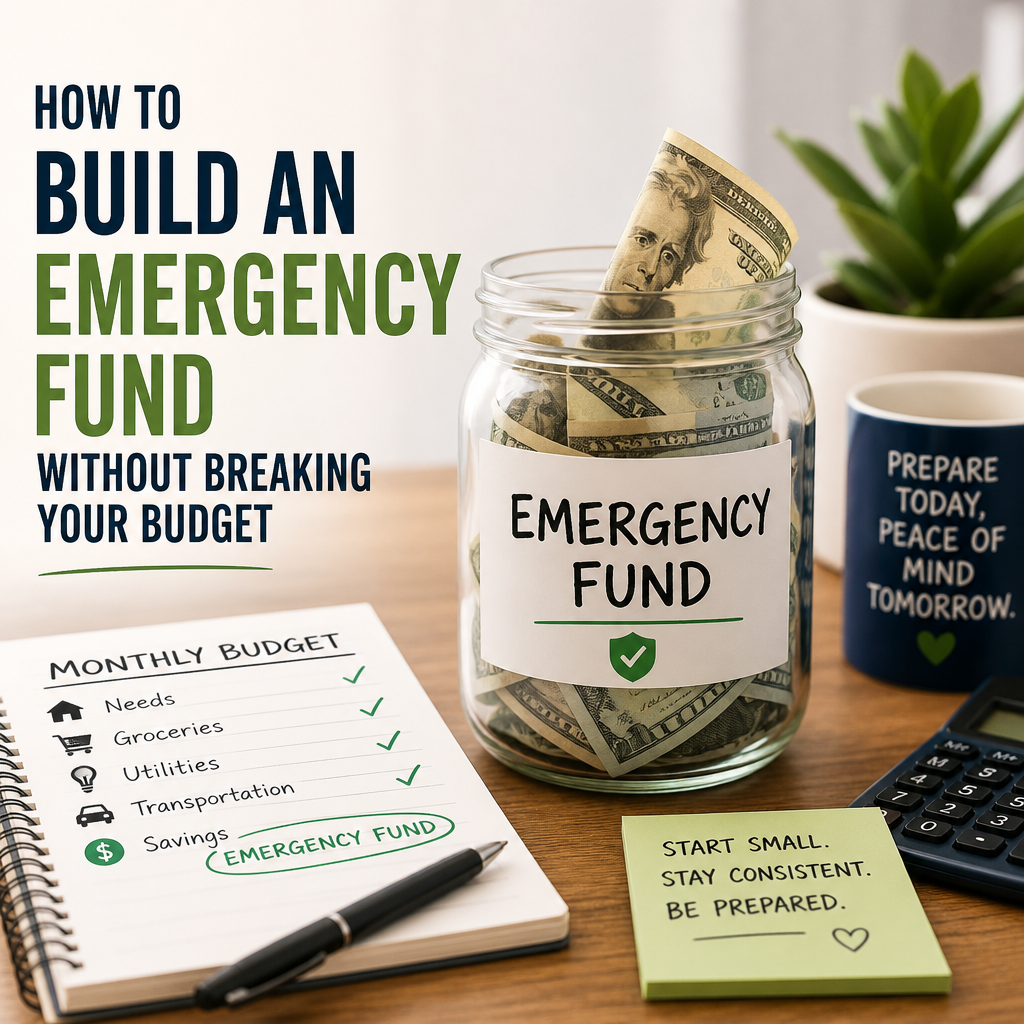
How to Build an Emergency Fund Without Breaking Your Budget
Building an emergency fund does not have to derail your finances or feel overwhelming. With a simple, steady approach, you can grow your emergency fund while still staying on track with your monthly budget.
By: Mary Mitchell on July 30, 2026
An emergency fund is one of the most practical financial tools you can build, but many people avoid starting because they assume it will wreck their monthly budget. The good news is that how to build an emergency fund without sacrificing your monthly budget is less about making huge sacrifices and more about using a smart, steady plan.
You do not need a perfect paycheck, a big raise, or a dramatic lifestyle overhaul to begin. What you need is a realistic strategy that protects your cash flow while still helping you prepare for the unexpected. A medical bill, car repair, job loss, or home emergency can happen at any time, and having even a small cushion can reduce stress and keep you from relying on credit cards or loans.
This guide walks through simple, sustainable ways to grow your emergency savings without throwing your budget off track.
Why an emergency fund matters
An emergency fund acts as a financial buffer between you and life’s surprises. Instead of turning a setback into a debt problem, you can cover it with cash you already set aside.
A strong emergency fund can help you:
Avoid high-interest debt
Stay on track with rent, mortgage, and bills during disruptions
Reduce stress when something unexpected happens
Give yourself more flexibility in future financial decisions
Even a modest fund can make a real difference. The goal is not to be perfect right away. The goal is to start and keep going.
How to build an emergency fund without sacrificing your monthly budget
The key is to treat emergency savings as a planned expense, not an afterthought. If you wait until the end of the month to save whatever is left, there usually will not be much left. Instead, build savings into your budget in a way that feels manageable.
Start with a realistic target
You do not need to save six months of expenses immediately. That larger goal is useful, but it can feel overwhelming if you are starting from zero.
Break the process into smaller milestones:
Save your first $250 or $500
Build one month of essential expenses
Work toward three months of basic living costs
Aim for a larger cushion if your situation calls for it
A smaller, near-term target can help you build momentum. Once you reach it, you can keep expanding the fund gradually.
Automate small transfers
Automation is one of the easiest ways to build savings without thinking about it every week. Set up an automatic transfer from checking to savings right after payday.
Even small amounts add up over time:
$10 per week
$25 per paycheck
A fixed monthly transfer that fits your budget
The amount matters less than the habit. If you never have to decide whether to save, you are more likely to stay consistent.
Treat it like a bill
One of the most effective mindset shifts is to treat emergency savings like a recurring bill you must pay. That makes it easier to prioritize.
For example, if you already budget for utilities, groceries, and transportation, add a line for emergency savings. This prevents the fund from feeling optional. When it is built into your monthly plan, it becomes part of normal financial life.
Trim expenses without feeling deprived
Building savings does not always require major cutbacks. Often, small changes free up enough room to fund your emergency account.
Look for expenses that are flexible rather than essential:
Cancel or pause subscriptions you rarely use
Cook one or two more meals at home each week
Reduce convenience spending like takeout or impulse purchases
Shop for lower-cost phone, internet, or insurance plans
Use cash-back or rewards strategically, then transfer the savings
The goal is not to live miserably. It is to redirect money from low-priority spending to a higher-priority goal.
Use windfalls wisely
Tax refunds, bonuses, cash gifts, and side income can speed up your progress without affecting your regular budget.
Instead of spending the entire amount, consider this simple split:
Put a portion into emergency savings
Use a portion for a needed expense
Save a small amount for fun or motivation
This balanced approach helps you avoid burnout while still making meaningful progress.
Save “found money”
You may be able to build your emergency fund using money you do not notice in day-to-day spending. For example:
Round up purchases and transfer the difference
Deposit cash you would normally leave in a wallet or drawer
Move rebates or refunds into savings
Send leftover amounts from each paycheck to your emergency account
These small, irregular deposits can supplement your regular savings plan without disrupting your budget.
Build your budget around essentials first
If you want to save without stress, make sure your budget covers the basics before you assign money elsewhere. That means prioritizing essential categories such as:
Housing
Utilities
Groceries
Transportation
Insurance
Minimum debt payments
Childcare or other necessary costs
Once the essentials are covered, identify a small but consistent amount for your emergency fund. Even if that means saving slowly at first, you will be building a habit that can last.
Use a zero-based or priority-based budget
A structured budgeting method can make it easier to find room for savings.
Zero-based budgeting
With zero-based budgeting, every dollar gets a job. You assign income to expenses, savings, and goals until there is nothing left unplanned. This method helps you see where your money goes and prevents “extra” spending from disappearing.
Priority-based budgeting
With this approach, you fund the most important categories first. Emergency savings can be one of those priorities, even if the contribution is small. This method works well if your income changes from month to month.
Find room in your current budget
If your budget feels too tight, do not assume saving is impossible. Often, the issue is not a lack of income but a lack of visibility. A close look at spending can uncover room for savings.
Review the last 30 days of spending
Go through your bank and credit card statements and group your expenses into categories. Look for patterns such as:
Repeated convenience purchases
Subscription services you forgot about
Dining out more often than expected
Fees or charges you could reduce
This exercise is not about shame. It is about information. The clearer your spending picture, the easier it becomes to make small adjustments.
Set a “micro-savings” goal
If money is tight, start extremely small. A micro-savings goal might be:
$5 per week
$20 per month
One transfer every payday, no matter how small
That may not seem like much, but it creates the habit of saving regularly. Once your budget improves, you can raise the amount.
Use a separate savings account
Keeping emergency savings in a separate account reduces temptation. If it sits in checking, it is easy to spend on everyday purchases without realizing it.
Look for an account that is:
Easy to access in a true emergency
Separate from your daily spending money
Free of unnecessary fees
Ideally interest-bearing, if available
A separate account also makes progress more visible. Watching the balance grow can reinforce your momentum.
Protect your budget while building savings
Saving for emergencies should strengthen your financial life, not create new problems. If your monthly budget is already tight, be careful not to overcommit. The best emergency fund plan is one you can maintain.
Avoid draining necessary categories
Do not fund your savings by underbudgeting essentials like groceries, medication, or transportation. That can create a different kind of emergency later.
A better approach is to make small, sustainable tradeoffs. If saving $75 a month feels impossible, try $25. If that still feels too tight, start with $10 and build from there.
Adjust when your income changes
Your savings plan should flex with your situation. If your income drops, reduce your contribution temporarily rather than stopping altogether. If you receive a raise or your expenses decrease, increase your savings rate.
A flexible plan can help you stay consistent through changing seasons.
Use your emergency fund only for real emergencies
To preserve the fund, define what counts as an emergency before you need the money.
Common examples include:
Job loss or reduced work hours
Emergency medical expenses
Major car repairs needed for work or family obligations
Urgent home repairs such as a broken furnace or roof leak
Less urgent spending, such as holiday gifts or a weekend trip, should come from a separate sinking fund or discretionary budget category.
Practical example: building savings on a tight budget
Imagine someone earning a modest monthly income with limited flexibility. They want to start saving but cannot spare a large amount.
Here is one way they might do it:
Cut one streaming service: free up $12 per month
Pack lunch twice a week: free up $30 per month
Move spare change and cashback to savings: average $15 per month
Automate a $25 transfer after each paycheck: $50 per month
That adds up to more than $100 a month without a major lifestyle change. The exact numbers will vary, but the point is the same: multiple small changes can create meaningful savings.
Common mistakes to avoid
When building an emergency fund, it helps to steer clear of a few common pitfalls.
Waiting for the “right time”
There is rarely a perfect time to start saving. If you wait until everything feels comfortable, you may wait forever. Start where you are.
Saving only leftover money
Leftover money tends to disappear. Decide your savings amount in advance.
Trying to save too aggressively
Saving too much too fast can create budget strain and cause you to quit. Consistency matters more than speed.
Using the fund too casually
If you dip into the fund for non-emergencies, it will not be there when you truly need it. Keep the purpose clear.
How to stay motivated
A savings goal becomes easier when you can see progress. Try these simple strategies:
Track your balance visually on a chart or app
Celebrate small milestones, like your first $500
Remind yourself of past financial emergencies and how savings could have helped
Review your progress once a month
Motivation tends to grow when the goal feels real and achievable.
Frequently Asked Questions
How much should my emergency fund be?
A common starting point is one month of essential expenses, then building toward three to six months if possible. If that feels too large right now, begin with a smaller target like $500. The right amount depends on your income stability, household needs, and comfort level.
What if I can only save a few dollars a week?
That is still worth doing. Small contributions build the saving habit and create a starter cushion. A few dollars a week may not seem impressive, but consistency matters more than the starting amount. Over time, you can increase your transfers as your budget allows.
Should I pay off debt or build an emergency fund first?
Often, it makes sense to do both. Many people start with a small emergency fund while paying off high-interest debt. That way, they have some protection against new emergencies without putting all extra money toward debt. If you have no savings at all, a small starter fund can prevent more debt later.
Where should I keep my emergency fund?
Keep it in a separate, FDIC-insured savings account or another safe account that is easy to access during real emergencies. Avoid tying it up in investments that may lose value or take time to access. The goal is safety and liquidity, not growth at all costs.
What counts as an emergency?
A true emergency is unexpected, necessary, and urgent. Examples include a sudden car repair needed for work, an emergency room bill, or a job loss. Planned expenses like vacations, holiday shopping, or routine maintenance should be saved for separately, not pulled from the emergency fund.
Building an emergency fund does not have to mean living on a painfully tight budget. When you focus on small, steady actions, you can protect your finances without creating unnecessary stress. The most effective approach is usually the simplest: set a realistic target, automate contributions, trim a few flexible expenses, and let your savings grow over time.
If you are starting from zero, remember that progress is still progress. A starter fund of $250 or $500 can provide real breathing room. If you already have some savings, the next step is to keep building until you have a cushion that matches your needs. Either way, the goal is the same: create a financial safety net that helps you handle surprises without throwing your monthly budget into chaos.
The best time to begin is now, even if your first contribution is small. Consistency, not perfection, is what turns a fragile budget into a more resilient one.
Mary S, CFP®, is a Certified Financial Planner with over 12 years of experience in personal finance, retirement planning, and wealth management. She writes educational content that helps readers understand financial concepts and make informed decisions based on reliable information.