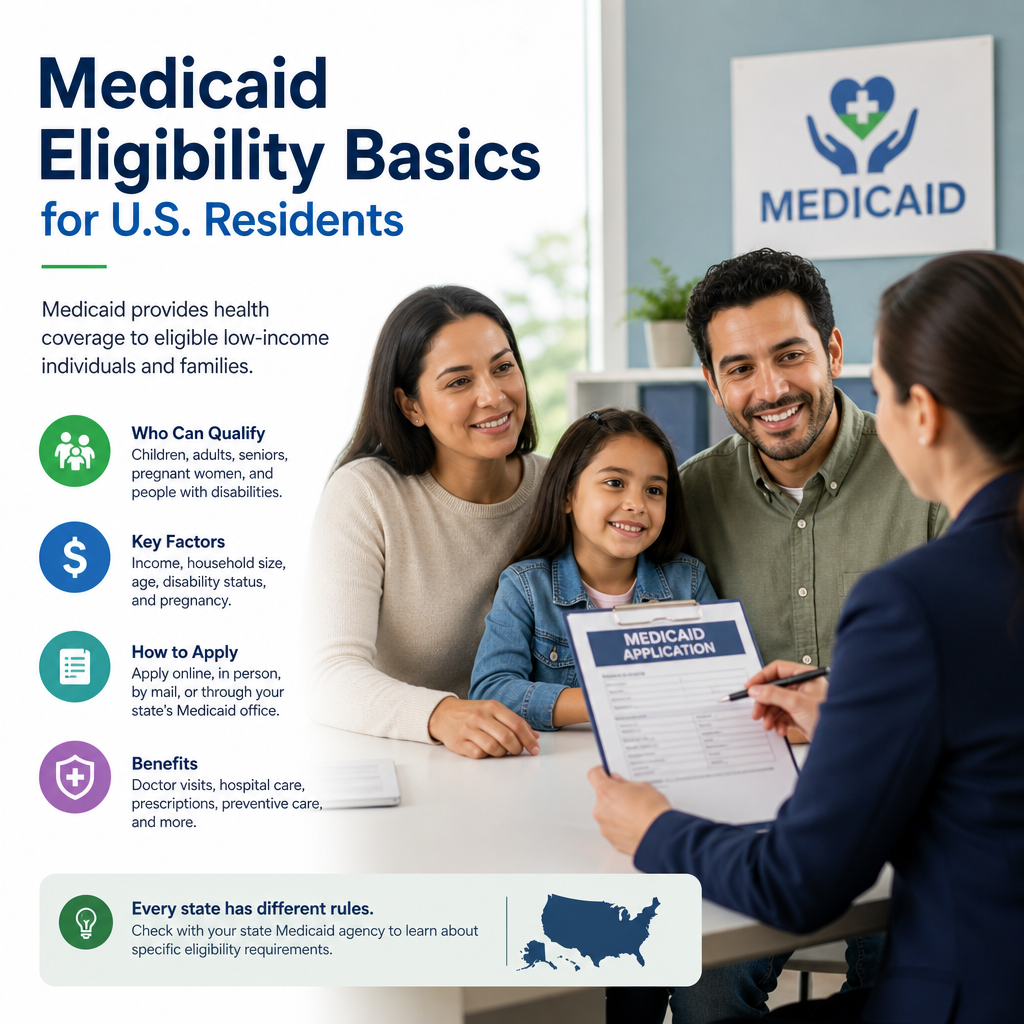
Medicaid eligibility can feel confusing, but the basics are easier to understand once you know what factors matter most, like income, household size, and where you live. This guide breaks down the key rules so you can quickly see whether you or a loved one may qualify for coverage.
By: Emily Adams on July 30, 2026
Medicaid eligibility is one of the most important topics for people trying to access affordable health coverage in the United States. Whether you’re applying for yourself, helping a family member, or planning ahead for a major life change, understanding how Medicaid works can help you make better decisions and avoid missed opportunities.
Medicaid is a joint federal and state program that helps cover medical costs for millions of people with limited income and resources. While the program follows federal rules, each state runs its own version within those guidelines. That means Medicaid eligibility can vary depending on where you live, your household size, your income, and, in some cases, your age, disability status, pregnancy status, or whether you need long-term care.
This guide explains the basics of Medicaid eligibility in clear, practical terms so U.S. residents can better understand who qualifies, how to apply, and what to do if circumstances change.
What Is Medicaid?
Medicaid is a public health insurance program designed to help people who may not be able to afford private coverage. It can pay for a wide range of services, including:
Doctor visits
Hospital care
Prescription drugs
Preventive services
Maternity care
Mental health services
Long-term care for eligible individuals
In many states, Medicaid also includes extra benefits such as transportation to medical appointments, vision care, or dental services. The exact benefits depend on your state’s program.
Because Medicaid is funded by both the federal government and individual states, it plays a major role in providing health coverage to children, parents, pregnant people, seniors, and adults with disabilities.
How Medicaid Eligibility Works
Medicaid eligibility is based on several factors. The most common include:
Income
Household size
State of residence
Age
Disability status
Pregnancy status
Citizenship or qualified immigration status
Need for long-term care
Income and Household Size
For many applicants, income is the first thing reviewed. States often compare your income to the Federal Poverty Level (FPL), but the exact thresholds depend on the Medicaid category and the state.
Household size matters because a larger family generally has a higher income limit than a smaller one. For example, a single adult may qualify at one income level, while a family of four may qualify at a different level.
State Differences
One of the biggest things to understand about Medicaid eligibility is that it is not identical in every state. States have different income rules, application systems, benefit packages, and expansion policies.
In Medicaid expansion states, more low-income adults may qualify. In non-expansion states, eligibility may be more limited, especially for adults without dependent children.
Special Eligibility Categories
Some groups may qualify even if their income is above the standard limit for other applicants. These groups often include:
Pregnant women
Children
Seniors
People with disabilities
People who need nursing home or home-based long-term care
Who May Qualify for Medicaid?
Medicaid eligibility depends on the category you fall into. Below are the most common groups that may qualify.
Children
Many children in low- and moderate-income families qualify for Medicaid. In some states, children may qualify at higher income levels than adults. This is because Medicaid and the Children’s Health Insurance Program (CHIP) work together to cover kids in families that may not have access to affordable private insurance.
Pregnant Individuals
Pregnant people often qualify more easily because Medicaid covers prenatal care, labor and delivery, and postpartum services in many states. Since pregnancy can create immediate medical needs, states typically treat this as a priority category.
Parents and Caregivers
In some states, low-income parents or relatives caring for children may qualify for Medicaid. Income limits for this group are often lower than the limits for children or pregnant individuals.
Adults Without Dependents
Adults without dependent children may qualify in states that expanded Medicaid under the Affordable Care Act. In states that did not expand Medicaid, coverage options for this group may be more limited unless they qualify under another category.
Seniors and People With Disabilities
Older adults and people with disabilities may qualify based on income, medical need, and asset rules. For some of these applicants, Medicaid can help with services that Medicare does not fully cover, especially long-term care.
Medicaid Expansion and Why It Matters
Medicaid expansion is an important part of understanding Medicaid eligibility. Under the Affordable Care Act, states were given the option to expand Medicaid to cover more low-income adults.
What Expansion Means
In expansion states, many adults with incomes at or below a certain percentage of the Federal Poverty Level may qualify, even if they do not have children or a disability. This has opened the door to coverage for people who previously fell through the cracks.
Why It Affects Eligibility
If your state expanded Medicaid, you may have a much better chance of qualifying based on income alone. If your state did not expand, you may need to meet a different category requirement, such as being pregnant, caring for a child, or living with a disability.
Because this can change over time, it’s smart to check your state’s current rules before assuming you are not eligible.
Income Limits and the Federal Poverty Level
Most Medicaid programs use the Federal Poverty Level as a benchmark. The Federal Poverty Level is a measure updated each year by the federal government. States use it to determine whether a household’s income falls within the range for Medicaid.
Why It’s Important
A person’s income may be counted differently depending on:
Whether the state uses modified adjusted gross income rules
Whether the applicant is a child, adult, pregnant person, or senior
Whether the person is applying for regular Medicaid or long-term care Medicaid
Practical Example
A single adult earning a modest income may qualify in one state but not another because the income threshold differs. A parent with two children may qualify for coverage for the children even if the parent does not qualify.
This is why it’s essential to check the exact rules for your state instead of relying on general assumptions.
Immigration and Citizenship Rules
Medicaid eligibility also depends on citizenship or immigration status.
U.S. Citizens
U.S. citizens are generally eligible to apply if they meet the other program requirements.
Qualified Immigrants
Some non-citizens with eligible immigration status may qualify for Medicaid. The rules can depend on how long the person has lived in the United States and the category of immigration status they hold.
Other Immigration Situations
Certain immigrants may not qualify for full Medicaid benefits but could still be eligible for emergency Medicaid or other limited coverage options in some states.
Because immigration rules can be complicated, applicants should review official state guidance carefully or seek help from a qualified enrollment assister.
What About Assets and Resources?
For many Medicaid groups, income is the primary factor. However, assets or resources may matter for certain applicants, especially seniors and people applying for long-term care coverage.
Common Countable Resources
These may include:
Bank accounts
Additional real estate
Certain investments
Some retirement assets
What May Be Exempt
Depending on the program, some items may not count, such as:
A primary home
One vehicle
Personal belongings
Certain burial arrangements
Because asset rules can be very specific, they are often one of the most confusing parts of Medicaid eligibility. Applicants for long-term care especially should review the rules carefully.
How to Apply for Medicaid
Applying for Medicaid is usually straightforward, but the process can vary by state. Most states let you apply online, by phone, in person, or by mail.
Steps to Apply
Gather important documents
Collect proof of identity, income, household size, residency, and any immigration or disability documents if needed.
Submit an application
Apply through your state Medicaid agency, the Health Insurance Marketplace, or a state benefits portal.
Wait for review
The state will evaluate your information and may ask for additional documents.
Respond quickly to requests
Missing paperwork is a common reason applications are delayed.
Keep your notice
If approved, read the coverage details carefully so you know what benefits you have and when coverage begins.
Helpful Documents to Have Ready
Pay stubs or proof of income
Social Security numbers, if available
Birth certificates or ID
Proof of state residency
Immigration documents, if applicable
Pregnancy verification, if applying under that category
What Happens After You’re Approved?
If you qualify, your Medicaid coverage will begin according to state rules. After approval, you should understand how to use your benefits, which doctors accept your coverage, and whether you need to choose a managed care plan.
Managed Care Plans
Many Medicaid beneficiaries are enrolled in managed care. This means a private insurance company works with the state to manage your benefits. You may need to:
Choose a primary care doctor
Get referrals for specialists
Use in-network providers
Renewals and Redetermination
Medicaid eligibility is not permanent. States review cases periodically to confirm that beneficiaries still qualify. This process is often called renewal or redetermination.
To avoid losing coverage:
Update your address
Report income changes
Respond to renewal notices promptly
Keep your contact information current
What If Your Income Changes?
Income changes are common, especially for people with variable work hours, seasonal employment, or changing family situations. If your income goes up or down, it may affect your Medicaid eligibility.
If Income Goes Up
You may no longer qualify for Medicaid, but you could still be eligible for subsidized Marketplace coverage. It’s important to report changes as required by your state.
If Income Goes Down
If your income drops, you may become newly eligible even if you previously did not qualify. This is especially important for people who lose a job, have a medical issue, or experience a family change.
Common Mistakes People Make
Understanding Medicaid eligibility is easier when you know the mistakes to avoid.
1. Assuming All States Have the Same Rules
They do not. State differences matter a lot.
2. Not Reporting Changes
Income, address, family size, and immigration status changes can all affect eligibility.
3. Missing Renewal Notices
If you don’t respond, you could lose coverage even if you still qualify.
4. Confusing Medicaid With Medicare
Medicaid is based mainly on income and need; Medicare is generally age- or disability-based. Some people qualify for both.
5. Guessing Instead of Checking Official Sources
Medicaid rules change. Always verify with your state agency or a trusted official source.
Medicaid vs. Medicare: A Quick Difference
People often confuse Medicaid with Medicare, but they serve different purposes.
Medicaid
Based on income and eligibility category
Joint federal-state program
Covers low-income residents and certain special groups
Medicare
Mainly for people age 65 and older, or certain younger people with disabilities
Federal health insurance program
Not based on income, though costs may vary depending on income and resources
Some people qualify for both programs. This is sometimes called being “dual eligible.”
Frequently Asked Questions
1. How do I know if I qualify for Medicaid?
To find out if you qualify, review your state’s Medicaid income limits and eligibility categories. Your household size, income, age, disability status, pregnancy status, and immigration status may all matter. The safest approach is to apply or use your state’s eligibility screening tool, since official agencies can evaluate your situation directly.
2. Can I get Medicaid if I work?
Yes. Many working people qualify for Medicaid, especially if their income is low enough. Eligibility depends on how much you earn, how many people are in your household, and the rules in your state. Even if you work full time, you may still qualify in some cases.
3. Do I need to be unemployed to get Medicaid?
No. Medicaid is based on income and category, not whether you have a job. You can be employed, self-employed, or between jobs and still qualify if you meet the program requirements.
4. Will my savings affect Medicaid eligibility?
Sometimes. For many Medicaid categories, savings do not matter much, but for seniors and people seeking long-term care coverage, resources and assets may be reviewed. Rules vary by state and by the type of Medicaid coverage you’re applying for.
5. What should I do if I’m denied Medicaid?
If you’re denied, read the notice carefully to understand why. You may be able to correct missing information, appeal the decision, or look into other coverage options such as Marketplace plans with premium tax credits. If your circumstances change, you can also reapply.
Understanding Medicaid eligibility can make a real difference when you need affordable health coverage. While the rules may seem complicated at first, the basics are manageable once you break them down: income, household size, state rules, and special categories like pregnancy, disability, parenting, or long-term care needs. The most important thing to remember is that eligibility is not the same everywhere, so where you live matters just as much as your financial situation.
If you think you might qualify, don’t wait to explore your options. Gather your documents, check your state’s official Medicaid site, and apply as soon as possible. Even if you’re not sure you meet every requirement, it’s worth verifying rather than assuming you’re ineligible. Medicaid can open the door to important medical care, reduce financial stress, and provide stability during times of change.
The more you understand how Medicaid works, the easier it becomes to make confident, informed choices for yourself and your family.
Emily A, holds a Master's degree in Public Administration (MPA) and has over 7 years of experience researching federal and state assistance programs. She writes educational content focused on government benefits, public policy, and community resources, using information from official agencies to help readers understand available programs and eligibility requirements.