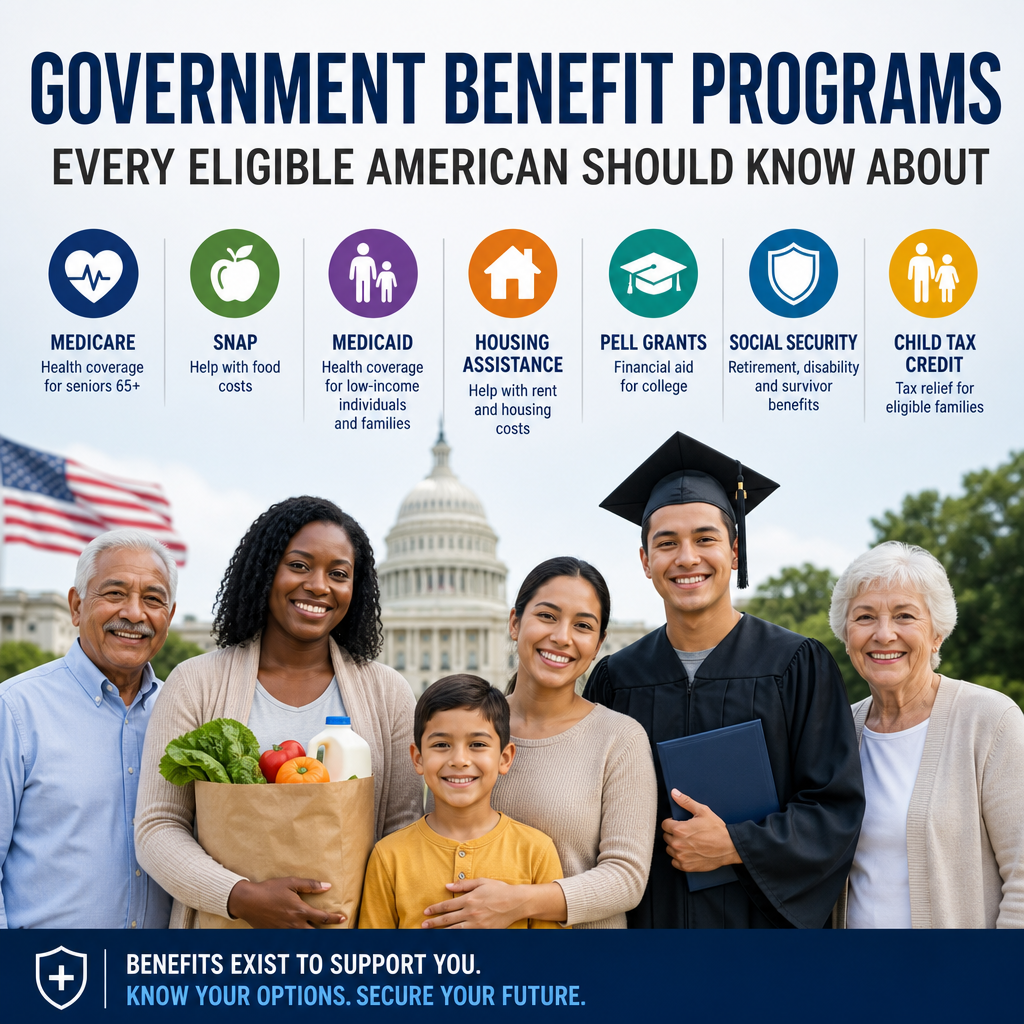
Government Benefit Programs Every Eligible American Should Know About
Government benefit programs can do more than provide emergency relief—they can help with health care, food, housing, retirement, and more when you need it most. Knowing which government benefit programs you may qualify for can make a big difference in your financial security and peace of mind.
By: Emily Adams on July 30, 2026
Many people think of government benefit programs as something only for a narrow group of Americans, but the reality is much broader. If you’re facing a job loss, raising children, paying for health care, caring for a family member, or planning for retirement, there may be public assistance programs designed to help. Understanding what exists—and who qualifies—can make a real difference in your financial stability and peace of mind.
The challenge is that benefit programs are spread across federal, state, and local agencies, each with its own rules. Some provide monthly payments, others reduce essential costs like food, housing, or medical care. Knowing where to start helps you avoid leaving support on the table.
Why Government Benefit Programs Matter
Government benefits are not just emergency aid. For many households, they function as a safety net that helps cover basic needs during difficult periods and supports long-term independence.
These programs can help with:
Healthcare costs
Nutrition and food access
Income replacement
Housing assistance
Child and family support
Retirement security
Disability-related expenses
If you qualify for one program, you may qualify for others. That’s why it’s smart to review the full landscape of government benefit programs rather than focusing on just one form of assistance.
Government Benefit Programs Everyone Should Understand
Social Security Retirement Benefits
Social Security is one of the most familiar benefit programs in the United States. Workers pay into the system throughout their careers, and eligible retirees can receive monthly retirement payments.
You may qualify based on your work history, and the amount depends on your earnings record and the age you begin collecting. While you can start benefits before full retirement age, doing so usually reduces your monthly payment.
Why it matters: Social Security remains a foundation for many retirees’ income and helps cover essentials such as rent, utilities, food, and medications.
Social Security Disability Insurance (SSDI)
SSDI supports people who have a qualifying disability and a sufficient work history. Unlike need-based assistance, SSDI is tied to your past payroll contributions.
To qualify, you generally must:
Have a condition that meets the Social Security definition of disability
Be unable to perform substantial work because of that condition
Have enough work credits from prior employment
Example: A worker who develops a serious medical condition and can no longer maintain employment may be eligible for SSDI, depending on their work record and medical documentation.
Supplemental Security Income (SSI)
SSI is another Social Security program, but it is based on financial need rather than work history. It provides monthly payments to eligible adults and children who have limited income and resources and who are aged, blind, or disabled.
SSI can be especially important for people who:
Have never worked enough to qualify for SSDI
Have very limited savings
Need help meeting basic living expenses
Because SSI rules are strict, applicants should review income and asset limits carefully before applying.
Health Care Support Programs
Medicare
Medicare is the federal health insurance program for people age 65 and older, as well as certain younger people with disabilities or specific medical conditions.
It includes different parts:
Part A: Hospital coverage
Part B: Medical coverage
Part C: Medicare Advantage plans offered by private insurers
Part D: Prescription drug coverage
Understanding how Medicare works can help you avoid gaps in coverage and unexpected out-of-pocket expenses. Many beneficiaries also qualify for help with premiums and drug costs through additional programs.
Medicaid
Medicaid is a joint federal and state program that helps eligible low-income individuals and families pay for health care. Coverage varies by state, but the program can include doctor visits, hospital care, long-term care, pregnancy services, and more.
Eligibility often depends on:
Household income
Family size
Disability status
State-specific rules
Practical tip: If your income changes or you lose employer-sponsored coverage, check Medicaid eligibility right away. You may qualify even if you didn’t before.
Children’s Health Insurance Program (CHIP)
CHIP provides low-cost health coverage for children in families that earn too much to qualify for Medicaid but still need help affording insurance. In some states, CHIP also covers pregnant women.
This program is especially useful for working families who struggle with private insurance premiums and deductibles.
Food Assistance Programs
Supplemental Nutrition Assistance Program (SNAP)
SNAP helps eligible households buy groceries. Benefits are typically loaded onto an electronic benefits card and can be used at approved stores and markets.
SNAP eligibility depends on household income, expenses, and state rules. Some households with children, older adults, or people with disabilities may qualify more easily because of special deductions or categorical eligibility.
Common uses of SNAP:
Fruits and vegetables
Bread and grains
Meat, fish, and dairy
Seeds and plants that produce food
SNAP can make a significant difference for families balancing food costs with rent, transportation, and medical bills.
Special Supplemental Nutrition Program for Women, Infants, and Children (WIC)
WIC supports pregnant women, new mothers, infants, and children up to age five who are at nutritional risk and meet income guidelines. It provides food benefits, nutrition education, breastfeeding support, and referrals for health services.
WIC focuses on specific nutritional needs during early childhood and pregnancy, making it one of the most valuable government benefit programs for families with young children.
Housing Assistance Programs
Housing Choice Vouchers
The Housing Choice Voucher Program, often called Section 8, helps low-income households afford rent in the private market. If approved, a portion of the rent is paid through the program and the family pays the remainder based on income.
Because demand is often high, waiting lists can be long. Still, it’s worth applying if your local housing authority is accepting applications.
Public Housing
Public housing is owned and managed by local public housing agencies and serves eligible low-income families, older adults, and people with disabilities. Rent is typically based on household income.
Public housing options vary widely by community. Some locations offer apartments, while others may include townhomes or specialized units for seniors.
Emergency Housing and Homelessness Assistance
People facing eviction, homelessness, or unsafe living conditions may be eligible for short-term housing help through local agencies, nonprofits, or federal emergency programs.
These services may include:
Shelter placement
Rapid rehousing assistance
Emergency rental help
Utility support
Case management
If you’re in immediate danger of losing housing, contact local housing agencies and community organizations as soon as possible.
Nutrition and Family Support Programs
Temporary Assistance for Needy Families (TANF)
TANF provides cash assistance and support services to very low-income families with children. States run the program, so benefits and rules vary.
TANF may help with:
Basic monthly needs
Child care support
Job training
Transportation assistance
Work-related expenses
Unlike some other programs, TANF often includes employment or participation requirements. Still, it can be a vital bridge during periods of hardship.
Child Care Assistance
Child care costs can prevent parents from working or attending school. Many states offer child care assistance programs that help eligible families pay for licensed child care services.
These programs are especially helpful for:
Single parents
Working families with low incomes
Parents in job training or education programs
Access varies by state, but the assistance can be a crucial support for maintaining employment and family stability.
Education and Career Support Programs
Pell Grants and Federal Student Aid
If you or a family member is considering college or career training, federal student aid can help. Pell Grants are need-based awards that generally do not need to be repaid, unlike loans.
Federal student aid may also include:
Direct subsidized and unsubsidized loans
Work-study opportunities
Additional grants for specific circumstances
The Free Application for Federal Student Aid (FAFSA) is the gateway to most of these options.
Workforce Development and Job Training Programs
Government-funded workforce programs can help people build skills, update credentials, and find new employment. These services are often offered through American Job Centers and state workforce agencies.
Support may include:
Career counseling
Resume help
Training vouchers
Apprenticeship connections
Job search support
These programs can be especially useful after layoffs or when changing careers.
Veteran and Military Family Benefits
VA Health Care and Disability Benefits
Veterans may be eligible for health care, disability compensation, education benefits, home loan support, and other services through the Department of Veterans Affairs.
Eligibility depends on factors such as:
Length and type of service
Discharge status
Service-connected disabilities
Income and priority group placement for health care
Veterans and surviving spouses should check benefits carefully, since some programs are easy to overlook.
Survivor and Family Benefits
Military families may also qualify for benefits related to survivor support, education assistance, and transitional help after service-related loss. These programs can be complex, but they often provide essential long-term support.
Benefits for Older Adults and Caregivers
Medicare Savings Programs
Some low-income Medicare beneficiaries qualify for state-administered savings programs that help cover premiums, deductibles, and copayments. These programs can reduce out-of-pocket costs significantly.
Extra Help for Prescription Drugs
Medicare’s Extra Help program assists eligible individuals with Part D prescription drug costs. It may lower premiums, deductibles, and copays.
Caregiver Support Services
Family caregivers often shoulder heavy responsibilities. Depending on the state and situation, caregivers may be able to access:
Respite care
Training
Home and community-based services
Support through Medicaid waiver programs
If you’re caring for an aging parent or disabled family member, explore caregiver-specific assistance early rather than waiting for burnout to set in.
How to Find Out What You Qualify For
Because many government benefit programs overlap, the best approach is to check eligibility across multiple programs at once. Start with the agencies most relevant to your situation.
A Simple Step-by-Step Approach
List your household details
Income
Household size
Ages of family members
Disability status
Housing situation
Identify your biggest need
Food
Medical care
Rent
Child care
Retirement income
Check federal and state program websites
Many programs are administered locally, even if funded federally
Apply even if you are unsure
Eligibility rules can be nuanced, and many people assume they won’t qualify when they actually do
Keep documents organized
ID, proof of income, tax returns, medical records, lease information, and bank statements may be needed
Common Mistakes to Avoid
Assuming one denied application means all benefits are unavailable
Waiting until a crisis becomes severe
Failing to report income or household changes
Ignoring state-specific programs
Missing renewal deadlines
Why It Pays to Stay Informed
Benefit rules change. Income thresholds, filing requirements, and program availability can shift with new laws or state budget decisions. A family that didn’t qualify last year may qualify now after a job loss, medical diagnosis, or change in household size.
Staying informed helps you:
Reduce financial stress
Protect your health and housing
Make better decisions about work and retirement
Access support before a crisis worsens
Even if you don’t need help today, knowing the landscape of government benefit programs can prepare you for the future and help you support family members when they need it.
Frequently Asked Questions
1. What are the most important government benefit programs to know about?
The most widely used programs include Social Security retirement benefits, SSI, SSDI, Medicare, Medicaid, SNAP, WIC, housing assistance, TANF, and veteran benefits. The most relevant program depends on your age, income, health status, and family situation.
2. How do I know if I qualify for government benefits?
Eligibility usually depends on income, household size, disability status, age, work history, and state-specific rules. The best way to know is to review official program guidelines and apply even if you are unsure, since many programs have multiple qualification pathways.
3. Can I receive more than one government benefit at the same time?
Yes. Many people receive multiple benefits at once. For example, someone may get Medicare and Extra Help, or SNAP and housing assistance. However, some programs affect each other, so it’s important to report accurate information and understand how benefits interact.
4. Are government benefit programs only for low-income people?
No. While many programs are income-based, others are tied to age, disability, work history, military service, or family status. Social Security retirement benefits and Medicare are common examples of programs that are not limited only to low-income households.
5. Where should I start if I need help right now?
Start with the agency that matches your immediate need. For food, check SNAP or WIC. For health care, look at Medicaid or Medicare resources. For housing, contact your local housing authority. For income support, review Social Security, SSI, or TANF. Applying early can help prevent a crisis from getting worse.
Understanding government benefit programs can make a meaningful difference when money is tight, health costs rise, or family responsibilities increase. From Social Security and Medicare to SNAP, Medicaid, housing help, and veteran services, these programs exist to support Americans through life’s most challenging moments and, in many cases, to strengthen long-term stability.
The key is not to assume you’re ineligible. Many people qualify for support they never explore simply because the system feels confusing or time-consuming. By learning the basics, gathering your documents, and checking official program sites, you give yourself a better chance to access assistance that can improve your daily life.
If you or someone in your household may need help, take the next step now. Review the programs that fit your situation, apply early, and keep track of renewal dates and paperwork. The right benefit at the right time can ease stress, protect your household, and help you move forward with greater confidence.
Emily A, holds a Master's degree in Public Administration (MPA) and has over 7 years of experience researching federal and state assistance programs. She writes educational content focused on government benefits, public policy, and community resources, using information from official agencies to help readers understand available programs and eligibility requirements.