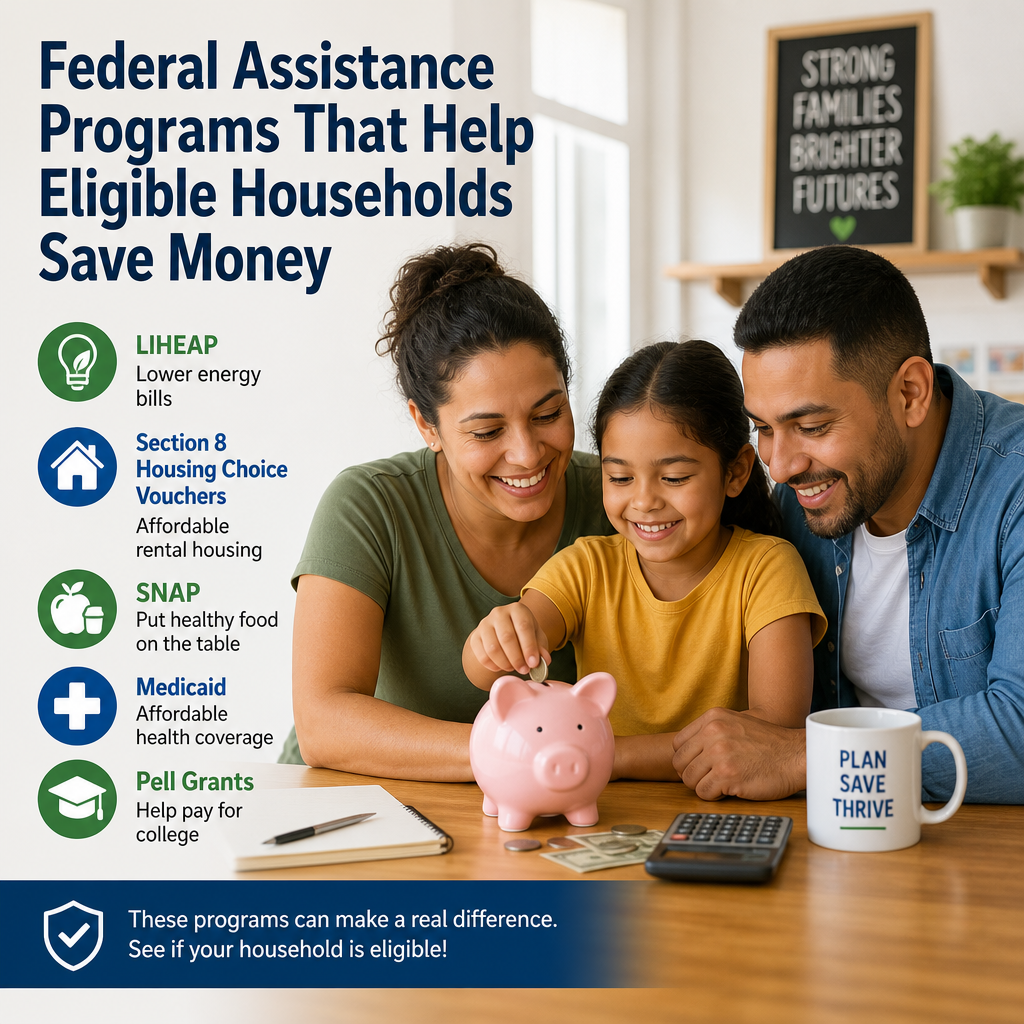
Federal Assistance Programs That Help Eligible Households Save Money
Federal assistance programs can make a real difference when your household budget is stretched thin, offering support for essentials like food, housing, healthcare, and utilities. If you’re unsure where to start, learning the key programs and eligibility rules can help you find the right support sooner.
By: Emily Adams on July 30, 2026
Many families face moments when everyday expenses become difficult to manage. Job loss, rising housing costs, medical bills, or unexpected emergencies can strain a household budget quickly. In those situations, federal assistance programs can provide meaningful support to eligible households by helping with food, housing, healthcare, utilities, child care, and other essential needs.
These programs are designed to offer a safety net, not a permanent solution. The challenge is that many people do not know what help exists, how to qualify, or where to apply. Understanding the major options can make it easier to get support before a crisis becomes worse.
This guide explains the most common federal assistance programs, who they may help, and how households can take practical steps to find the right resources.
What Are Federal Assistance Programs?
Federal assistance programs are benefits and services funded by the U.S. government to help individuals and families meet basic needs. Some are run directly by federal agencies, while others are administered by states using federal funds.
These programs often focus on:
Food and nutrition
Housing stability
Healthcare access
Energy and utility costs
Income support
Child and family services
Disaster recovery
Eligibility usually depends on income, household size, age, disability status, pregnancy, veteran status, or other factors. In many cases, households may qualify for more than one program at the same time.
Federal Assistance Programs for Food and Nutrition
Food assistance is one of the most widely used forms of help for eligible households. If grocery costs are putting pressure on your budget, these programs may provide relief.
Supplemental Nutrition Assistance Program (SNAP)
SNAP helps low-income households buy food using an electronic benefits card. Funds can be used at approved grocery stores, supermarkets, and some farmers markets.
SNAP may help with:
Groceries for home meals
Fresh produce, meat, dairy, and pantry staples
Budget stability during income interruptions
Eligibility generally considers income, household size, and certain expenses. Rules vary by state, but the application process is usually handled through the state human services agency.
Special Supplemental Nutrition Program for Women, Infants, and Children (WIC)
WIC supports pregnant people, new parents, infants, and young children who are at nutritional risk. It provides healthy food benefits, nutrition education, breastfeeding support, and referrals to care.
WIC is especially useful for households with:
Pregnant or postpartum women
Infants and children under age 5
Limited income and specific nutritional needs
National School Lunch and School Breakfast Programs
These programs help children receive nutritious meals during the school day. Many families apply through their local school district, and eligibility often depends on household income or participation in other assistance programs.
Federal Assistance Programs for Housing Stability
Housing costs can consume a large portion of a household budget. Federal housing assistance programs are designed to reduce instability and prevent homelessness.
Housing Choice Voucher Program
Often called Section 8, the Housing Choice Voucher Program helps eligible households pay rent in the private market. Participants typically pay a portion of their income toward rent, while the voucher covers the rest, up to program limits.
This program can help families who:
Need affordable rental options
Are at risk of eviction
Have limited income and high housing costs
Because demand is high, waiting lists may be long in many areas.
Public Housing
Public housing includes apartment units owned and managed by local public housing authorities. Rent is usually based on household income, making it more affordable for qualifying families.
Emergency Housing and Homelessness Prevention Support
Some federal funds flow through local agencies to help households facing eviction, utility shutoff, or homelessness. These resources may cover:
Short-term rental assistance
Security deposits
Past-due utilities
Shelter services
Case management and housing referrals
If a household is already in crisis, it is important to contact the local housing authority, community action agency, or emergency assistance office right away.
Federal Assistance Programs for Healthcare
Medical bills and insurance gaps can create serious financial strain. Several federal assistance programs help reduce healthcare costs for eligible households.
Medicaid
Medicaid provides health coverage for eligible low-income individuals and families. It can cover doctor visits, hospital care, prescriptions, mental health services, and other essential care.
Medicaid is particularly important for:
Children
Pregnant individuals
People with disabilities
Older adults with limited income
Families with low wages or unstable employment
Because each state administers Medicaid slightly differently, eligibility and covered services can vary.
Children’s Health Insurance Program (CHIP)
CHIP covers children in families who earn too much to qualify for Medicaid but still cannot afford private insurance. Some states also offer coverage for pregnant individuals.
CHIP helps households access:
Routine checkups
Immunizations
Dental and vision care
Specialist visits
Affordable Care Act Marketplace Savings
While not always thought of as an assistance program in the traditional sense, Marketplace plans may include premium tax credits and cost-sharing reductions for eligible households. These subsidies can lower monthly premiums and out-of-pocket costs.
Federal Assistance Programs for Income and Employment Support
Some households need direct financial help to bridge periods of unemployment, disability, or retirement. Federal programs in this area are often essential for keeping households afloat.
Temporary Assistance for Needy Families (TANF)
TANF provides cash assistance and work-related support to very low-income families with children. States manage the program within federal guidelines, so benefits and requirements vary.
TANF funds may support:
Rent or utility needs
Transportation
Child care
Job training and work activities
Supplemental Security Income (SSI)
SSI provides monthly payments to people with limited income and resources who are age 65 or older, blind, or disabled. This program can be a lifeline for individuals who cannot work full-time due to health conditions.
Unemployment Insurance
Unemployment benefits are usually administered by states, but the system is federally supported. Workers who lose a job through no fault of their own may qualify for temporary income replacement while looking for new work.
Social Security Benefits
For many households, Social Security retirement, survivor, or disability benefits form a major part of monthly income. While not a short-term aid program in the same way as SNAP or TANF, these benefits can be critical for long-term household stability.
Federal Assistance Programs for Utilities and Energy Costs
Utility bills can become overwhelming during extreme weather or income interruptions. Several assistance options are available to help eligible households avoid shutoffs and keep homes safe.
Low Income Home Energy Assistance Program (LIHEAP)
LIHEAP helps households pay heating and cooling bills and may also provide emergency utility assistance. In some cases, it can help with weatherization or energy-related repairs.
LIHEAP may support families facing:
Winter heating costs
Summer cooling needs
Past-due utility bills
Equipment failures affecting home energy use
Applications are typically handled by state or local agencies.
Weatherization Assistance Program
This program helps improve home energy efficiency so households can lower long-term utility costs. Services may include insulation, air sealing, HVAC improvements, and other energy-saving upgrades.
Federal Assistance Programs for Child and Family Needs
Families with children often juggle many expenses at once. Federal programs can reduce stress by supporting child care, nutrition, and early development.
Child Care and Development Fund (CCDF)
CCDF helps eligible low-income families afford child care while parents work or attend school. Access to affordable care can make employment and education more realistic.
Head Start and Early Head Start
These programs provide early childhood education, developmental screenings, nutrition, and family support for eligible young children and pregnant people. They can be especially valuable for families seeking a strong early learning foundation.
How to Find the Right Federal Assistance Programs
Because many federal assistance programs overlap, the best approach is to start with the household’s most urgent need and then look for additional support.
Step 1: Identify the Immediate Problem
Ask what is putting the most pressure on the household right now:
Food insecurity
Rent or mortgage stress
Medical expenses
Utility shutoff risk
Child care costs
No income after job loss
Step 2: Check Basic Eligibility
Most programs review:
Household income
Number of people in the home
Age of household members
Disability or pregnancy status
Citizenship or immigration-related program rules
State-specific requirements
Step 3: Apply Through the Correct Agency
Applications may go through:
State human services departments
Local housing authorities
State Medicaid agencies
School districts
Community action agencies
Social Security Administration offices
Step 4: Gather Required Documents
Having documents ready can speed up the process. Common items include:
Photo ID
Social Security numbers or proof of household members
Proof of address
Pay stubs or proof of income
Utility bills or lease agreements
Medical records, if relevant
Bank statements or expense documentation
Step 5: Follow Up and Recertify
Many programs require periodic recertification. Missing a deadline can interrupt benefits, so it helps to keep records organized and respond to notices quickly.
Practical Examples of How Federal Assistance Can Help
Here are a few realistic scenarios that show how these programs work together.
Example 1: A Family Facing Job Loss
A parent loses work unexpectedly. The household may apply for:
SNAP for groceries
Medicaid for healthcare coverage
Unemployment insurance for temporary income
LIHEAP to help with utilities
Example 2: A Single Parent Paying High Rent
A single parent with two children may need:
Housing Choice Voucher assistance
Child care support through CCDF
School meal programs
TANF if income is extremely limited
Example 3: An Older Adult on a Fixed Income
A retiree living on a small Social Security check might qualify for:
SNAP to reduce grocery costs
Medicaid to help with medical bills
LIHEAP for energy bills
Housing support through a local authority
Tips for Getting the Most From Assistance Programs
A few simple habits can make the process smoother:
Apply as soon as need arises
Ask about multiple programs at once
Keep copies of all forms and notices
Update your agency if income or household size changes
Use trusted government websites whenever possible
Be persistent if you are placed on a waiting list
It also helps to contact local nonprofits, legal aid groups, and community action agencies. They often know which federal assistance programs are active in your area and can help with applications.
Frequently Asked Questions
1. Can a household qualify for more than one federal assistance program at the same time?
Yes. In fact, many households receive support from multiple programs at once. For example, a family might use SNAP for food, Medicaid for healthcare, and LIHEAP for utility bills. Each program has its own eligibility rules, so qualifying for one does not automatically mean you qualify for another, but overlap is common.
2. Do federal assistance programs only help people who are unemployed?
No. Many working households qualify for assistance if their income is low enough. Full-time and part-time workers, caregivers, students, older adults, and people with disabilities may all be eligible depending on the program. Assistance is based on financial need and household circumstances, not just employment status.
3. How long does it take to get approved for federal assistance?
Processing times vary by program, state, and application volume. Some benefits may be approved relatively quickly, while others can take longer because of interviews, document review, or waiting lists. If your situation is urgent, ask whether emergency or expedited assistance is available.
4. What if I am denied benefits?
If you are denied, you usually have the right to appeal or request a fair hearing. Carefully review the denial notice to understand the reason. Sometimes a denial happens because a document is missing or income information was incomplete. You may also be able to reapply later if your circumstances change.
5. Where should I start if I do not know which program fits my situation?
Start with the most urgent need. If food is the biggest problem, begin with SNAP or WIC. If rent is the issue, contact your local housing authority. If medical costs are too high, check Medicaid or CHIP. You can also contact 211 in many areas for referrals to local and federal resources.
Official Resources
Benefits.gov — Federal benefits eligibility screening tool and program directory
Federal assistance programs can make a real difference for eligible households navigating hard times. Whether the need is food, housing, healthcare, child care, or utility support, these programs exist to help families stay stable and protect their well-being. The key is knowing where to look, understanding the basic eligibility rules, and applying as soon as possible.
If you are facing financial pressure, do not wait until the situation becomes unmanageable. Start by identifying the most urgent need, gather your documents, and explore the programs that fit your household’s circumstances. Even if one program does not work out, another may still be available. Many families find that combining several forms of support creates the breathing room they need to recover and plan ahead.
The more informed you are about federal assistance programs, the easier it becomes to make confident decisions and access help when it matters most. Taking the first step today could lead to greater stability, less stress, and a clearer path forward for your household.
Emily A, holds a Master's degree in Public Administration (MPA) and has over 7 years of experience researching federal and state assistance programs. She writes educational content focused on government benefits, public policy, and community resources, using information from official agencies to help readers understand available programs and eligibility requirements.