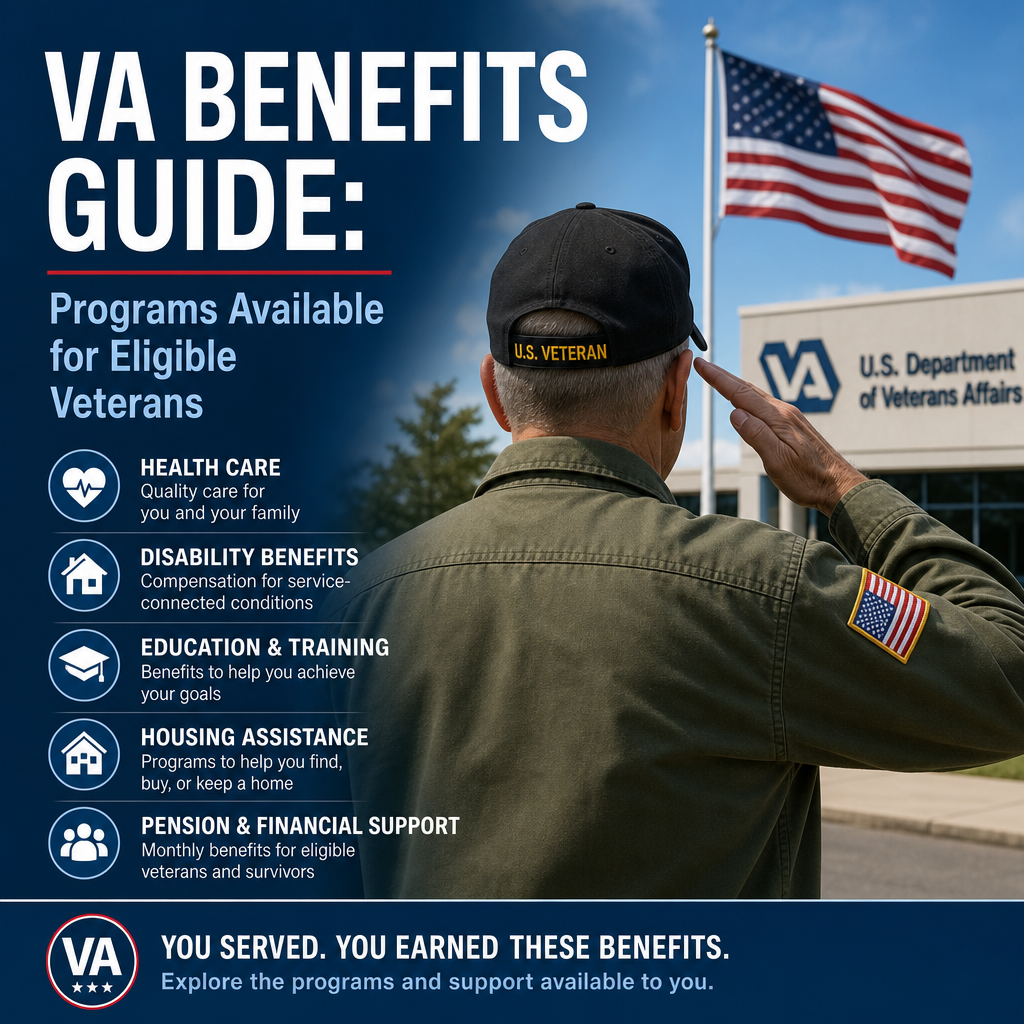
VA Benefits Guide: Programs Available for Eligible Veterans
VA benefits can open the door to essential support, from health care and disability compensation to education, home loans, and family assistance. This guide breaks down the main programs in simple terms so you can see what you may qualify for and how to get started.
By: Emily Adams on July 30, 2026
Navigating VA benefits can feel overwhelming at first, especially when you’re trying to understand what programs you may qualify for and how to apply. The good news is that the Department of Veterans Affairs offers a wide range of support for eligible veterans, from health care and disability compensation to education, home loans, and family benefits. This VA benefits guide breaks down the major programs available in plain English so you can better understand what’s out there and how to take the next step.
What Are VA Benefits?
VA benefits are government programs created to support veterans, certain service members, and in some cases surviving spouses or dependents. These benefits exist to recognize military service and help veterans transition successfully into civilian life.
Depending on your service history, disability status, income, family situation, and discharge type, you may qualify for one or more types of support. Some benefits are automatic once you meet the rules, while others require an application and supporting documentation.
Main Types of VA Benefits
The VA offers several categories of assistance. Below are the most common programs eligible veterans should know about.
1. VA Health Care
VA health care provides medical services through the VA health system. This can include:
Primary care
Preventive care
Mental health services
Specialty care
Prescription medications
Rehabilitation services
Long-term care support in certain cases
Eligibility depends on factors such as service history, discharge status, income, and whether you have a service-connected disability. Many veterans use VA health care as their main source of medical coverage, while others combine it with private insurance or Medicare.
2. Disability Compensation
VA disability compensation is a monthly tax-free payment for veterans who developed an illness or injury during military service, or whose service made a condition worse. This may include:
Physical injuries
Chronic pain conditions
Hearing loss
PTSD
Traumatic brain injury
Respiratory conditions
Other service-connected disabilities
The amount you receive depends on your disability rating, which the VA assigns after reviewing medical evidence and service records. If your condition worsens over time, you may be able to request a review for a higher rating.
3. VA Pension
The VA pension is a needs-based benefit for wartime veterans who have limited income and meet certain service requirements. This program is different from disability compensation because it is based more on financial need and age or disability status.
A special version, called Aid and Attendance, may provide additional support if you need help with daily activities such as bathing, dressing, or eating.
4. Education and Training Benefits
One of the most well-known VA benefits is educational support. These programs can help pay for:
College
Trade school
Graduate education
Apprenticeships
On-the-job training
Certification programs
The Post-9/11 GI Bill is one of the most widely used education benefits for eligible veterans. It may help cover tuition, housing, books, and supplies, depending on eligibility and enrollment status. Other programs may also be available for veterans who served under different periods or circumstances.
5. Home Loan Benefits
VA home loan benefits help eligible veterans buy, build, repair, or refinance a home. A major advantage is that many borrowers can get a home loan with no down payment and no private mortgage insurance.
Common VA home loan uses include:
Purchasing a primary residence
Refinancing an existing mortgage
Making energy-efficient home improvements
Buying certain types of manufactured housing
The VA does not lend money directly in most cases. Instead, it guarantees a portion of the loan, which encourages approved lenders to offer favorable terms.
6. Life Insurance Options
The VA also offers life insurance programs designed to provide financial protection for veterans and their families. These plans may be especially helpful for service members and veterans with service-connected disabilities or those seeking affordable coverage.
Life insurance options may include:
Servicemembers’ Group Life Insurance (SGLI)
Veterans’ Group Life Insurance (VGLI)
Service-Disabled Veterans Life Insurance (S-DVI), where eligible
Each program has different eligibility rules, premium structures, and coverage limits.
7. Burial and Memorial Benefits
Eligible veterans may qualify for burial benefits that can help cover funeral-related expenses and provide honors for military service. These benefits may include:
Burial in a national cemetery
Headstone or marker
Burial flag
Presidential Memorial Certificate
Military funeral honors
Families often find these benefits meaningful because they help ensure a veteran’s service is formally recognized and remembered.
Other VA Benefits Veterans Should Know About
The VA also provides additional support that many veterans overlook at first. These programs may not get as much attention, but they can be valuable depending on your circumstances.
Adaptive Equipment and Housing Grants
If a service-connected disability affects mobility or daily living, the VA may help with:
Specially adapted housing grants
Home modification support
Adaptive equipment for vehicles
Assistive technology
These benefits can improve independence and make daily life safer and more manageable.
Vocational Rehabilitation and Employment
Veterans with service-connected disabilities may qualify for help preparing for work, changing careers, or finding more suitable employment. This program can include:
Career counseling
Resume and interview support
Training and education
Job placement assistance
Support for self-employment in some cases
The goal is to help veterans build a path to meaningful, sustainable employment.
Caregiver Support
The VA recognizes that family caregivers often play an essential role in a veteran’s recovery and daily life. Certain caregivers may qualify for support such as:
Training and education
Counseling services
Respite care options
Financial assistance in limited cases
This can be especially important for veterans with significant physical or mental health needs.
Mental Health Services
Mental health care is a critical part of the VA benefits system. Veterans may access services for:
Depression
Anxiety
PTSD
Substance use concerns
Sleep issues
Grief and adjustment challenges
The VA offers both in-person and telehealth options in many situations. Seeking help early can make a real difference in long-term well-being.
How to Know Which VA Benefits You May Qualify For
Eligibility rules vary by program, but the VA commonly reviews several key factors:
Length and type of military service
Character of discharge
Service-connected disabilities
Income and financial need
Age or health status
Family and dependent status
A veteran may qualify for some benefits and not others. For example, someone may be eligible for education assistance but not a needs-based pension. Another veteran may receive disability compensation but still need to meet separate rules for home loan benefits.
How to Apply for VA Benefits
The application process depends on the benefit, but these steps can help you get organized.
1. Gather Important Documents
Before applying, collect records that may support your claim, such as:
DD Form 214 or other discharge papers
Medical records
Service treatment records
Marriage or dependent records
Income information
Prior claim decisions, if applicable
Having these ready can make the process smoother.
2. Choose the Right Benefit Program
Start with the benefit that best matches your current needs. If you’re dealing with a service-connected medical issue, disability compensation or health care may be your best starting point. If you’re planning to go back to school, education benefits may matter more.
3. Submit Your Application
Many VA benefits can be applied for online through VA.gov. Some can also be filed by mail, with help from a Veterans Service Organization, or through a VA office.
4. Respond to Requests for More Information
The VA may ask for additional evidence, medical exams, or clarification. Respond promptly so your claim can keep moving.
5. Keep Track of Deadlines
Some benefits have important filing windows or appeal deadlines. Missing one can delay or reduce your options, so stay organized and keep copies of everything you submit.
Tips for Making the Most of Your VA Benefits
Understanding the programs is one thing. Using them well is another. Here are some practical tips to help you get the most from your VA benefits.
Use a Veterans Service Organization
A VSO can help you file claims, understand eligibility, and gather evidence. Many veterans find this support especially useful when dealing with disability claims or appeals.
Review Your Benefit Options Regularly
Your needs may change over time. You might start with health care, then later use education, housing, or caregiver support. Reviewing your options every year or after a major life event can uncover additional benefits.
Keep Your Records Updated
If you move, change banks, get married, have a child, or experience a new medical issue, update the VA promptly. Small record issues can create delays in payments or eligibility reviews.
Don’t Assume You’re Not Eligible
Many veterans miss out on support because they assume they don’t qualify. If your discharge status, service period, or income situation seems uncertain, it’s worth checking directly with the VA or a qualified representative.
Common Mistakes to Avoid
Even strong claims can be delayed by avoidable errors. Watch out for these common mistakes:
Submitting incomplete forms
Forgetting to include service records
Missing follow-up appointments
Overlooking dependent information
Waiting too long to file
Not appealing a decision when appropriate
A careful, organized approach can save time and frustration.
Frequently Asked Questions
1. What are the most common VA benefits available to veterans?
The most common VA benefits include health care, disability compensation, education assistance, home loan programs, life insurance, and burial benefits. Some veterans may also qualify for pension, caregiver support, or vocational rehabilitation depending on their service and personal circumstances.
2. How do I know if I qualify for VA disability compensation?
You may qualify if you have a current physical or mental health condition linked to your military service. The VA will review your service records, medical evidence, and connection between the condition and your time in service. A VA disability rating determines the amount of monthly compensation.
3. Can I use more than one VA benefit at the same time?
Yes, many veterans use multiple benefits at once. For example, a veteran might receive disability compensation, use VA health care, and also qualify for education assistance. Each benefit has its own eligibility rules, so approval for one does not automatically guarantee approval for another.
4. Is VA health care free for all veterans?
Not always. Some veterans receive care with little or no cost, while others may have copayments based on income, priority group, and type of service. Eligibility and cost-sharing rules vary, so it’s important to check your specific situation through the VA.
5. What should I do if my VA claim is denied?
If your claim is denied, read the decision carefully to understand why. You may be able to submit new evidence, request a review, or file an appeal depending on the situation. Getting help from a Veterans Service Organization or accredited representative can improve your next steps.
Understanding VA benefits is an important step toward accessing the support you earned through your military service. Whether you need medical care, disability compensation, education funding, a home loan, or family support, the VA offers programs that can make a real difference in daily life and long-term stability.
The key is to start with the benefit that fits your situation, gather the right records, and apply as early as possible. If you’re unsure where you stand, don’t assume you’re ineligible. Many veterans leave valuable benefits unused simply because they never checked. A little time spent learning your options can lead to meaningful support for you and your family.
If you’re ready to move forward, review your eligibility, organize your documents, and explore the official VA resources above. The right benefit may be closer than you think.
Emily A, holds a Master's degree in Public Administration (MPA) and has over 7 years of experience researching federal and state assistance programs. She writes educational content focused on government benefits, public policy, and community resources, using information from official agencies to help readers understand available programs and eligibility requirements.