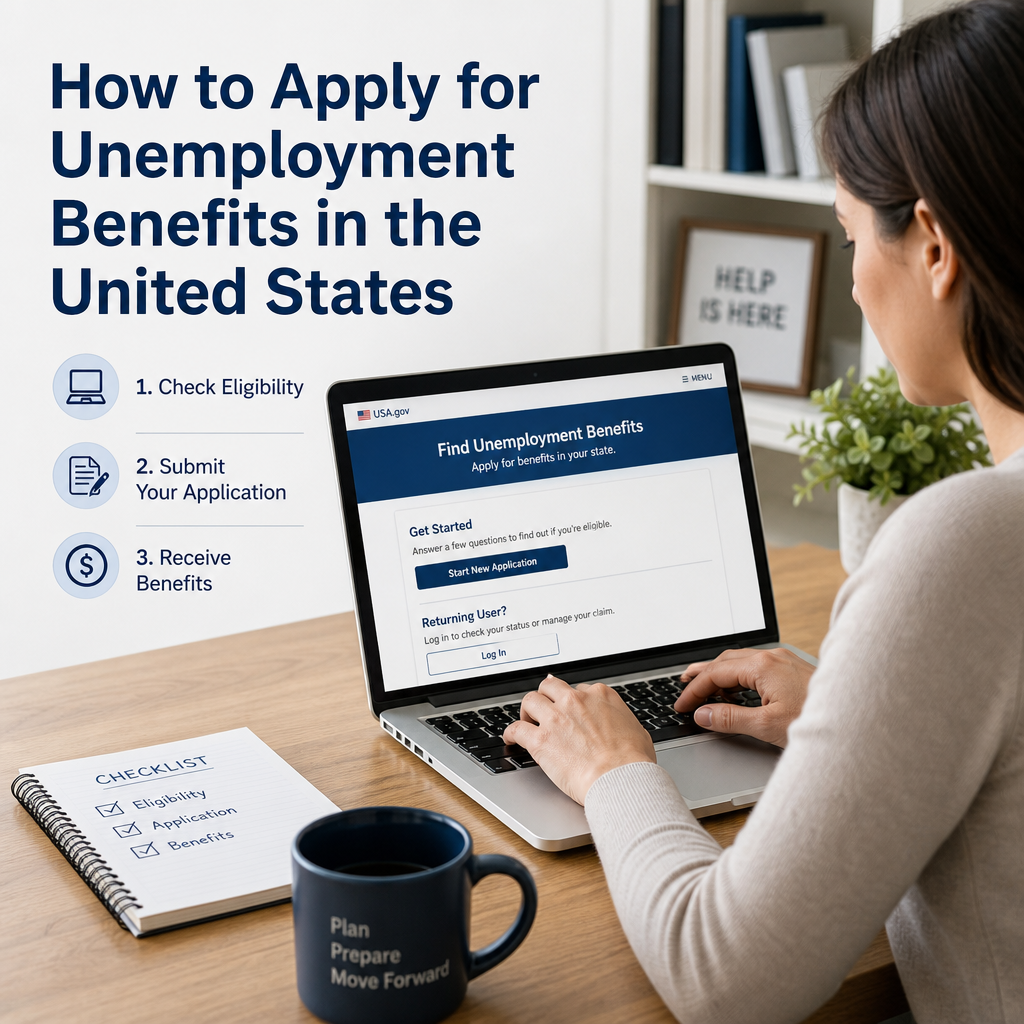
How to Apply for Unemployment Benefits in the United States
Losing your job can feel overwhelming, but unemployment benefits may offer a much-needed financial cushion while you search for your next opportunity. This guide explains how to apply for unemployment benefits in the United States, including what you need, where to file, and how to avoid common delays.
By: Emily Adams on July 30, 2026
Losing a job can be stressful, but unemployment benefits can help you stay financially afloat while you look for new work. If you’re unsure where to begin, this guide explains how to apply for unemployment benefits in the United States, what information you’ll need, and how to avoid common mistakes that slow down your claim.
Unemployment insurance is a state-run program funded by employers. While the basic purpose is the same across the country, the application process, eligibility rules, and payment timing can vary from state to state. That means the most important step is understanding your state’s specific requirements and acting quickly after your job ends.
What Unemployment Benefits Are and Who They Help
Unemployment benefits are temporary payments for workers who lose their jobs through no fault of their own and meet state eligibility rules. These benefits are designed to help people cover essential expenses while they search for new work.
In general, unemployment benefits may help if you:
Were laid off due to a reduction in workforce
Lost your job because the position was eliminated
Had hours reduced significantly in some cases
Are able to work, available to work, and actively seeking work
You usually cannot collect unemployment if you quit without a qualifying reason or were fired for serious misconduct. However, each state handles these situations differently, so it’s worth applying if you are unsure.
How to Apply for Unemployment Benefits in the United States
The application process starts with your state unemployment office, not a federal agency. Although the benefits program is commonly called unemployment insurance, you will typically file through your state’s labor department, workforce agency, or unemployment division.
Step 1: Find Your State’s Unemployment Website
Every state has its own application portal. Start by searching for your state’s official unemployment office website or visit the U.S. Department of Labor’s state resource pages. Avoid third-party sites that charge fees to file a claim.
Step 2: Gather Your Information
Before you begin, collect the details you’ll need to complete the application. Having everything ready can help prevent delays.
Commonly required information includes:
Your full legal name
Social Security number
Home address and contact information
Driver’s license or state ID number, if applicable
Alien registration number, if you are not a U.S. citizen and are authorized to work
Last employer’s name, address, and phone number
Dates you worked for each employer during the past 12 to 18 months
Reason you are no longer working
Bank account information for direct deposit, if available in your state
If you worked for multiple employers, be ready to list each one. Some states may also ask for your pay history or W-2 information.
Step 3: File the Initial Claim
You can usually apply online, by phone, and sometimes in person. Online filing is the fastest and most common option.
When completing the claim, answer carefully and honestly. The state will use your information to determine:
Whether you are monetarily eligible based on wages earned
Whether your separation from work qualifies
Whether you meet weekly work-search and availability requirements
Be precise about why your job ended. For example, “laid off due to business closure” is very different from “quit due to stress” or “terminated for attendance issues.”
Step 4: Wait for Your Determination
After filing, your state reviews your claim and sends a determination notice. This document explains whether you qualify, how much you may receive, and how long benefits may last.
Processing time depends on the state and workload, but delays are common if:
Your former employer contests the claim
The state needs extra verification
Your application contains missing or inconsistent information
Read every notice from your unemployment office carefully. Some states use mail and email, while others require you to log in to an online portal.
Step 5: Certify for Benefits Every Week or Two Weeks
Filing the initial claim is only the beginning. In most states, you must certify weekly or biweekly that you are still unemployed or working reduced hours and remain eligible.
During certification, you may need to report:
Any earnings from part-time or temporary work
Job search activities
Availability for work
Any refusals of suitable job offers
Changes in address or employment status
If you miss a certification deadline, your payments may stop until you correct the issue.
Eligibility Rules You Should Know
Eligibility can vary by state, but most unemployment programs consider a few common factors.
Work History and Wages
States typically look at your earnings during a “base period,” which is usually the first four of the last five completed calendar quarters before you file. You must have earned enough wages to qualify.
If you recently started a new job or had interrupted work history, you may still qualify depending on your state’s rules.
Reason for Separation
Your job loss must generally be due to circumstances beyond your control. Common qualifying reasons include:
Layoffs
Company downsizing
Reduced hours in some cases
Business shutdowns
Non-qualifying reasons often include:
Quitting without good cause
Being terminated for misconduct
Refusing available work without a valid reason
Availability and Job Search Requirements
Most states require you to be ready, willing, and able to work. You also usually have to look for work and keep records of your job search.
That may mean:
Applying to jobs
Contacting employers
Attending interviews
Registering with a state job bank
Some states have stricter work-search rules than others, and a few temporarily relax these rules in special circumstances. Always follow your state’s current instructions.
How Much You May Receive
The amount of unemployment benefits depends on your past earnings and your state’s formula. Most states pay a weekly benefit amount based on a portion of your previous wages, up to a state-specific maximum.
Your payment may be reduced if you earn part-time income while collecting benefits. For example, if you work a few hours during a week, you may still qualify for a partial payment depending on the amount earned and your state rules.
If you’re unsure how the calculation works, review your state’s benefit estimator or official guidance. Never assume the amount will be the same from one state to another.
Common Mistakes to Avoid When Applying
A simple error can delay your claim or cause a denial. Watch out for these common issues:
Waiting too long to file
File as soon as you become unemployed. Delaying can affect when benefits start.
Giving incomplete information
Missing employer details, incorrect dates, or inconsistent answers can trigger review.
Not checking mail or online messages
Your state may send deadlines, requests, or determinations that require a quick response.
Failing to certify on time
Even if you already filed, you still need to keep up with weekly or biweekly certifications.
Skipping job search records
Keep a written list of where you applied, when you applied, and who you contacted.
Ignoring appeal rights
If your claim is denied, you may be able to appeal. Deadlines are often short, so act promptly.
What to Do If Your Claim Is Denied
A denial does not always mean the end of the process. In many cases, you can appeal the decision and provide more information.
A strong appeal usually includes:
A copy of the denial notice
A clear explanation of why you disagree
Supporting documents such as pay stubs, separation letters, or emails
Witness statements, if relevant and allowed by your state
Submit your appeal before the deadline listed in the notice. If you miss it, you may lose the right to challenge the decision.
Special Situations That May Affect Your Claim
Unemployment rules can be more complicated if your situation is not straightforward.
If You Quit Your Job
You may still qualify if you left for a legally recognized “good cause,” such as unsafe working conditions, unpaid wages, or certain family or medical reasons depending on state law. Documentation matters.
If You Were Fired
Being fired does not automatically disqualify you. The key question is whether the employer can show misconduct. If the termination was due to performance issues, personality conflicts, or attendance problems, eligibility may still depend on the details.
If You Are a Gig Worker or Contractor
Independent contractors, freelancers, and gig workers often do not qualify for standard unemployment insurance because they are not classified as employees. Some federal or state programs have expanded coverage during emergencies, but those are not permanent. Check your state’s current rules carefully.
If You Move to Another State
You can often continue your claim after moving, but you should notify the unemployment office immediately. Your work search and reporting obligations may change, especially if you are now looking for work in a different labor market.
Practical Tips to Keep Your Claim Moving
A smooth claim depends on organization and responsiveness. A few simple habits can help:
Create a folder for all unemployment-related documents
Save screenshots or confirmation numbers when you file
Check your email, voicemail, and online account frequently
Respond quickly to identity verification requests
Record every job search activity
Keep copies of tax forms and benefit notices for your records
If your state offers online messaging or a claimant portal, use it regularly. Many problems are easier to fix early.
Frequently Asked Questions
1. How do I know if I’m eligible for unemployment benefits?
Eligibility usually depends on three main factors: your work history, the reason you lost your job, and whether you are available and actively looking for work. Most states require you to have earned enough wages during a base period and to have lost your job through no fault of your own. Because rules vary, the safest approach is to apply and let the state determine eligibility.
2. How soon should I apply after losing my job?
You should apply as soon as possible after you become unemployed or have your hours significantly reduced. Benefits typically do not start until you file a claim, so waiting can delay payments. Even if you are unsure whether you qualify, filing early is usually better than waiting.
3. Can I collect unemployment if I work part-time?
Yes, many states allow partial unemployment benefits if you work part-time and earn below a certain amount. You must report all earnings during weekly or biweekly certification. Your benefit payment may be reduced based on what you earned that week.
4. What happens if my employer disputes my claim?
Your state unemployment office will review the dispute and may request more information from both you and your employer. This can slow down processing, but you should continue certifying for benefits while the claim is under review, if your state allows it. Keep all documents related to your job separation in case you need to support your case.
5. Do unemployment benefits count as taxable income?
Yes, unemployment compensation is generally taxable at the federal level, and some states also tax it. You may be able to choose tax withholding when you file or make estimated payments later. Keep your tax forms, especially Form 1099-G, for filing season.
Applying for unemployment benefits in the United States does not have to feel overwhelming. Once you understand the basics, the process becomes much more manageable: find your state’s official unemployment website, gather your documents, file your initial claim, and continue certifying on time. Just as important, stay alert for messages from your state agency and keep accurate records of your job search and earnings.
Because unemployment rules vary by state, the details matter. A small mistake like missing a deadline or entering the wrong employer information can slow down your benefits or trigger a denial. Taking a careful, organized approach can help you avoid those setbacks and get the support you need sooner.
If you’re facing a job loss now, start with your state’s unemployment office and review the official requirements as soon as possible. The sooner you act, the sooner you can focus on your next opportunity with a little more financial breathing room.
Emily A, holds a Master's degree in Public Administration (MPA) and has over 7 years of experience researching federal and state assistance programs. She writes educational content focused on government benefits, public policy, and community resources, using information from official agencies to help readers understand available programs and eligibility requirements.