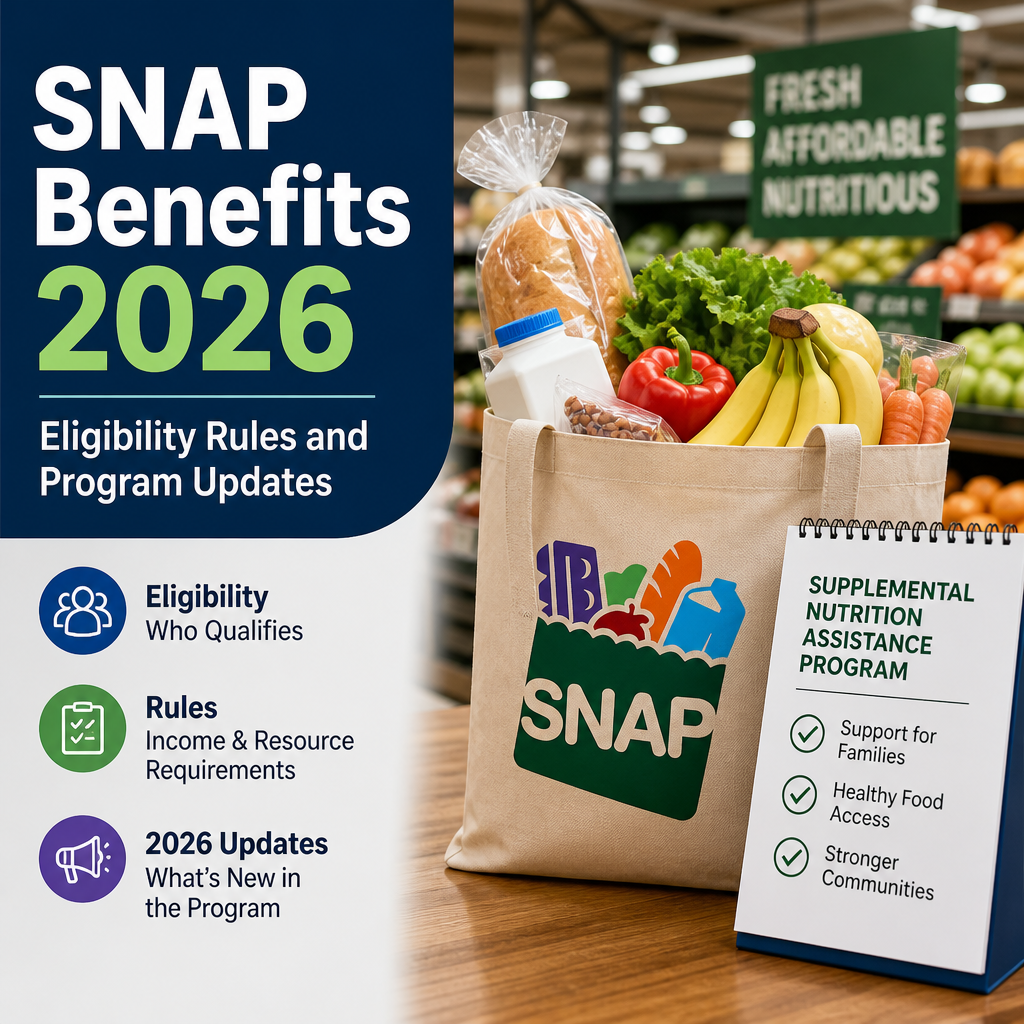
SNAP Benefits 2026: Eligibility Rules and Program Updates
SNAP benefits 2026 continue to provide vital food assistance for millions of households, but eligibility depends on a mix of income, household size, expenses, and state-specific rules. Understanding the latest SNAP eligibility rules can help you see whether you qualify and what changes to watch for when applying or renewing.
By: Emily Adams on July 30, 2026
The SNAP benefits 2026 landscape is important for millions of households that rely on food assistance to help cover grocery costs. SNAP, short for the Supplemental Nutrition Assistance Program, continues to play a critical role in reducing food insecurity while giving eligible families, older adults, people with disabilities, and workers a more stable path to nutritious meals.
If you’re trying to understand SNAP benefits 2026, this guide breaks down the current eligibility rules, how the program is typically determined, what updates recipients should watch for, and how to prepare for application or recertification. Because program rules can vary by state and may change over time, it’s essential to review the latest guidance from official sources before applying or renewing.
What Are SNAP Benefits?
SNAP is a federal nutrition assistance program administered by the U.S. Department of Agriculture and managed by state agencies. It helps eligible people buy food at approved retailers using an Electronic Benefit Transfer, or EBT, card.
SNAP benefits can be used for:
Fruits and vegetables
Meat, poultry, and fish
Dairy products
Bread and cereals
Seeds and plants that produce food
SNAP generally cannot be used for nonfood items such as alcohol, tobacco, household supplies, vitamins, or prepared hot foods in most cases.
In SNAP benefits 2026, the program continues to support low-income households through monthly food assistance, with eligibility based on income, household size, expenses, and other factors.
SNAP Benefits 2026: Eligibility Rules Explained
Eligibility for SNAP benefits 2026 is determined by federal rules, but states apply those rules through their own agencies. That means the exact application process and some administrative details can differ depending on where you live.
Basic Eligibility Requirements
In general, households must meet several core requirements:
Household income limits
SNAP considers both gross income and net income in many cases.
Gross income is the household’s income before certain deductions.
Net income is the amount left after allowable deductions.
Household size
Larger households usually qualify at higher income levels because food costs are higher.
Assets in some cases
Many households do not face strict asset limits anymore, but rules may vary by state and household type.
Some households, such as those with elderly or disabled members, may face different standards.
Citizenship or immigration status
U.S. citizens and certain eligible noncitizens may qualify.
Immigration rules are specific, so applicants should check official guidance carefully.
Work requirements
Some adults without dependents may need to meet work rules, register for work, or participate in employment and training programs unless they qualify for an exemption.
Common Deduction Factors
SNAP calculations often take allowable deductions into account, which can improve eligibility or increase monthly benefits. These may include:
Housing and utility costs
Child care expenses
Medical expenses for elderly or disabled household members
Legally owed child support payments in some situations
Earned income deductions
Because deductions can have a major impact on benefit amounts, two households with the same income may receive different SNAP benefits 2026 results depending on their monthly expenses.
Recent Program Updates Affecting SNAP in 2026
The rules for SNAP benefits 2026 can be shaped by federal policy changes, state administration decisions, cost-of-living adjustments, and temporary program changes that become permanent or expire. While the details can vary, here are the kinds of updates households should watch closely.
Cost-of-Living Adjustments
SNAP benefit amounts and income limits are reviewed periodically. These adjustments are designed to reflect changes in food costs and inflation. For households, that means:
Maximum benefit levels may increase
Income thresholds may shift
Some households may see changes in monthly allotments even if their situation stays the same
If you receive SNAP, it’s wise to read renewal notices carefully because benefit amounts may change based on updated federal standards.
Work Requirement Changes
Work-related rules are among the most closely watched parts of SNAP policy. Adults in certain age ranges without dependents may need to meet work requirements unless exempt due to disability, pregnancy, caregiving, or another qualifying reason.
In 2026, households should pay attention to:
Age-based work rules
Time limits for able-bodied adults without dependents in certain circumstances
State employment and training opportunities
Exemption rules for veterans, homeless individuals, and others depending on current law
If you’re unsure whether a work rule applies to your household, contact your state SNAP office or review USDA guidance.
Verification and Renewal Procedures
Many states continue to streamline SNAP applications and renewals, but applicants still need to provide documentation when requested. Recent administrative updates have focused on:
Online applications
Digital document uploads
Telephone interviews in some cases
Simplified recertification processes for eligible households
These changes may make it easier to stay enrolled, but they also require households to check mail, email, or online accounts regularly so they don’t miss notices.
Electronic Benefit Transfer Access
EBT remains the standard method for receiving SNAP benefits. Most states now use mobile-friendly portals or apps that help recipients:
Check balances
Review transaction history
Manage PINs
Report card issues
For families using SNAP benefits 2026, keeping EBT information secure is especially important. Avoid sharing your PIN and monitor your account for unauthorized activity.
How Household Income Is Evaluated
Income is one of the most important factors in SNAP eligibility. States generally evaluate both earned and unearned income.
Earned Income
Earned income includes:
Wages
Salaries
Self-employment income
Certain training or work program payments
Unearned Income
Unearned income may include:
Unemployment benefits
Social Security benefits
Child support payments received
Some pensions
Disability benefits
Not all income is counted the same way. For example, some educational aid, tax credits, or assistance payments may be excluded under SNAP rules. This is why applicants should not assume they are ineligible based on gross income alone.
Example of How It Works
Consider a household of three with a modest wage income and high rent. Even if the gross income appears slightly above a simple threshold, allowable deductions for housing, utilities, or dependent care may bring the net income into eligibility range. That household could still qualify for SNAP benefits 2026.
This is one reason it pays to apply if you think you may qualify. Many families underestimate how deductions affect the final determination.
Who May Qualify for SNAP Benefits 2026?
SNAP is designed to help a wide range of households facing financial strain. Common groups that may qualify include:
Working families with low wages
Older adults on fixed incomes
People with disabilities
Unemployed workers
College students who meet specific exemptions
Single-parent households
Households with high housing or medical expenses
Eligibility is not limited to people with no income. Many SNAP recipients work, receive partial benefits, or use assistance temporarily during a period of instability.
How to Apply for SNAP in 2026
Applying for SNAP benefits 2026 usually begins with the state agency that administers the program in your area. Most states allow applications online, by phone, in person, or by mail.
Typical Application Steps
Submit an application
Provide household information, income, expenses, and basic identification details.
Complete an interview
Many states require a phone or in-person interview.
Some interviews are shorter or waived in certain cases.
Provide verification documents
Proof of identity
Income records
Rent or mortgage statements
Utility bills
Child care or medical expense documentation when relevant
Wait for a decision
Processing times vary, but expedited benefits may be available for qualifying households with very limited income or resources.
Use your EBT card
If approved, benefits are deposited monthly onto the card.
Tips for a Smoother Application
Gather documents before you apply.
Answer all questions honestly and completely.
Keep copies of everything you submit.
Respond quickly if the state agency asks for more information.
Report changes when required, such as a new job or move.
Common Reasons SNAP Households Lose Benefits
Even eligible households can lose benefits if they miss deadlines or fail to comply with program rules. Common issues include:
Not completing recertification on time
Missing scheduled interviews
Failing to submit requested verification
Not reporting required changes
Exceeding income limits after a new job or raise
Losing an exemption from work requirements
If your benefits stop unexpectedly, contact your state SNAP agency right away. In many cases, problems can be fixed if you act quickly.
How to Stay Informed About SNAP Changes
Because SNAP benefits 2026 may be affected by policy updates, households should rely on trusted official sources rather than social media rumors or outdated blog posts.
Best Ways to Stay Updated
Check your state SNAP agency website
Review USDA Food and Nutrition Service notices
Read any renewal letters or email alerts carefully
Update your contact information when it changes
Save appointment dates and deadlines in a calendar
If you receive other benefits such as Medicaid, TANF, or SSI, changes in one program may also affect the others. Coordination matters, especially for households with multiple forms of public assistance.
Practical Examples of SNAP Use in 2026
To better understand how SNAP works in real life, here are a few common situations.
Example 1: A Working Parent
A single parent works part time and pays high daycare costs. Even though the household earns a paycheck every month, child care expenses and rent reduce the amount left for food. SNAP can help fill the gap and keep grocery costs manageable.
Example 2: An Older Adult on Fixed Income
An older adult living on Social Security may struggle with rising food prices and medication costs. If medical and housing expenses are high enough, SNAP may provide meaningful monthly support.
Example 3: A Family Between Jobs
A household experiencing a temporary drop in income after job loss may qualify for expedited SNAP assistance. This can help stabilize the family while they search for work.
These examples show why eligibility cannot be judged by income alone. Household situation matters.
Frequently Asked Questions
1. What is the easiest way to find out if I qualify for SNAP benefits 2026?
The fastest way is to contact your state SNAP agency or use an official pre-screening tool if your state provides one. These tools can give you a rough estimate, but only the agency can make the final decision. Be sure to include all income and household expenses for the most accurate result.
2. Do I need to be unemployed to get SNAP?
No. Many SNAP recipients work part time or full time. Eligibility depends on household income, size, deductions, and other factors. Having a job does not automatically disqualify you from SNAP benefits 2026.
3. Can college students get SNAP?
Sometimes. College students may qualify if they meet an exemption or specific requirement, such as working a certain number of hours, caring for a dependent, or participating in approved work-study or training programs. Student rules can be strict, so review them carefully before applying.
4. Will my SNAP benefits change if my income changes?
Yes, they may. You may need to report changes in income, household size, or living expenses depending on your state’s reporting rules. A change can increase, decrease, or end your benefits. Always report changes on time to avoid overpayments or disruptions.
5. What should I do if my application is denied?
Read the denial notice carefully to understand the reason. You may be able to submit missing documents, correct an error, or request a fair hearing if you believe the decision was wrong. Deadlines matter, so act quickly if you want to appeal.
Understanding SNAP benefits 2026 starts with knowing that eligibility is based on more than just wages. Household size, income type, deductions, work rules, and state procedures all play a part in whether someone qualifies and how much assistance they receive. Recent program updates may affect benefit amounts, verification steps, renewals, and work-related requirements, so staying informed is just as important as submitting a complete application.
For households facing rising grocery costs, SNAP can provide practical relief and help stretch the monthly food budget. The key is to use official resources, keep records current, and respond quickly to notices from your state agency. If you think you may qualify, don’t assume you earn too much or have too much income without checking the deduction rules. A careful review could make a real difference.
Take the next step by reviewing your state’s SNAP guidelines, gathering your documents, and applying or renewing on time. Small actions now can help protect access to food assistance when it matters most.
Emily A, holds a Master's degree in Public Administration (MPA) and has over 7 years of experience researching federal and state assistance programs. She writes educational content focused on government benefits, public policy, and community resources, using information from official agencies to help readers understand available programs and eligibility requirements.