Simple Budgeting Methods for Families to Save More Every Month
Simple budgeting methods can help families take control of their money without adding stress or complicated rules. By keeping things easy to follow, you can cover essentials, reduce waste, and save more each month.
By: Mary Mitchell on July 30, 2026
Families often know they need a budget, but the hardest part is finding a method that actually works in real life. Between groceries, rent or mortgage payments, childcare, gas, school expenses, and the occasional surprise bill, it can feel like money disappears before the month is over. The good news is that simple budgeting methods can make a big difference without turning family life into a spreadsheet marathon.
The best budgeting system is not the most complicated one. It is the one your household can stick with consistently. When a budget is practical, easy to review, and built around your real spending habits, it becomes much easier to save money every month and reduce financial stress.
Why Simple Budgeting Methods Work for Families
Many families abandon budgets because they start with too much detail, too many categories, or unrealistic expectations. A simple system works better because it focuses on a few key decisions:
How much money comes in
Where the money goes
How much to save
What to do when expenses change
A family budget should support daily life, not complicate it. Simple budgeting methods help you stay aware of spending patterns, plan for irregular costs, and make progress toward goals like building an emergency fund, paying off debt, or saving for a vacation.
More importantly, simplicity makes budgeting sustainable. If both adults in the household can understand the plan quickly, it is far more likely to work month after month.
Start with a Clear Picture of Monthly Income and Expenses
Before choosing a budgeting method, it helps to know exactly what your family earns and spends. This step does not need to be perfect, but it should be honest.
List All Sources of Income
Include:
Paychecks after taxes
Side income
Child support or alimony, if applicable
Government benefits
Any recurring support from other sources
If your income changes from month to month, use a conservative average. It is better to plan from a slightly lower number than to depend on money that may not arrive.
Track Essential and Flexible Expenses
Separate your expenses into two broad groups:
Fixed or essential expenses
Housing
Utilities
Groceries
Transportation
Insurance
Debt payments
Childcare
Minimum savings goals
Flexible expenses
Dining out
Entertainment
Clothing
Subscriptions
Gifts
Miscellaneous spending
This breakdown gives you a foundation for every budgeting method discussed below.
Simple Budgeting Methods That Help Families Save More Every Month
There is no single correct budget for every household. The best method depends on your income, goals, and how much structure you want. These simple budgeting methods are especially useful for families because they are practical and easy to maintain.
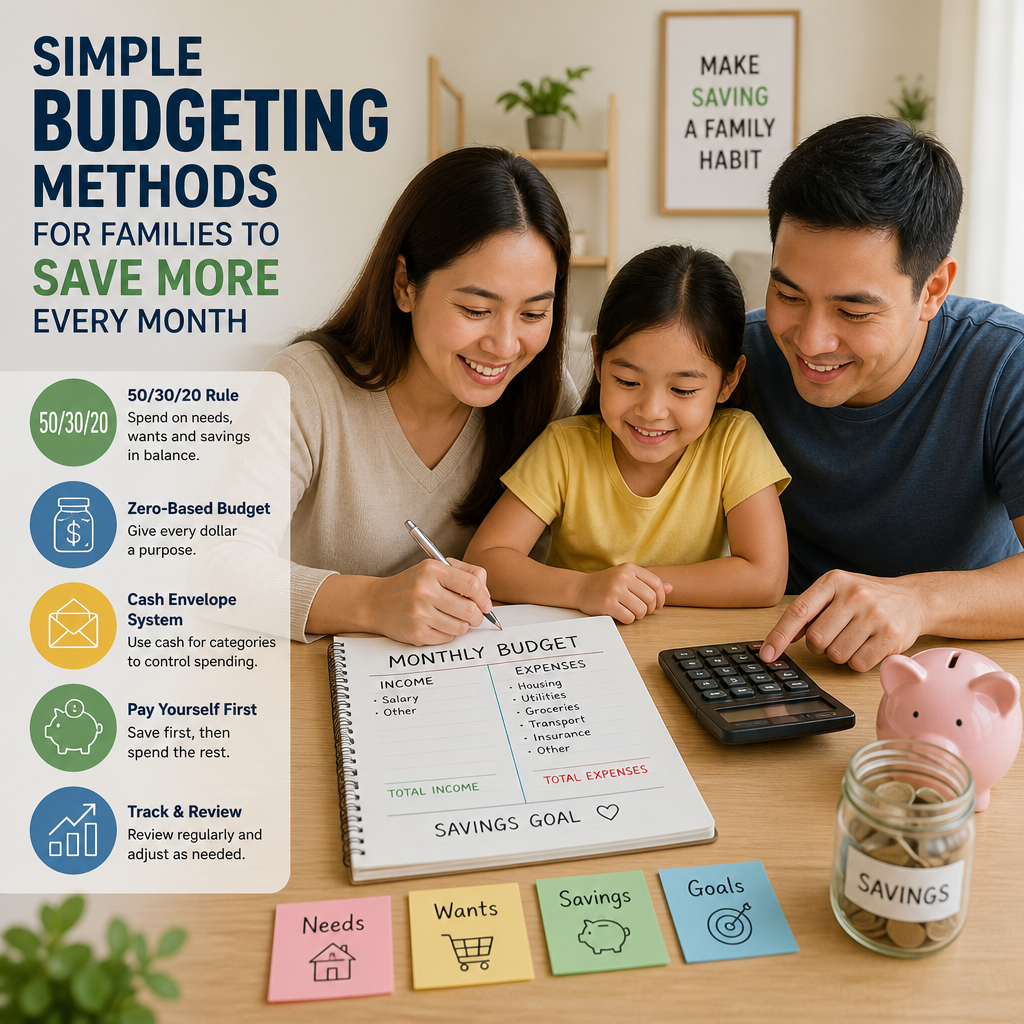
1. The 50/30/20 Budget
The 50/30/20 budget is one of the easiest budgeting methods to understand. It divides after-tax income into three broad categories:
50% for needs
30% for wants
20% for savings and debt repayment
Why Families Like It
This method gives families a clear framework without too many categories. It is helpful if you want a general plan but do not want to track every dollar.
Example
If your monthly take-home income is $5,000:
$2,500 goes to needs
$1,500 goes to wants
$1,000 goes to savings or debt payoff
In reality, family budgets are not always perfect fits for this split. Some families may need a larger portion for housing or childcare. If that happens, the ratios can be adjusted while still keeping the same basic idea.
Best For
Families who want a beginner-friendly budget
Households with steady income
People who need a simple structure for saving more
2. Zero-Based Budgeting
With zero-based budgeting, every dollar gets a job. By the end of the month, your income minus expenses, savings, and debt payments should equal zero.
That does not mean you spend every dollar. It means you assign every dollar a purpose before the month begins.
Why It Works
This method helps families become more intentional. Instead of wondering where money went, you tell each dollar where to go. It is especially useful if you tend to overspend in small, unplanned ways.
Example
If your family brings in $4,200 in a month, you might assign money like this:
Rent or mortgage: $1,400
Groceries: $700
Utilities: $300
Transportation: $400
Insurance: $300
Savings: $500
Debt payments: $300
Childcare: $200
Personal spending: $100
Every dollar is allocated before the month starts.
Best For
Families who want tight control over spending
Households trying to reduce debt
People who like detailed planning
3. The Envelope Budget System
The envelope budget system is a classic method that still works well today. You set limits for variable spending categories and place the money in envelopes, either physically or digitally.
Common envelope categories include:
Groceries
Gas
Dining out
Fun money
Clothing
School supplies
Once the envelope is empty, spending in that category stops until the next budget period.
Why Families Find It Helpful
The envelope system is excellent for controlling categories that tend to drift upward. It creates a visible limit, which makes overspending harder to ignore.
Modern Digital Version
You do not need cash to use this method. Many families use budgeting apps or separate accounts to simulate envelopes. The principle stays the same: each category has a defined limit.
Best For
Families who overspend on variable expenses
People who like hands-on budgeting
Households that want clear boundaries
4. The Pay-Yourself-First Method
The pay-yourself-first approach puts savings at the center of your budget. Instead of saving what is left over at the end of the month, you move money to savings first and live on the rest.
How It Works
When income arrives, automatically transfer money to:
Emergency savings
Retirement accounts
College savings
Vacation funds
Big planned purchases
After those transfers, budget the remaining money for bills and daily expenses.
Why It Helps Families Save More
A lot of families intend to save but never get around to it. This method removes the temptation to spend first and save later. Even a small automatic transfer can build momentum over time.
Best For
Families building emergency savings
Households that struggle to save consistently
People who want a low-effort system
5. The Cash Flow Calendar Method
The cash flow calendar method is especially useful for families with uneven income or many due dates. Instead of only looking at totals for the month, you map out when money comes in and when bills are due.
Why It Matters
A family may technically have enough income to cover all bills, but still struggle if paychecks and due dates do not line up. A cash flow calendar helps prevent late payments and overdrafts.
How to Use It
Write down each paycheck date.
List every bill’s due date.
Mark regular spending needs like groceries and gas.
Check for gaps where cash may be tight.
Move due dates or budget spending accordingly if possible.
Best For
Families paid weekly, biweekly, or irregularly
Households with many recurring bills
Parents managing seasonal expenses
6. The Weekly Budget Method
Some families do better when they break the month into smaller pieces. The weekly budget method gives you a fresh start each week and can make spending feel more manageable.
How It Helps
Instead of trying to stretch groceries, gas, and fun money over an entire month, you divide those categories into weekly amounts. This can reduce the feeling of running out of money too soon.
Example
If your family budget for groceries is $800 a month, you might set aside about $200 per week.
Best For
Families who prefer shorter planning cycles
People who need better control over variable expenses
Parents juggling many small, frequent purchases
Tips to Make Any Family Budget Work Better
No matter which budgeting method you choose, a few habits can make it more effective.
Review the Budget Together
If possible, involve both partners or all adult decision-makers in the household. A budget works best when everyone understands the plan and agrees on priorities.
Build in Flexibility
Family life changes quickly. School events, doctor visits, car repairs, and growth spurts do not always wait for the budget. Leave room for the unexpected so the plan does not fall apart at the first surprise.
Use Automation
Automate as much as possible:
Bill payments
Transfers to savings
Retirement contributions
Debt payments
Automation reduces missed payments and makes saving more consistent.
Track Spending Regularly
You do not need to micromanage every purchase, but regular check-ins help you stay on track. A quick weekly review can reveal patterns before they become expensive problems.
Set Specific Goals
Saving feels easier when it has a purpose. Goals like these keep families motivated:
$1,000 emergency fund
Holiday gift savings
Summer camp fund
Car replacement fund
Debt payoff target
How to Choose the Best Budgeting Method for Your Family
The best method depends on your personality and financial situation. Ask these questions:
Do you want a simple overview or detailed control?
Is your income steady or irregular?
Do you overspend in certain categories?
Are you trying to save more, pay off debt, or both?
Will everyone in the household actually use the system?
If you want a low-stress starting point, the 50/30/20 budget is a strong option. If you need stricter control, zero-based budgeting or the envelope system may work better. If saving is the biggest challenge, the pay-yourself-first method can help you make progress quickly.
Practical Example: A Family Budget That Saves More
Consider a family with $6,000 in monthly take-home pay. They want to save more but keep the system simple.
They choose a hybrid approach:
Pay themselves first by saving $600 automatically
Use a weekly grocery limit
Track fixed bills in a cash flow calendar
Set aside separate envelopes for dining out, clothing, and kids’ activities
Review the budget every Sunday night
This setup is not complicated, but it creates structure. Over time, the family gains better control over spending and starts saving more each month without feeling deprived.
Common Budgeting Mistakes Families Can Avoid
Even simple budgeting methods can fail if the basics are ignored.
Underestimating Irregular Expenses
Things like school supplies, holiday gifts, car maintenance, and medical copays can throw off a budget if they are not planned in advance.
Making the Budget Too Strict
A budget that leaves no room for real life usually does not last. Small flexible categories help prevent burnout.
Forgetting to Adjust
If income changes or bills increase, the budget should change too. A good budget is a living plan, not a fixed rule.
Not Reviewing Progress
A budget only helps if you check whether it is working. Even a 10-minute weekly review can make a big difference.
Frequently Asked Questions
1. What is the easiest budgeting method for families?
The easiest budgeting method for many families is the 50/30/20 budget because it is simple and broad. It gives you a general structure without requiring a detailed breakdown of every expense. However, the easiest method is the one your family will actually use consistently. For some households, that may be the envelope system or the pay-yourself-first approach.
2. How can a family save more money every month without earning more?
A family can save more by tracking spending, reducing waste, setting limits on flexible categories, and automating savings. Small changes like cutting subscriptions, planning meals, or reducing impulse purchases can free up money. The key is to make savings a built-in part of the budget instead of something left over at the end of the month.
3. Is zero-based budgeting too complicated for beginners?
Not necessarily. Zero-based budgeting can sound complex, but it becomes easier once you get used to assigning every dollar a purpose. Beginners often do well with a simplified version that focuses on major categories first. The method is powerful because it creates clarity and helps prevent money from disappearing unnoticed.
4. Should families use cash or a budgeting app?
Both can work. Cash is useful for categories where overspending is common because it creates a visible limit. Budgeting apps are convenient for tracking digital payments, transfers, and recurring bills. Many families use a combination of both. The best choice depends on how your household prefers to manage money.
5. How often should a family review its budget?
A weekly review is a smart habit for most families. It does not need to take long, but it helps you catch problems early and adjust spending before the month gets away from you. A monthly review is also important for looking at bigger patterns and planning for the next cycle.
Simple budgeting methods can help families save more every month by turning financial chaos into a manageable routine. Whether you choose the 50/30/20 budget, zero-based budgeting, the envelope system, or a pay-yourself-first approach, the most important factor is consistency. A budget should fit your family’s lifestyle, income pattern, and financial goals.
Start with the method that feels easiest to maintain, then adjust as your needs change. Focus on the categories that matter most, automate savings whenever possible, and review your plan regularly so small issues do not become bigger problems. Over time, even modest changes can create meaningful progress.
The goal is not perfection. The goal is a system that helps your family spend with intention, reduce stress, and keep more of what you earn. If you keep the process simple and realistic, budgeting becomes less of a chore and more of a tool for building a stronger financial future.
Mary S, CFP®, is a Certified Financial Planner with over 12 years of experience in personal finance, retirement planning, and wealth management. She writes educational content that helps readers understand financial concepts and make informed decisions based on reliable information.