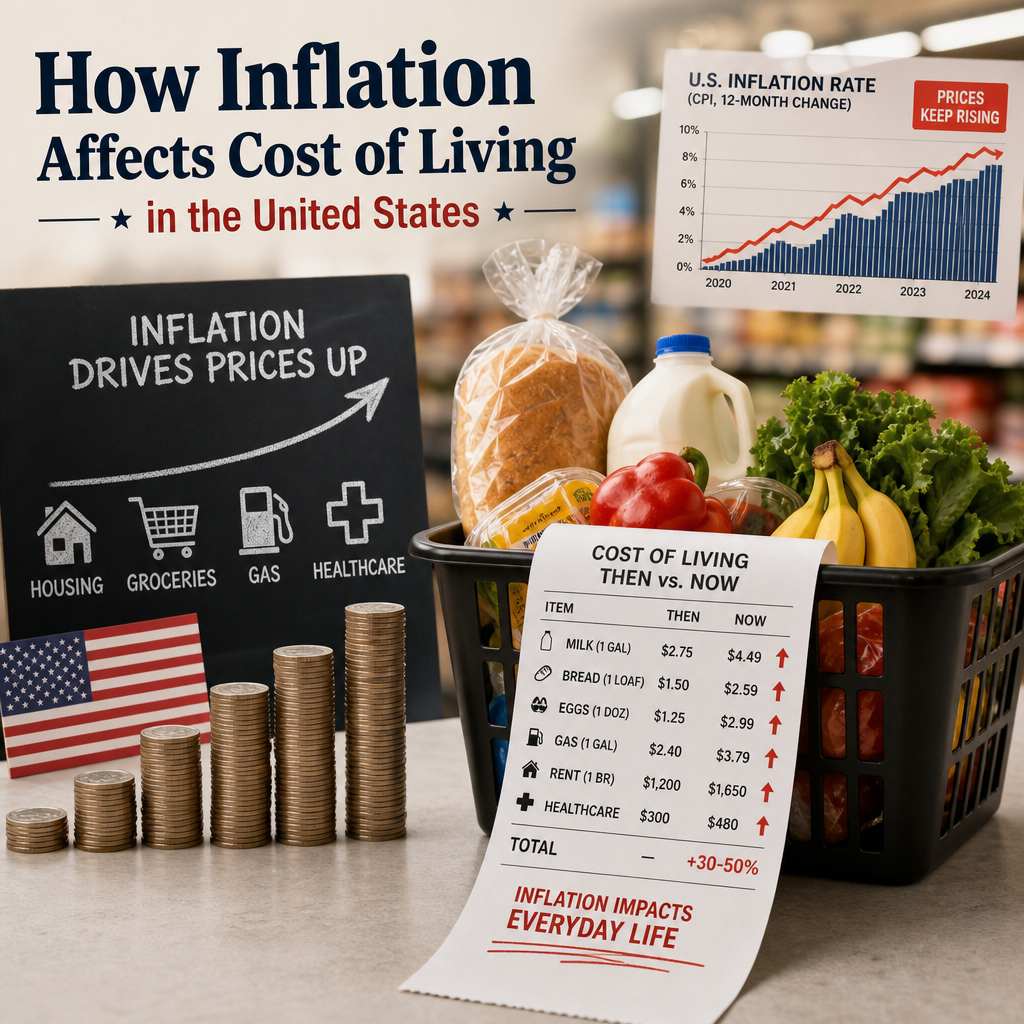
How Inflation Affects Cost of Living in the United States
Inflation can quietly raise the cost of living, making everyday essentials like housing, groceries, and transportation take a bigger bite out of your budget. In this article, you’ll learn how inflation affects your finances and practical ways to stay prepared without feeling overwhelmed.
By: Mary Mitchell on July 30, 2026
Inflation affects nearly every household in the United States, even when it doesn’t feel dramatic from month to month. One year, your grocery bill may look manageable; the next, the same items cost noticeably more. That’s why understanding how inflation affects the cost of living in the United States is so important. It helps you make smarter decisions about budgeting, saving, borrowing, and planning for the future.
Inflation is not just an economic headline. It shows up in rent increases, higher utility bills, rising insurance premiums, and even everyday purchases like coffee, gas, and school supplies. While you can’t control inflation itself, you can control how prepared you are for it. In this article, we’ll break down what inflation means, how it changes the cost of living, and practical ways to manage your finances in an inflationary environment.
What Inflation Means for Everyday Americans
Inflation is the general rise in prices over time. When inflation increases, each dollar buys a little less than it did before. That doesn’t mean every price rises at the same pace, but over time, families often notice a bigger squeeze on their monthly budgets.
For example, if rent rises faster than wages, housing becomes a larger share of your income. If food prices climb while your grocery budget stays the same, you may need to cut back elsewhere. That’s the real impact of inflation on the cost of living: your money may still be the same amount, but its purchasing power declines.
Why inflation happens
Inflation can be influenced by several factors:
Higher demand for goods and services
Supply chain disruptions
Rising labor costs
Increased energy prices
Changes in monetary policy
You don’t need to predict every cause to respond effectively. What matters most is understanding how rising prices affect your household and what actions you can take now.
How Inflation Affects the Cost of Living in the United States
The phrase how inflation affects the cost of living in the United States covers more than a single monthly bill. It touches nearly every part of household life. Some expenses rise quickly, while others grow more slowly, but the combined effect can be significant.
Housing costs
Housing is often the biggest monthly expense for American households, and inflation can make it even more challenging.
Rent may increase when leases renew.
Mortgage rates can rise when inflation pushes interest rates higher.
Property taxes and insurance may climb over time.
Maintenance and repairs can become more expensive due to higher material and labor costs.
For renters, even a modest increase can strain a budget. For homeowners, higher borrowing costs or insurance premiums can reduce flexibility in other parts of the household budget.
Food and grocery prices
Food is one of the most noticeable ways inflation shows up in daily life. Many families feel the effects first at the grocery store.
Common changes include:
Higher prices for meat, eggs, dairy, and produce
Increased costs for packaged and prepared foods
Greater restaurant prices for dining out
More expensive delivery and convenience charges
Because food is a recurring expense, even small price increases add up quickly over the course of a year.
Transportation costs
Inflation also affects transportation, especially when fuel prices rise.
Gasoline and diesel may cost more
Car insurance premiums can increase
Auto repairs and parts may be more expensive
Public transportation fares may rise in some areas
If you commute daily or drive a large family vehicle, transportation inflation can have a major impact on your budget.
Healthcare and insurance
Healthcare costs often rise faster than general inflation, making this category especially important.
You may see increases in:
Health insurance premiums
Deductibles and copays
Prescription drug costs
Dental and vision expenses
Out-of-pocket medical services
Because healthcare costs are often unavoidable, planning ahead is essential. A single unexpected bill can disrupt your finances if you are not prepared.
Utilities and household essentials
Energy and utility prices can also shift with inflation.
Electricity and natural gas bills may rise
Water and sewer fees may increase
Internet and cell phone plans may become more expensive
Household staples like cleaning products and paper goods can cost more
These may seem like small changes individually, but together they can noticeably increase your monthly expenses.
The Relationship Between Inflation and Wages
A key part of understanding inflation is comparing it to income growth. If your wages rise at the same pace as inflation, your purchasing power may stay relatively stable. But if prices rise faster than your income, your standard of living can feel tighter.
This is why some people feel like they are “making the same money but getting less out of it.” Even when a raise arrives, it may not fully offset the higher cost of living.
What that means for your budget
When wages lag behind inflation, households often:
Spend a larger share of income on necessities
Cut back on discretionary spending
Delay savings goals
Rely more on credit cards or loans
That pattern can create financial stress, especially if debt payments are already part of your monthly budget.
How to Tell Whether Inflation Is Affecting Your Household
You don’t need a degree in economics to spot inflation in your own life. The best indicator is your budget.
Ask yourself:
Are my essential expenses rising faster than my income?
Am I buying fewer groceries for the same amount of money?
Have I delayed repairs, savings, or travel because costs increased?
Am I using credit more often to cover basic expenses?
If the answer to several of these questions is yes, inflation is likely affecting your cost of living.
Track your spending patterns
A simple monthly review can reveal a lot. Compare spending in categories like:
Housing
Food
Transportation
Healthcare
Utilities
Debt payments
Savings
Look for categories that have grown significantly over the past 6 to 12 months. That gives you a clearer picture of where inflation is hitting hardest.
Practical Ways to Manage Your Finances During Inflation
You can’t avoid inflation completely, but you can build a stronger financial strategy around it. The goal is to protect your budget, preserve savings, and stay flexible.
1. Rebuild or strengthen your budget
A budget is your first defense against rising prices. If your old budget no longer works, update it.
Try this approach:
List your fixed expenses
Estimate variable expenses based on recent actual spending
Identify areas where prices have increased
Reallocate money toward necessities
Reduce spending in lower-priority categories
A realistic budget should reflect today’s costs, not last year’s assumptions.
2. Focus on high-impact spending categories
When prices rise, not every expense deserves equal attention. Concentrate on the biggest budget drivers first.
Look closely at:
Housing
Transportation
Groceries
Insurance
Debt payments
Small savings on subscriptions or takeout matter, but lowering a major monthly expense can make a bigger difference.
3. Build a more flexible grocery strategy
Food inflation can be tough, but there are practical ways to adapt.
Plan meals before shopping
Buy store brands when quality is comparable
Use coupons and loyalty programs wisely
Reduce food waste by cooking what you already have
Choose seasonal produce when possible
Compare unit prices, not just shelf prices
A more intentional grocery routine can reduce waste and help you stretch your food budget.
4. Protect yourself from high-interest debt
Inflation and debt can create a dangerous combination, especially if you rely on credit cards for everyday purchases. High-interest balances become harder to manage when prices are already squeezing your cash flow.
If possible:
Pay more than the minimum on credit cards
Avoid using credit for regular expenses unless necessary
Consider consolidating debt only if it lowers your total cost
Prioritize paying down high-interest balances first
Reducing debt can improve your monthly flexibility and lower long-term financial stress.
5. Keep an emergency fund
Inflation makes surprises more expensive. A car repair, medical bill, or temporary job loss can hit harder when everything costs more.
An emergency fund helps absorb those shocks. Even if you can only save a small amount each month, consistency matters.
Start with a simple goal:
Save a starter emergency fund
Add to it gradually
Keep it in a separate, accessible account
That buffer can prevent you from turning to debt when unexpected costs arise.
6. Review subscriptions and recurring charges
Recurring expenses quietly drain cash flow. During periods of inflation, it’s smart to revisit them.
Check for:
Streaming services
Gym memberships
App subscriptions
Delivery memberships
Automatic renewals
Bank fees
Cancel anything you don’t use regularly. Even modest monthly savings can free up money for essentials.
7. Compare insurance and service providers
Rising prices do not always mean you have to accept the first offer you see. Shop around for:
Auto insurance
Homeowners or renters insurance
Internet plans
Cell phone plans
Utility options where available
Comparing providers once a year can lead to meaningful savings, especially if your coverage needs have changed.
8. Adjust savings goals without abandoning them
Inflation may force you to slow down some goals, but it shouldn’t eliminate them. If you can’t save as much as before, reduce the target temporarily rather than stopping altogether.
For example:
Lower short-term vacation savings
Keep retirement contributions going if possible
Scale back nonessential goals while preserving essential ones
Use automatic transfers to stay consistent
The key is maintaining forward momentum, even if the pace changes.
Smart Long-Term Financial Habits in an Inflationary Economy
Long-term stability comes from habits, not quick fixes. If inflation remains a factor, a resilient financial plan matters more than ever.
Invest in your earning power
One of the best ways to fight inflation is to strengthen your income over time. That can include:
Building job skills
Pursuing certifications or training
Asking for a raise with strong evidence
Exploring side income aligned with your skills
Networking for better opportunities
Increasing income gives you more room to handle rising costs.
Keep your financial plan diversified
A balanced approach can help reduce risk:
Hold cash for short-term needs
Save for emergencies
Invest for long-term growth
Avoid overcommitting to fixed monthly obligations
Diversification is not just for investments. It also applies to income, spending, and savings strategy.
Revisit your financial plan regularly
Inflation changes the ground under your feet. Review your finances at least every few months so you can respond early instead of reacting late.
During your review, check:
Spending trends
Debt balances
Savings progress
Income changes
Upcoming expenses
That habit helps you stay proactive.
Common Mistakes to Avoid When Inflation Rises
When prices climb, some financial mistakes become more costly.
Avoid these pitfalls:
Ignoring small price increases that add up over time
Relying too heavily on credit cards
Keeping an outdated budget
Forgetting to review insurance and recurring subscriptions
Stopping savings entirely
Waiting too long to adjust spending habits
A small adjustment now can prevent a bigger financial problem later.
Frequently Asked Questions
1. What is the main effect of inflation on the cost of living?
The main effect of inflation is that everyday expenses become more expensive over time. Housing, groceries, transportation, healthcare, and utilities can all rise, which means your money does not stretch as far as it used to.
2. Why does inflation feel worse for some families than others?
Inflation affects households differently depending on where they spend the most money. Families with high housing, healthcare, or transportation costs may feel inflation more intensely than households with more flexible budgets or higher incomes.
3. Can inflation help people with fixed-rate debt?
In some cases, yes. If you have fixed-rate debt, the payment stays the same even if prices rise. However, that benefit can be offset if your income does not keep up with inflation or if you carry high-interest revolving debt like credit cards.
4. What is the best way to budget during inflation?
The best approach is to update your budget using current prices, not older estimates. Focus on essentials first, track actual spending, and look for the highest-impact categories where you can reduce costs without hurting your quality of life.
5. How can I protect my savings from inflation?
You can protect savings by keeping an emergency fund for short-term needs, avoiding unnecessary cash drag, and considering long-term investments that may outpace inflation over time. For many people, the best defense is a combination of disciplined saving, smart investing, and regular financial review.
Inflation is a normal part of the economy, but its impact on daily life can be very real. When prices rise faster than income, households feel pressure in the places that matter most: housing, food, transportation, healthcare, and basic household needs. Understanding how inflation affects the cost of living in the United States gives you a clearer view of why your budget may feel tighter and where to focus your attention.
The good news is that you are not powerless. By updating your budget, controlling high-impact expenses, reducing debt, strengthening savings, and reviewing your financial habits regularly, you can make inflation more manageable. You may not be able to stop prices from rising, but you can build a financial plan that adapts to change.
Start with one or two practical steps this month. Review your spending, compare recurring bills, and look for ways to protect your cash flow. Small adjustments can create real breathing room over time, helping you stay steady even when the cost of living continues to move upward.
Mary S, CFP®, is a Certified Financial Planner with over 12 years of experience in personal finance, retirement planning, and wealth management. She writes educational content that helps readers understand financial concepts and make informed decisions based on reliable information.