Understanding FAFSA: Complete Guide for First-Time Applicants
If you’re planning to pay for college, understanding FAFSA is one of the most important steps you can take. The Free Application for Federal Student Aid—better known as FAFSA—opens the door to federal grants, work-study opportunities, and student loans. For many students, it also helps determine eligibility for state and institutional aid.
The process can feel intimidating at first, especially if you’re applying for the first time. But once you understand what FAFSA is, who should complete it, and how to approach it step by step, it becomes much more manageable. This guide breaks it all down in plain English so you can file with confidence and avoid common mistakes.
What FAFSA Is and Why It Matters
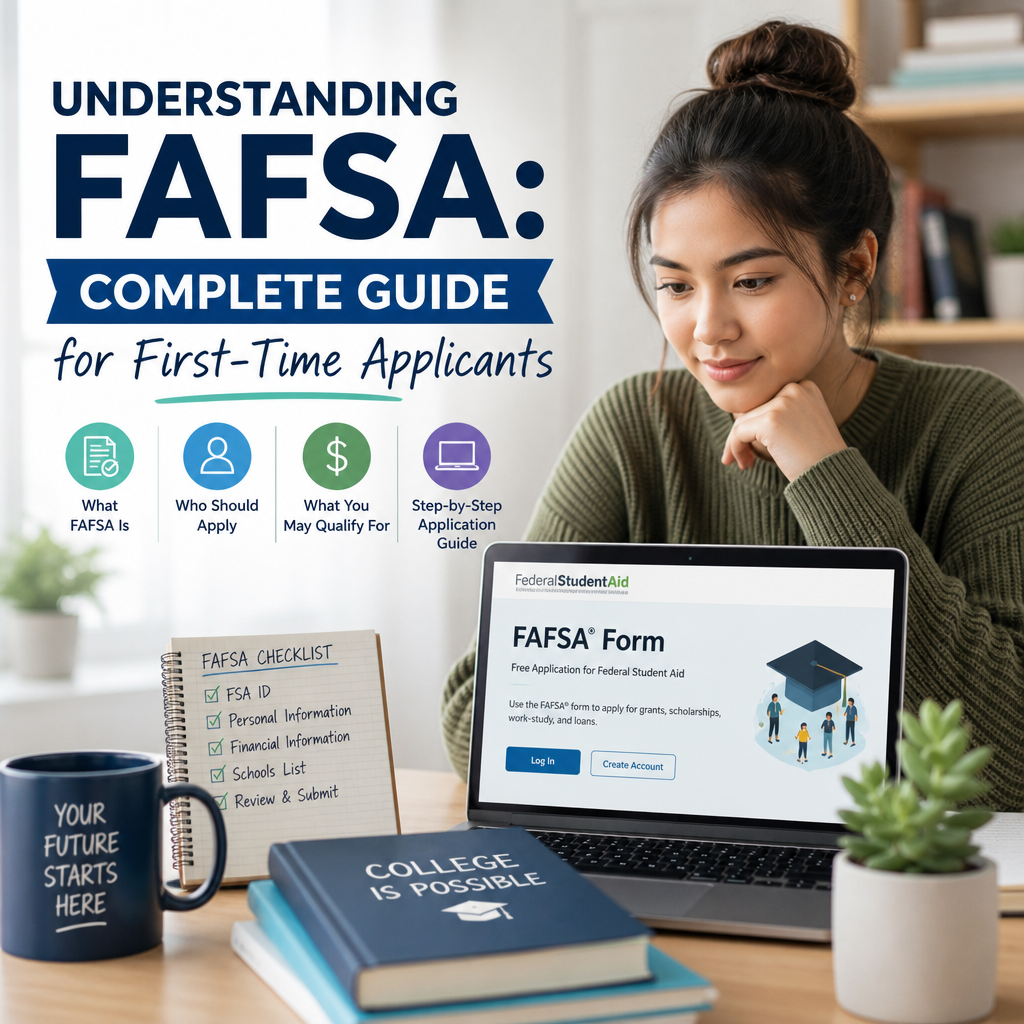
FAFSA is the application used by the U.S. Department of Education to determine your eligibility for federal student aid. Colleges, states, and many scholarship programs also use your FAFSA information to award additional financial assistance.
What you can access through FAFSA
Submitting FAFSA may help you qualify for:
- Federal Pell Grants
- Federal Supplemental Educational Opportunity Grants (FSEOG)
- Federal Work-Study
- Federal Direct Subsidized and Unsubsidized Loans
- Some state-based financial aid
- Institutional aid from colleges and universities
FAFSA does not guarantee aid, but it is the starting point for most need-based financial assistance. If you skip it, you could miss out on money that helps reduce the cost of college.
Who Should Complete FAFSA?
Many people assume FAFSA is only for students from low-income families. That’s not true. You should complete FAFSA if you want to be considered for any type of federal student aid, and often for state or school aid as well.
Students who should file
You should submit FAFSA if you are:
- A high school senior planning to attend college
- A current college student renewing aid
- A graduate or professional student
- A parent helping a dependent student apply
- An adult returning to school
- A student exploring trade schools or eligible certificate programs
Even if you think your family earns too much to qualify, it is still worth submitting. Some aid programs require FAFSA regardless of income, and many schools use it to award merit-based or need-based funding.
When to Submit FAFSA
Timing matters. FAFSA opens each year on a set date, and filing early can improve your chances of receiving certain aid, especially if your state or school has limited funding.
Key timing tips
- File as soon as the application opens
- Meet all state and college deadlines
- Renew every year you want aid
- Don’t wait until you are admitted to college
The FAFSA application uses tax information from an earlier “prior-prior” year, which means you usually don’t need to wait for your current taxes to be filed. This makes it easier to apply early and accurately.
What You Need Before You Start
A smooth FAFSA application begins with gathering your documents ahead of time. Having everything ready can save you from stopping midway through the process.
Information typically needed
For the student, you may need:
- Social Security number
- Date of birth
- Legal name exactly as it appears on official documents
- Driver’s license number, if applicable
- Federal tax information
- Records of untaxed income, if any
- List of schools you want to send FAFSA to
If you are considered a dependent student, you’ll also need parent information such as:
- Parent’s Social Security number
- Parent’s tax information
- Parent’s marital status
- Records of assets, if required
Create your FSA ID first
Before starting FAFSA, you and any required parent contributors should create an FSA ID at the official Federal Student Aid website. This serves as your electronic signature and lets you log in securely. If a parent has to contribute information, they need their own FSA ID.
How to Fill Out FAFSA Step by Step
The application is online and usually takes less time when you prepare in advance. Here’s a simple breakdown of the process.
1. Go to the official FAFSA website
Start only at the official federal site. Be cautious of websites that look similar but are not affiliated with the government.
2. Log in using your FSA ID
The student will begin the application, then invite parents or other contributors if needed. Everyone involved should enter their information carefully and use legal names that match official records.
3. Answer personal and school questions
FAFSA asks about:
- Your identity
- Your residency status
- Your marital status
- The schools you want to receive your information
You can list multiple schools, and they will each get your FAFSA data.
4. Enter financial information
FAFSA uses tax data and other financial details to estimate your expected contribution toward college costs. In many cases, the application can import tax information directly from the IRS, which reduces errors.
5. Review and sign the application
Double-check every section before submitting. Missing signatures or incorrect data can delay processing. Once everything is complete, submit the form online.
6. Save your confirmation
After submission, you’ll receive a confirmation page or email. Keep it for your records.
Understanding Dependency Status
One of the most confusing parts of FAFSA for first-time applicants is determining whether you are a dependent or independent student. This affects whose financial information must be reported.
Dependent vs. independent
Most undergraduate students are considered dependent unless they meet specific criteria. If you’re dependent, you must provide parent financial information.
You may be considered independent if you meet certain conditions, such as being:
- 24 or older
- Married
- A graduate or professional student
- A veteran or active-duty service member
- A parent or legal guardian of dependents
- An emancipated minor
- An unaccompanied homeless youth or at risk of homelessness
If you are unsure, answer the dependency questions carefully. The FAFSA form will guide you through the logic.
Common FAFSA Mistakes to Avoid
Small mistakes can slow down your application or cause incorrect aid estimates. First-time applicants should pay special attention to these common issues.
Mistakes that cause problems
- Using the wrong legal name
- Entering a Social Security number incorrectly
- Forgetting to create an FSA ID
- Leaving required questions blank
- Mixing up parent and student information
- Listing the wrong schools
- Missing state or college deadlines
- Forgetting to update FAFSA each year
How to reduce errors
A few simple habits make a big difference:
- Compare your FAFSA entries with official documents.
- Use exact spelling and formatting.
- Review the application before submitting.
- Keep copies of tax records and confirmations.
- Respond quickly if your school asks for verification.
What Happens After You Submit FAFSA?
Submitting FAFSA is only the first step. After that, your application goes through processing, and the information is sent to the colleges and institutions you listed.
Student Aid Report and next steps
You’ll receive a Student Aid Report (SAR), which summarizes the information you entered. Review it carefully for errors or warnings. If something looks incorrect, make corrections as soon as possible.
Verification may be required
Some applicants are selected for verification. This does not mean you did something wrong. It simply means the school needs additional documentation to confirm the information on your FAFSA.
If selected, respond quickly and provide the requested documents. Delays can affect your aid package.
Financial aid offers
Once colleges receive your FAFSA data, they may send financial aid offers. These packages can include grants, loans, scholarships, and work-study. Compare them carefully, not just by total dollar amount, but by how much is free aid versus money you have to repay.
FAFSA Tips for First-Time Applicants
A little preparation can make FAFSA much easier and less stressful.
Practical tips to make the process smoother
- Start early so you have time to fix mistakes
- Use the IRS data retrieval option if available
- Keep a folder for tax documents and school correspondence
- Ask your school counselor or financial aid office for help
- Renew FAFSA every year
- Apply even if you are unsure you’ll qualify
Example: A first-time applicant scenario
Suppose a high school senior is applying to four colleges. The student creates an FSA ID, gathers parent tax information, fills out FAFSA early, and lists all four schools. A few weeks later, the student receives a financial aid offer from each school. Because FAFSA was filed on time, the student is considered for both federal aid and school-based grants.
That simple step can make a meaningful difference in college affordability.
Frequently Asked Questions
1. Is FAFSA only for federal student loans?
No. FAFSA is used for more than loans. It also determines eligibility for federal grants, work-study, and many state and school-based financial aid programs. Even if you do not want to borrow money, you should still submit FAFSA to be considered for other aid.
2. Do I need to complete FAFSA every year?
Yes. FAFSA must be completed each academic year you want to receive financial aid. Your financial situation, school enrollment, and other factors can change, so schools need updated information to determine your eligibility.
3. What if my parents refuse to provide their information?
If you are a dependent student, parent information is usually required. If your parents refuse, contact your school’s financial aid office. In some cases, they may explain whether you qualify for limited unsubsidized loan eligibility or how to handle unusual family situations.
4. Can undocumented students complete FAFSA?
In most cases, students without eligible immigration status are not eligible for federal student aid, but rules can vary by state and school. Some students may still qualify for state aid or institutional aid. Check with your school’s financial aid office and official state resources for guidance.
5. What should I do if I make a mistake after submitting FAFSA?
Log in to your FAFSA account and make a correction as soon as possible. Fixing errors quickly helps prevent delays in processing and reduces the chance of incorrect aid estimates. If the mistake affects verification or school deadlines, contact the financial aid office right away.
Official Resources
- Federal Student Aid: FAFSA Overview
- Federal Student Aid: FSA ID
- IRS: FAFSA and Tax Information
- College Board: Paying for College
- National Association of Student Financial Aid Administrators
Conclusion
Understanding FAFSA is one of the smartest first steps you can take when preparing for college. It may seem like just another form, but it can open the door to grants, work-study, and low-interest federal loans that make higher education more affordable. The key is to start early, gather your documents, create your FSA ID, and complete the application accurately.
First-time applicants often worry about making mistakes, but FAFSA is designed to guide you through the process. If you take it one section at a time, review your answers carefully, and follow up on any requests from your school, you’ll be in a much stronger position to receive aid. Even if you are unsure whether you qualify, submitting FAFSA is still worth the effort because many colleges and programs use it to determine eligibility for financial support.
The sooner you apply, the better prepared you’ll be to compare aid offers and plan for college costs with confidence.