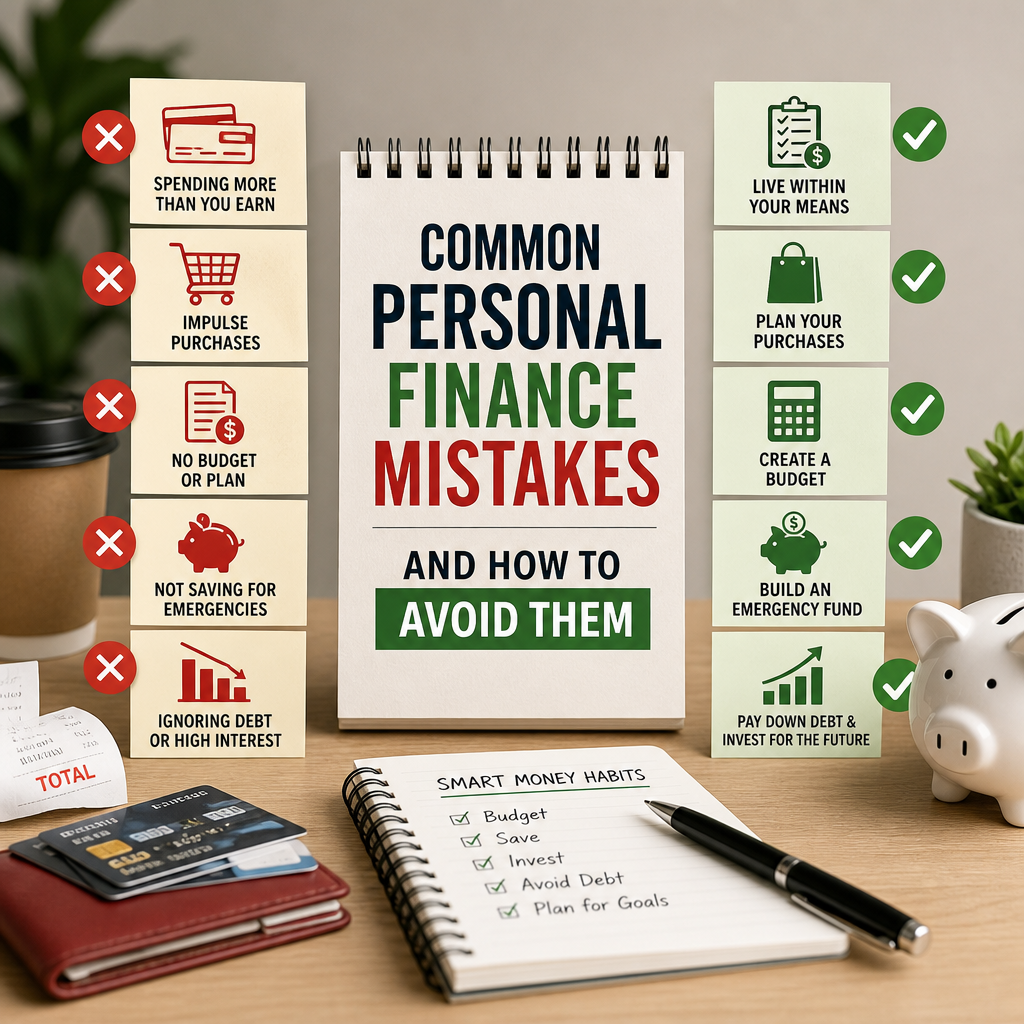
Common Personal Finance Mistakes and How to Avoid Them
Personal finance mistakes can sneak up on anyone, but they’re much easier to fix once you know what to look for. With a few simple habits, you can take control of your money, avoid common traps, and build a stronger financial future.
By: Mary Mitchell on July 30, 2026
Personal finance mistakes happen to almost everyone at some point. Maybe you overspend when you’re stressed, ignore your savings goals, or put off dealing with debt because it feels overwhelming. The good news is that most money missteps are fixable once you identify them.
Understanding the most common personal finance mistakes can help you protect your cash flow, reduce financial stress, and make better long-term decisions. Whether you’re just starting out or trying to get back on track, a few smart habits can make a major difference.
Why Personal Finance Mistakes Happen
Financial mistakes usually aren’t about a lack of intelligence. They often come from habits, emotions, and poor planning. Many people were never taught how to budget, save, invest, or manage debt effectively. Others know what to do but struggle with consistency.
Some of the most common reasons people make money mistakes include:
Living without a clear budget
Spending reactively instead of intentionally
Using credit to cover everyday expenses
Ignoring savings until “later”
Not planning for emergencies or irregular bills
Delaying decisions about debt or investing
The key is not to aim for perfection. It’s to notice weak spots early and replace them with better systems.
Common Personal Finance Mistakes and How to Avoid Them
1. Not Having a Budget
One of the biggest personal finance mistakes is spending without a plan. If you don’t know where your money goes each month, it’s easy to overspend in small ways and end up short when important bills arrive.
A budget gives your money direction. It helps you understand what you need, what you can save, and where you may be leaking cash.
How to avoid it:
Track your income and expenses for one full month
Group spending into categories such as housing, food, transportation, debt, and savings
Choose a budgeting method that fits your style
Review your budget weekly, not just once a month
A simple example: if you notice you’re spending more on takeout than expected, you can set a weekly dining-out limit before it affects your grocery budget or savings goals.
2. Spending More Than You Earn
This mistake often starts small. A few subscriptions, frequent deliveries, or impulse buys can gradually push your monthly spending above your income. Once that happens, people often rely on credit cards or loans to fill the gap.
Spending more than you earn creates long-term stress because it prevents saving and increases debt.
How to avoid it:
Compare your monthly spending to your take-home pay
Cut back on nonessential purchases
Delay impulse buys with a 24-hour waiting rule
Cancel unused subscriptions and recurring charges
If your income is tight, focus on the biggest categories first. Lowering rent, transportation, or food costs usually has more impact than trying to save a few dollars here and there.
3. Not Building an Emergency Fund
Unexpected expenses are not unusual—they’re part of life. Car repairs, medical bills, home maintenance, and job changes can all disrupt your finances. Without an emergency fund, even a modest expense can trigger debt.
An emergency fund acts as a financial cushion. It gives you options and reduces panic when life gets expensive.
How to avoid it:
Start with a small goal, such as $500 or $1,000
Set up automatic transfers to savings
Keep the money in a separate account that’s easy to access
Rebuild the fund after you use it
You do not need to save everything at once. Consistency matters more than speed. Even small deposits add up over time.
4. Relying Too Much on Credit Cards
Credit cards can be useful when used responsibly, but they become dangerous when they fund everyday living expenses or lifestyle inflation. High-interest debt can grow quickly and make it harder to keep up with monthly obligations.
A common personal finance mistake is treating available credit like extra income. It isn’t. It’s borrowed money that needs to be repaid, often with interest.
How to avoid it:
Use credit cards only for planned purchases you can pay off in full
Keep utilization low
Review statements every month for errors or unnecessary spending
Pay attention to interest rates and due dates
If you already carry balances, prioritize paying down the most expensive debt first or use a payoff strategy like the debt avalanche or debt snowball method.
5. Ignoring Retirement Savings
Many people delay retirement contributions because it feels too far away or because immediate expenses seem more urgent. Unfortunately, waiting too long can make it harder to build enough savings later.
Retirement investing works best when time is on your side. Even modest contributions can grow over the years, especially if you take advantage of employer matching when available.
How to avoid it:
Contribute to a retirement account as early as possible
Increase contributions when you get a raise
Capture any employer match
Treat retirement savings like a fixed monthly expense
If you’re unsure where to begin, start with a small percentage of your paycheck and increase it gradually. The habit matters more than the starting number.
6. Failing to Set Financial Goals
Without goals, money tends to disappear into short-term spending. You may know you want to “save more” or “get out of debt,” but vague intentions usually don’t lead to action.
Specific financial goals give your money a purpose. They also make it easier to stay motivated.
How to avoid it:
Use goals that are clear and measurable, such as:
Save $1,500 for emergencies in six months
Pay off one credit card by the end of the year
Contribute 10% of each paycheck to retirement
Save for a vacation without using credit
When your goals are concrete, you can build a plan around them and track progress along the way.
7. Not Watching Small Expenses
Small purchases are easy to overlook, but they can quietly drain your budget. Coffee runs, app subscriptions, late fees, convenience fees, and extra delivery charges may not seem serious individually. Together, they can become a major leak.
This is one of the more subtle personal finance mistakes because it feels harmless in the moment.
How to avoid it:
Review bank and card statements regularly
Identify recurring charges you no longer use
Set spending limits for discretionary categories
Ask yourself whether each purchase supports your priorities
A practical example: if you subscribe to three streaming services but only use one regularly, cancel the others and redirect that money to debt or savings.
8. Waiting Too Long to Start Investing
Some people avoid investing because they think they need a lot of money, perfect timing, or advanced knowledge. That hesitation can cost them valuable time.
Investing is not about picking perfect winners. It’s about building long-term wealth with a diversified, patient approach. The earlier you start, the more time your money has to grow.
How to avoid it:
Begin with simple, diversified investment options
Learn the basics of risk, fees, and asset allocation
Invest regularly instead of trying to time the market
Focus on long-term goals rather than short-term market noise
If investing feels intimidating, start by learning one concept at a time. Understanding index funds, employer-sponsored plans, and diversification can make the process much less stressful.
9. Not Understanding Debt Terms
Many people focus only on the monthly payment and overlook the full cost of borrowing. That’s a mistake. Interest rate, repayment term, fees, and late penalties all affect how expensive debt becomes.
When you don’t understand your debt terms, it’s easier to make choices that keep you stuck longer.
How to avoid it:
Read loan agreements carefully
Compare interest rates and repayment terms
Know whether your rate is fixed or variable
Watch for deferred interest, late fees, and prepayment rules
A lower monthly payment may look attractive, but it can sometimes mean a longer repayment period and more interest overall. Always look at the full picture.
10. Avoiding Financial Check-Ins
Many people only look at their money when there’s a problem. By then, the damage may already be done. Regular check-ins help you spot issues early, adjust your plan, and stay aligned with your goals.
Avoidance is one of the most expensive financial habits because small problems tend to grow.
How to avoid it:
Schedule a weekly or monthly money review
Check account balances and transactions
Compare actual spending to your budget
Update goals as your life changes
A short 20-minute review each week can prevent overdrafts, missed payments, and overspending. It also helps you feel more in control.
Practical Habits That Improve Personal Finance Fast
Avoiding personal finance mistakes becomes easier when you build simple systems. You don’t need a complicated setup to make progress.
Use Automatic Transfers
Automating savings and bill payments reduces the chance of forgetting something important. It also removes some of the mental effort from money management.
Keep Fixed and Variable Expenses Separate
When you know your fixed costs versus your flexible spending, it becomes easier to see where adjustments are possible.
Create Sinking Funds
A sinking fund is money set aside for planned but irregular expenses, like holidays, car repairs, insurance premiums, or annual memberships. This keeps those expenses from derailing your budget.
Keep Financial Decisions Simple
Too many choices can lead to procrastination. Use straightforward rules for spending, saving, and debt repayment so you can act consistently.
Review Progress Quarterly
Every few months, look at your income, savings, debt, and goals. Celebrate what’s working and adjust what isn’t.
A Simple Framework for Better Money Decisions
If you want a practical way to avoid common personal finance mistakes, use this framework:
Know your numbers — income, bills, debt, and savings
Set priorities — what matters most right now
Automate good habits — savings, bills, and investing
Reduce friction — make bad habits harder to repeat
Review regularly — catch issues before they grow
This approach works because it focuses on behavior, not just information. Most people already know they should save more or spend less. The real challenge is building a system that makes better choices easier.
Frequently Asked Questions
What is the most common personal finance mistake?
One of the most common personal finance mistakes is spending without a budget. When you don’t have a clear plan for your money, it becomes easy to overspend, miss savings goals, and rely on credit to cover gaps.
How can I stop living paycheck to paycheck?
Start by tracking spending, cutting unnecessary costs, and creating a basic budget. Then build a small emergency fund and automate savings, even if you can only start with a small amount. Increasing income can also help if your essential expenses are too high.
Is it better to save money or pay off debt first?
It depends on your situation. Many people benefit from doing both at the same time: building a small emergency fund while making extra debt payments. If you have very high-interest debt, paying it down aggressively can save money over time.
How much should I keep in an emergency fund?
A common starting point is $500 to $1,000 for smaller emergencies. Over time, many people aim for three to six months of essential expenses, depending on job stability, dependents, and overall financial circumstances.
When should I start investing?
As soon as you can. If you have access to a retirement plan with an employer match, that’s often a smart place to begin. Even small, regular contributions can be valuable because investing rewards consistency and long-term thinking.
Personal finance mistakes are common, but they don’t have to define your financial future. Most money problems become easier to manage once you bring clarity to your spending, build an emergency fund, understand your debt, and start saving consistently. The biggest shift is often not a dramatic one—it’s the decision to pay attention, make a plan, and follow through.
If you’ve made a few of these mistakes, you’re not behind. You’re in a normal place, and you can improve from here. Start with one change that feels manageable, like tracking expenses, automating savings, or reviewing your subscriptions. Then build from there. Small, steady actions create momentum, and momentum creates financial confidence.
The more intentional you are with your money, the more control you gain over your choices, your stress, and your future. Better financial habits don’t happen overnight, but they do happen one decision at a time.
Mary S, CFP®, is a Certified Financial Planner with over 12 years of experience in personal finance, retirement planning, and wealth management. She writes educational content that helps readers understand financial concepts and make informed decisions based on reliable information.