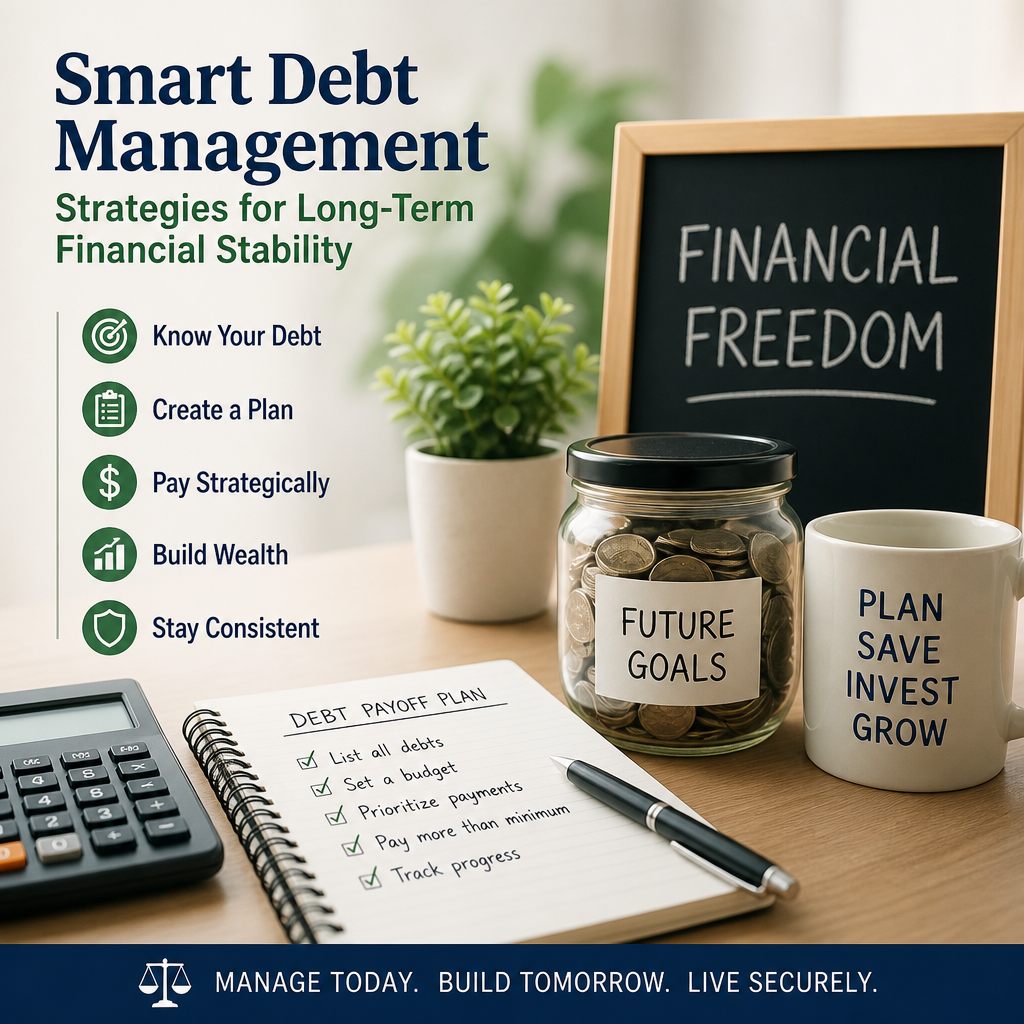
Smart Debt Management Strategies for Long-Term Financial Stability
Smart debt management strategies can help you turn debt from a source of stress into a tool for building long-term financial stability. By understanding what you owe and creating a clear repayment plan, you can reduce costs, protect your credit, and make room for future goals.
By: Mary Mitchell on July 30, 2026
Debt is not always a financial disaster. Used wisely, it can help you buy a home, fund education, or smooth out cash flow during temporary setbacks. The real challenge is learning how to manage debt without letting it control your future. That is where smart debt management strategies for long-term financial stability make a difference.
When you understand how debt works, how much you can realistically carry, and how to prioritize repayment, you create room for savings, investment, and peace of mind. Instead of treating debt as an emergency you hope will disappear, you build a plan that supports lasting financial health.
Why Smart Debt Management Matters
Good debt management is about more than making minimum payments on time. It’s about protecting your income, reducing interest costs, and making sure debt fits into a broader financial plan.
Without a clear strategy, even manageable debt can become a burden. High interest rates, late fees, and missed payments can snowball quickly. Over time, that can affect your credit score, limit borrowing options, and increase stress.
Smart debt management helps you:
Keep monthly payments under control
Reduce total interest paid over time
Protect your credit profile
Free up money for savings and emergencies
Build confidence in your financial decisions
If long-term financial stability is the goal, debt needs to be handled intentionally, not reactively.
Start With a Full Debt Inventory
Before you can create a plan, you need a complete picture of what you owe. Many people know they have debt, but they do not have a clear breakdown of balances, rates, or due dates. That makes it hard to prioritize.
List Every Debt You Owe
Write down each account, including:
Credit cards
Auto loans
Student loans
Personal loans
Mortgage
Buy now, pay later balances
Medical debt
Family loans, if applicable
For each one, note:
Current balance
Interest rate
Minimum monthly payment
Due date
Remaining term
Whether the rate is fixed or variable
This simple exercise often reveals opportunities. For example, you may discover that one credit card charges far more interest than the others or that a small loan can be paid off quickly to free up cash flow.
Separate Good Debt From Costly Debt
Not all debt carries the same financial impact. A mortgage or student loan may support long-term goals, while high-interest revolving debt can drain your budget fast.
Ask yourself:
Does this debt help me build long-term value?
Is the interest rate reasonable?
Can I pay it off on a predictable timeline?
Is it helping or hurting my financial flexibility?
This perspective helps you focus on the debts that create the most strain.
Build a Debt Repayment Strategy That Fits Your Life
There is no single best debt repayment method for everyone. The right approach depends on your income, cash flow, interest rates, and motivation style. The key is choosing a system you can follow consistently.
Smart Debt Management Strategies for Long-Term Financial Stability
1. Use the Debt Avalanche Method
The debt avalanche method focuses on paying off the debt with the highest interest rate first while making minimum payments on the rest.
This approach is powerful because it reduces the amount of interest you pay overall. It is especially effective if you want a mathematically efficient strategy.
Example:
If you have a credit card at 24%, a personal loan at 12%, and a car loan at 6%, you would direct extra payments toward the credit card first.
Why it works:
Lowers interest costs faster
Shortens repayment time
Improves long-term affordability
2. Try the Debt Snowball Method
The debt snowball method prioritizes the smallest balance first, regardless of interest rate. Once that debt is eliminated, you roll the payment into the next one.
This method can be highly motivating. Seeing quick wins helps some people stay committed.
Why it works:
Creates momentum
Offers visible progress
Encourages consistency
Example:
If you owe $500 on one card, $2,000 on another, and $8,000 on a personal loan, you pay off the $500 balance first. Then you move to the next smallest balance.
The snowball method may cost more in interest than the avalanche method, but it can be the better choice if motivation is your biggest challenge.
3. Refinance or Consolidate Carefully
Debt refinancing or consolidation can simplify repayment and potentially lower your interest rate. But it is not automatically beneficial.
Refinancing may make sense when:
You qualify for a meaningfully lower rate
Your credit has improved
You want to reduce monthly payments
You need to replace multiple payments with one
Be cautious with:
Extended repayment terms that increase total interest
Fees that offset the savings
Variable rates that could rise later
Consolidating secured debt into unsecured debt without a clear plan
Before refinancing, compare the total cost over the life of the loan, not just the monthly payment.
4. Negotiate Better Terms When Possible
Many people never ask creditors for better terms, but it can be worth doing. Credit card companies, lenders, and servicers sometimes offer hardship programs, lower interest rates, or temporary payment relief.
You can ask for:
A lower APR
A temporary payment reduction
Waived late fees
A modified repayment plan
A due date change to match your pay cycle
Be polite, clear, and prepared. Explain your situation honestly and ask what options are available. Even a small reduction in interest can make a meaningful difference over time.
Protect Your Budget While Paying Down Debt
Aggressive debt repayment only works if your basic budget remains stable. If you drain every spare dollar and leave nothing for emergencies, you risk going back into debt the moment something unexpected happens.
Create a Realistic Monthly Plan
Start with your after-tax income and cover essentials first:
Housing
Utilities
Groceries
Transportation
Insurance
Minimum debt payments
Then assign the remaining amount to extra debt repayment, savings, and nonessential spending.
A sustainable plan should still allow for:
Emergency savings
Occasional discretionary spending
Small lifestyle adjustments you can maintain
If your budget feels impossible, it probably is. A plan you can repeat for months or years beats an extreme strategy that collapses in two weeks.
Build a Small Emergency Fund
One of the smartest debt management moves is to avoid needing new debt in a crisis. Even a modest emergency fund can help cover car repairs, medical copays, or temporary income loss.
You do not need a perfect safety net right away. Start with a manageable goal, such as:
$500
$1,000
One month of essential expenses
That cushion can keep a surprise from becoming a new financial setback.
Improve Cash Flow to Accelerate Debt Reduction
If you want faster progress, focus on both sides of the equation: spending less and earning more.
Cut Recurring Costs
Recurring expenses can quietly drain your budget. Review subscriptions, memberships, and services you no longer use.
Look at:
Streaming services
App subscriptions
Gym memberships
Cable or internet bundles
Insurance premiums
Bank fees
Even small savings matter when they are redirected toward debt payments every month.
Increase Income Strategically
A side income or temporary boost can accelerate repayment without forcing major sacrifices. Consider:
Freelance work
Weekend shifts
Selling unused items
Seasonal work
Asking for a raise if your performance supports it
The goal is not to work endlessly. It is to create focused bursts of extra cash that help reduce principal faster.
Maintain Strong Credit Habits
Your credit profile matters because it affects borrowing costs, housing applications, and sometimes even insurance rates. Smart debt management should support your credit, not damage it.
Pay on Time
Payment history is one of the most important factors in credit scoring. Set up reminders or automatic payments for at least the minimum due.
Keep Credit Utilization in Check
For revolving accounts like credit cards, high balances relative to limits can hurt your credit and make debt harder to manage. Lower balances generally support healthier utilization.
Avoid Opening Unnecessary Accounts
New accounts can create complexity and tempt overspending. Only apply for new credit when it serves a real purpose.
Monitor Your Reports
Check your credit reports regularly for errors, outdated balances, or signs of identity theft. If something looks incorrect, dispute it promptly through the proper channels.
Know When to Seek Professional Help
Sometimes debt becomes too complicated to handle alone. That does not mean you failed. It means you may need a more structured solution.
Consider professional help if you are:
Missing payments consistently
Using new debt to cover old debt
Receiving collection calls
Facing wage garnishment, repossession, or foreclosure
Overwhelmed by multiple high-interest balances
Types of Help to Explore
Nonprofit credit counseling: Can help you review your budget and create a debt management plan
Certified financial planners: Useful for integrating debt decisions into a broader financial strategy
Bankruptcy attorneys: Important if debt is unmanageable and legal protection may be necessary
Choose reputable professionals and understand any fees before committing.
Think Long Term, Not Just Month to Month
The best debt strategy is one that supports your financial future, not just today’s budget. Long-term stability comes from balancing repayment with saving, planning, and discipline.
That means:
Paying debt down steadily
Avoiding unnecessary borrowing
Keeping an emergency fund
Saving for retirement even while repaying debt when possible
Making decisions based on total financial impact, not just short-term relief
A person who eliminates debt but has no savings may still be vulnerable. A person who saves nothing because every dollar goes toward debt may also struggle. Long-term stability requires balance.
Practical Example: Turning a Stressful Debt Situation Into a Plan
Imagine someone with the following debts:
Credit card A: $4,000 at 22%
Credit card B: $1,200 at 19%
Auto loan: $9,000 at 6%
Student loan: $15,000 at 4.5%
A smart debt management approach might look like this:
Pay minimums on all accounts
Put extra money toward Credit Card A using the avalanche method
Build a small emergency fund at the same time
Once Credit Card A is paid off, move to Credit Card B
Reevaluate whether refinancing the auto loan makes sense
Keep student loan payments current while focusing on higher-interest debt
This plan reduces interest costs and gradually improves cash flow without destabilizing the household budget.
Frequently Asked Questions
What is the best debt repayment strategy for long-term financial stability?
The best strategy depends on your goals and personality. The debt avalanche method is usually best for minimizing interest, while the debt snowball method can help you stay motivated. The most effective strategy is the one you can follow consistently without missing payments or creating new debt.
Should I pay off debt or save money first?
In many cases, you should do both. Start by building a small emergency fund so unexpected expenses do not force you deeper into debt. Then focus extra money on high-interest debt while continuing modest savings when possible. This balanced approach supports long-term financial stability.
Is debt consolidation a good idea?
Debt consolidation can be helpful if it lowers your interest rate, simplifies payments, and fits your budget. However, it is not always the best choice. Review fees, repayment terms, and the total cost over time before deciding. Avoid consolidation if it only gives you temporary relief without solving the underlying spending problem.
How can I reduce credit card debt faster?
Pay more than the minimum whenever possible, target the highest-interest card first, and look for ways to increase cash flow. You can also ask your card issuer for a lower APR or use a balance transfer carefully if the terms are favorable. The key is to stop new charges from undoing your progress.
When should I get professional help with debt?
If you are missing payments, using one debt to cover another, or feeling overwhelmed by collections, it may be time to talk with a nonprofit credit counselor or financial professional. Professional guidance can help you explore repayment plans, negotiate with creditors, or determine whether more serious options are necessary.
Debt does not have to derail your financial future. With a thoughtful plan, you can reduce balances, lower interest costs, and build the stability needed to move forward with confidence. The most effective approach starts with understanding exactly what you owe, then choosing a repayment method that fits your income, habits, and goals.
Smart debt management strategies for long-term financial stability are not about perfect timing or dramatic sacrifice. They are about consistency, clarity, and making decisions that strengthen your finances over time. Whether you use the avalanche method, the snowball method, consolidation, or a combination of strategies, the goal is the same: create breathing room in your budget and protect your future.
Take the next step by reviewing your debts, setting a realistic repayment plan, and building a small emergency cushion if you do not already have one. Every payment made with purpose brings you closer to lasting financial control, less stress, and a stronger foundation for the years ahead.
Mary S, CFP®, is a Certified Financial Planner with over 12 years of experience in personal finance, retirement planning, and wealth management. She writes educational content that helps readers understand financial concepts and make informed decisions based on reliable information.