Housing Assistance Programs for Low-Income Families Explained
Housing assistance programs can help low-income families reduce rent, find stable housing, and avoid the stress of falling behind. In this guide, we’ll explore the most common housing assistance programs, who qualifies, and how to apply for support.
By: Emily Adams on July 30, 2026
Finding safe, affordable housing can feel overwhelming when rent keeps rising and paychecks do not stretch far enough. For many households, housing assistance programs available for low-income families can make the difference between unstable housing and a secure place to live. These programs help reduce monthly housing costs, support access to rental homes, and open the door to long-term stability.
Whether you are looking for help with rent, public housing, voucher programs, or emergency support, it helps to understand how these resources work and where to apply. In this guide, we will break down the most common housing assistance options, who may qualify, and how families can get started.
What Are Housing Assistance Programs?
Housing assistance programs are government-funded or nonprofit-supported resources designed to help people afford safe housing. They may lower monthly rent, provide temporary shelter, support home repairs, or help families avoid eviction.
For low-income households, these programs are often essential. They can support:
Families struggling with high rent
Seniors living on fixed incomes
People with disabilities
Single parents and working households
Families experiencing homelessness or housing instability
Because each program has different rules, it is important to compare options and apply to the ones that fit your situation.
Main Housing Assistance Programs Available for Low-Income Families
There are several major housing assistance programs available for low-income families in the United States. Some are run by the federal government, while others are administered by local housing authorities or nonprofit organizations.
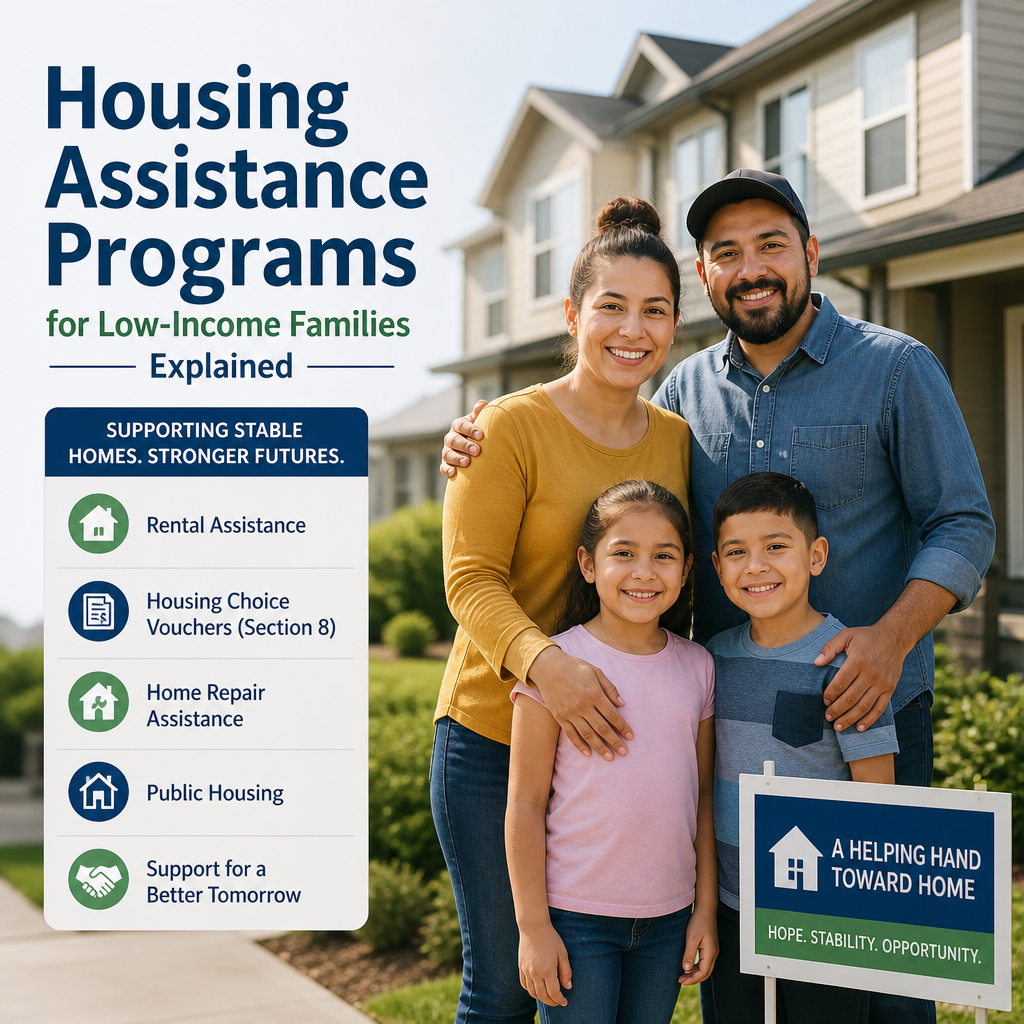
1. Housing Choice Voucher Program (Section 8)
The Housing Choice Voucher Program, often called Section 8, is one of the best-known rental assistance programs. It helps eligible families pay part of their rent in private housing.
Under this program:
The family finds a rental home that meets program standards
A local Public Housing Agency (PHA) reviews eligibility
The voucher covers a portion of the rent
The family typically pays the remaining amount based on income
This program offers flexibility because families can choose from many privately owned rental units, as long as the landlord accepts vouchers and the home passes inspection.
2. Public Housing
Public housing is owned and managed by local housing authorities. It provides affordable rental units for eligible low-income individuals and families.
Public housing may be a good fit for households that want:
Lower rent based on income
Access to housing managed by a public agency
A stable long-term rental option
Availability varies by area, and waiting lists can be long. Still, it remains one of the most important housing assistance programs available for low-income families.
3. Project-Based Rental Assistance
Project-Based Rental Assistance helps reduce rent in specific apartment buildings or housing communities. Unlike a voucher that moves with the tenant, this assistance is tied to the property itself.
This type of program can be helpful for families who want:
Predictable affordability
Access to well-maintained housing communities
On-site services in some cases
Eligibility usually depends on income and household size.
4. Emergency Housing Assistance
Emergency housing assistance is designed for families facing an immediate crisis. This may include:
Help with overdue rent
Utility payment support
Temporary shelter
Short-term motel or transitional housing
Eviction prevention services
Local governments, churches, community groups, and nonprofits often run these programs. They are especially helpful when a family is at risk of losing housing and needs fast support.
5. Low-Income Home Energy Assistance and Utility Support
While not a housing program in the strictest sense, utility support can make housing more affordable. Programs like LIHEAP help eligible households with heating and cooling bills.
Utility assistance may:
Reduce monthly household costs
Prevent shutoffs
Free up money for rent or groceries
For families on tight budgets, these savings can be critical.
6. Section 202 Supportive Housing for the Elderly
This program helps older adults with very low incomes access affordable housing. It often includes supportive services such as transportation help, housekeeping, or meal support.
Although it is designed for seniors, it is worth knowing about if your household includes elderly family members needing stable, affordable housing.
7. Section 811 Supportive Housing for People with Disabilities
Section 811 provides housing support for people with disabilities who have very low incomes. It can help them live independently in the community with appropriate services.
For households caring for a disabled family member, this may be a valuable long-term option.
Who Qualifies for Housing Assistance?
Eligibility rules vary by program, location, and household situation, but most programs focus on income limits. Families usually qualify if their income falls below a certain percentage of the area median income.
Common factors reviewed include:
Household income
Family size
Citizenship or eligible immigration status, depending on the program
Rental history
Background checks in some cases
Disability or age status for certain programs
Some programs prioritize households experiencing homelessness, disability, domestic violence, or severe rent burden. Since rules differ, it is important to check the specific requirements for each program.
Income Limits and Household Size
In many cases, larger families may qualify with a higher total income than smaller households because more people are supported in the home. Housing agencies typically use local income guidelines, so a family may qualify in one county but not another.
Documents You May Need
When applying, families often need:
Government-issued identification
Social Security numbers for household members, if required
Proof of income
Tax returns or pay stubs
Utility bills
Proof of current address
Lease agreements or eviction notices, if applying for crisis assistance
Having these documents ready can speed up the process.
How to Apply for Housing Assistance
Applying for housing assistance can take time, but being organized makes the process easier. Here are practical steps to follow.
1. Find the Right Program
Start by deciding what kind of help you need:
Ongoing rental assistance
Public housing
Emergency rent help
Support with utility bills
Temporary shelter
If your need is immediate, focus on crisis assistance first. If you are seeking long-term affordability, apply for programs like Section 8 or public housing.
2. Contact Your Local Housing Authority
Public Housing Agencies handle many of the main housing assistance programs available for low-income families. Your local PHA can tell you:
Which programs are open
Whether there is a waiting list
What documents are needed
How to apply online or in person
Many housing authorities also post updates on their websites.
3. Apply Early
Waiting lists for housing help are often long. If a waiting list opens, apply as soon as possible. Some programs close applications quickly when demand is high.
4. Follow Up on Your Application
After applying, keep records of:
Confirmation numbers
Dates submitted
Names of staff members you spoke with
Requests for additional documents
If your contact information changes, update the agency right away so you do not miss important notices.
5. Watch for Scams
Unfortunately, some people try to take advantage of families looking for help. Be careful if anyone:
Asks for large upfront fees
Promises guaranteed approval
Claims to “move you to the front of the list” for money
Uses unofficial websites that look suspicious
Legitimate housing programs do not usually require payment to apply.
Other Support Options That Can Help Families Stay Housed
Sometimes the best solution combines several forms of support. In addition to housing assistance programs, families may also benefit from:
Rental counseling: Helps tenants understand leases, rights, and budgeting
Legal aid: Can assist with eviction defense or tenant disputes
Food assistance: Frees up money for rent and utilities
Child care assistance: Makes it easier for parents to work or attend training
These supports may not directly lower rent, but they can improve overall housing stability.
Tips for Improving Your Chances
While approval is never guaranteed, a few simple steps can help:
Apply to multiple programs
Do not rely on one option alone.
Keep your paperwork organized
Missing documents can delay your application.
Respond quickly to requests
Agencies often have deadlines for follow-up materials.
Update your information
Notify agencies if you move, change phone numbers, or experience changes in income.
Ask about local resources
Community action agencies, nonprofits, and faith-based groups may know about smaller assistance programs.
Why Housing Assistance Matters for Low-Income Families
Stable housing affects nearly every part of family life. When families are not worried about eviction or unsafe conditions, they can focus more on work, school, health, and long-term planning.
Access to housing assistance programs available for low-income families can:
Reduce financial stress
Prevent homelessness
Improve school stability for children
Support better health outcomes
Help adults stay employed or pursue training
Housing support is not just about paying rent. It is about creating a foundation for stability and opportunity.
Frequently Asked Questions
1. What is the easiest housing assistance program to apply for?
It depends on your location and your situation, but emergency rental assistance or local nonprofit support may be faster than long-term programs like Section 8. Public housing and vouchers often have waiting lists, so applying early is important.
2. Can working families qualify for housing assistance?
Yes. Many low-income working families qualify, especially if rent takes up a large portion of household income. Eligibility is usually based on total income, family size, and local program rules rather than employment status alone.
3. How long does it take to get approved?
Approval times vary widely. Emergency aid may be processed quickly, while vouchers and public housing can take months or longer due to waiting lists. Always ask the agency for an estimated timeline when you apply.
4. Do I need good credit to qualify?
Not always. Some programs review rental history or background information, but poor credit does not automatically disqualify you. Each program has its own screening process, and some are more flexible than private landlords.
5. Where should I start if I need help right now?
If you face an eviction notice, unpaid rent, or a housing crisis, contact your local housing authority, dial 211 if available in your area, and look for emergency rental assistance or legal aid services right away.
For families struggling to keep up with rent, utilities, and rising living costs, housing support can provide real relief. The most important thing to remember is that there are multiple housing assistance programs available for low-income families, and each one serves a different need. Some offer long-term rental help, while others provide emergency support, public housing, or utility assistance.
The best first step is to identify the type of help your family needs most urgently. Then contact your local housing authority, gather your documents, and apply to more than one program if possible. Because demand is high, patience and persistence matter. Even if one application leads to a waiting list, another program may offer faster assistance.
Stable housing can improve nearly every part of family life, from budgeting to school performance to overall peace of mind. By learning how these programs work and where to find them, you can take a meaningful step toward greater stability and security for your household.
Emily A, holds a Master's degree in Public Administration (MPA) and has over 7 years of experience researching federal and state assistance programs. She writes educational content focused on government benefits, public policy, and community resources, using information from official agencies to help readers understand available programs and eligibility requirements.