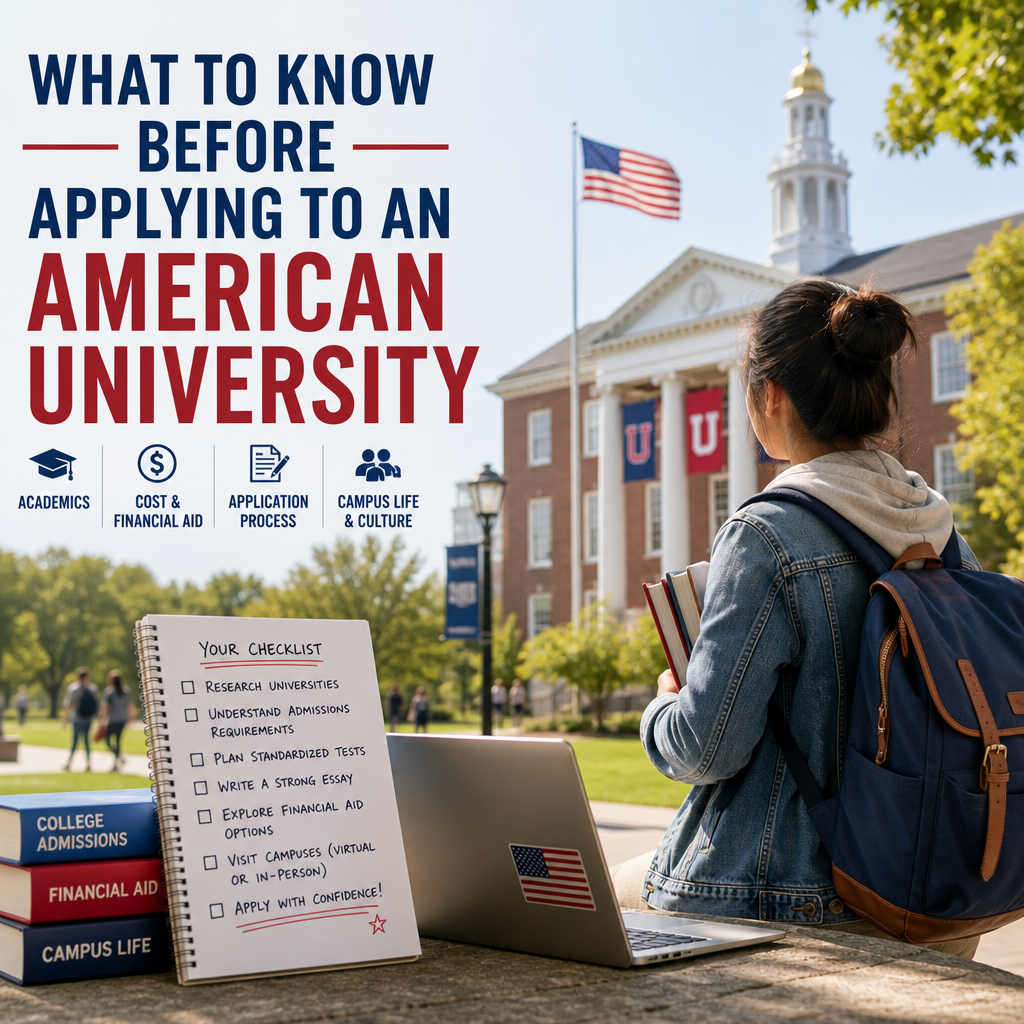
What to Know Before Applying to an American University
Applying to an American university is about more than grades—it’s a chance to show your strengths, interests, and goals through a holistic application. Understanding how American university admissions work early can help you choose the right schools and prepare with confidence.
By: Jennifer Collins on July 30, 2026
Applying to an American university can feel exciting, overwhelming, and full of possibilities all at once. For many students, the process starts long before the first application is submitted. It involves researching schools, understanding admission requirements, planning finances, and making sure your documents tell a strong, authentic story.
If you are considering studying in the United States, it helps to know what to expect before you begin. The application process for an American university is not just about grades. Schools also look at essays, activities, recommendations, and sometimes test scores, interviews, or portfolios. Understanding these pieces early can save time, reduce stress, and help you make smarter decisions.
This guide covers the most important things to know before applying to an American university, from choosing the right school to preparing for deadlines and visas.
Understanding How American University Admissions Work
One of the biggest differences in the U.S. system is that admissions are often holistic. That means universities review more than your academic record. They look at the full picture of who you are, what you have achieved, and how you might contribute to campus life.
What colleges usually consider
Most American universities evaluate some combination of:
High school grades or academic transcript
Course rigor, such as honors, AP, IB, or advanced classes
Standardized test scores, if required
Personal essays
Letters of recommendation
Extracurricular activities and leadership
Special talents, awards, or portfolios
English proficiency for international applicants
Some schools place heavier weight on academics, while others focus more on personal qualities, creativity, or community involvement. That is why it is important to research each university carefully instead of assuming they all use the same standards.
Holistic review does not mean vague review
Holistic admissions can sound unpredictable, but it is not random. Universities usually want students who are academically prepared and likely to thrive in their environment. They also want applicants who bring perspective, curiosity, and initiative.
If your grades are strong but your essay is weak, that can hurt you. If your grades are average but you show growth, resilience, and clear goals, that can still help you stand out. Balance matters.
Choose the Right Type of American University
Not every American university is the right fit for every student. Before applying, spend time learning the differences between school types so you can target programs that match your goals.
Public vs. private universities
Public universities are typically funded by state governments and often have larger student populations. They may offer lower tuition for in-state residents, though international students usually pay out-of-state rates.
Private universities rely more on tuition, endowments, and donations. They may be smaller, more selective, and sometimes offer generous financial aid.
Liberal arts colleges vs. research universities
A liberal arts college usually emphasizes smaller classes, close faculty interaction, and a broad education across disciplines. A research university may offer more graduate programs, larger labs, and extensive academic resources.
Ask yourself:
Do I want small classes or a large campus experience?
Am I looking for strong undergraduate teaching or major research opportunities?
Do I want a broad education or a highly specialized program?
Community colleges and transfer pathways
Some students begin at a community college and transfer later to a four-year university. This can be a practical and more affordable route, especially if you want extra time to adjust academically or financially.
Know the Academic Requirements Before You Apply
A common mistake is applying without fully understanding the academic expectations. American universities may ask for different documents depending on your education system and country.
Transcripts and grade conversion
You will usually need official transcripts or academic records from your high school or previous college. International applicants may also need certified translations and, in some cases, credential evaluations.
Do not assume your grades will be interpreted the same way everywhere. Some universities compare your academic record within the context of your school system, while others may use evaluation services.
Course prerequisites matter
Many majors have specific prerequisites. For example:
Engineering programs may require advanced math and science
Nursing programs may require biology or chemistry preparation
Business programs may expect strong math and writing skills
Art or design programs may need a portfolio
Check whether your intended major has required subjects before you apply. If you are missing key coursework, your options may be limited.
Standardized tests may or may not be required
Many American universities have adopted test-optional policies, but not all. Some still require SAT, ACT, GRE, GMAT, or other exams depending on the level and program.
For international students, English proficiency tests such as TOEFL, IELTS, or Duolingo English Test may also be required unless you qualify for a waiver.
Always verify each school’s current policy directly on its admissions page.
Prepare a Strong Application Package
A complete and thoughtful application can make a real difference. Even when grades are important, presentation matters too. Missing items, weak writing, or rushed recommendations can hold back an otherwise strong applicant.
The personal essay should sound like you
Many American universities ask for a personal statement or supplemental essays. These are your chance to show your personality, values, and goals.
A strong essay often includes:
A clear focus
Personal reflection
Specific examples
Honest voice
A connection to the university or program
Avoid writing what you think admissions officers want to hear. Instead, show how you think, what you care about, and how your experiences shaped you.
Recommendations should add insight
Letters of recommendation work best when they come from teachers, counselors, or mentors who know your work well. A generic letter is less helpful than one that explains your strengths in detail.
Before asking someone, consider whether they can speak to:
Your academic ability
Your character and work ethic
Your leadership or initiative
Your growth over time
Give recommenders enough time, and provide them with your resume, deadlines, and any relevant background.
Extracurricular activities should show depth
You do not need to join dozens of clubs to impress an American university. In fact, depth often matters more than quantity.
Admissions officers usually value:
Long-term commitment
Leadership roles
Community service
Work experience
Independent projects
Artistic or athletic achievements
A part-time job, family responsibility, or self-directed project can be just as meaningful as a formal club if you explain it well.
Understand the Cost of Studying in the U.S.
Finances are one of the most important parts of the process. Tuition is only one piece of the total cost of attending an American university.
Look beyond tuition
When planning your budget, include:
Application fees
Tuition and academic fees
Housing and meals
Books and supplies
Health insurance
Transportation
Personal expenses
Visa and travel costs
Some universities publish a “cost of attendance” estimate, which can help you compare options realistically.
Financial aid and scholarships
Many universities offer merit scholarships, need-based aid, or grants. Some are open to international students, while others are not. Funding policies vary widely.
If affordability matters, pay attention to:
Scholarship deadlines
Whether aid is need-aware or need-blind
Separate scholarship applications
Requirements for maintaining aid after enrollment
Apply early when possible, since some awards are limited.
Compare net cost, not just sticker price
A school with a high tuition rate may still be more affordable if it offers strong scholarships. Another school with lower tuition may become expensive once housing and fees are added.
Make a simple comparison table with:
Tuition
Housing and meals
Scholarships
Total estimated yearly cost
This can help you make a grounded decision instead of focusing only on the published tuition.
Pay Attention to Deadlines and Application Plans
Deadlines are easy to underestimate, especially if you are applying to multiple universities. A good timeline can keep you organized and reduce mistakes.
Common application rounds
Many American universities offer several admission plans, such as:
Early Decision
Early Action
Regular Decision
Rolling Admission
Early Decision is usually binding, meaning you agree to attend if admitted. Early Action is usually non-binding. Regular Decision gives you more time. Rolling Admission means applications are reviewed as they arrive.
Each option has pros and cons, so read the rules carefully.
Create your own timeline
Start planning at least several months before deadlines. A simple timeline might look like this:
Research schools
Confirm test requirements
Request transcripts and recommendations
Draft essays
Submit test scores if needed
Complete financial documents
Review and submit applications
Do not wait until the last week. Technical issues, missing documents, and time zone differences can create avoidable stress.
Learn About Student Visas Early
If you are an international student, getting admitted is only part of the process. You also need to understand the student visa requirements for studying in the United States.
Most students need an F-1 visa
The F-1 visa is the most common visa for academic study. After being admitted, the university usually issues immigration documents that let you apply for the visa.
Be ready for visa documentation
You may need to prepare:
Your admission letter
Proof of financial support
Passport
SEVIS fee receipt
Visa application form
Supporting academic documents
Visa processing can take time, so start early. Also remember that your university’s international student office is often a helpful resource.
Think About Campus Life and Fit
A university should fit your academic needs, but also your personal style and long-term goals. Campus environment can affect your success and happiness.
Ask practical questions
Before applying, research:
Location and climate
Campus size
Housing options
Internship access
Student support services
Religious or cultural communities
Safety and transportation
Career outcomes in your field
If possible, attend virtual tours, webinars, or student panels. Current students can offer valuable insight that brochures cannot.
Fit affects more than comfort
When students feel out of place, it can affect motivation and performance. A school that looks impressive on paper may not be the best environment for you. Choose places where you can learn, grow, and stay engaged.
Common Mistakes to Avoid
Many applicants make avoidable errors that weaken their chances. Knowing these ahead of time can help you stay focused.
Mistakes that often hurt applicants
Applying without checking program-specific requirements
Writing a generic essay for every school
Missing deadlines
Ignoring English proficiency requirements
Overlooking financial planning
Asking for recommendations too late
Choosing schools based only on rankings
Failing to proofread application materials
A careful, organized approach usually performs better than a rushed one.
Final Checklist Before You Apply
Before submitting any application, confirm that you have:
Chosen schools that fit your academic and financial goals
Reviewed admissions requirements for each university
Prepared transcripts and translations, if needed
Confirmed test policies and sent scores
Written and revised essays
Requested recommendations early
Reviewed scholarship and aid options
Checked deadlines and submission rules
Planned for visa and travel steps, if applicable
Frequently Asked Questions
1. When should I start applying to an American university?
It is best to start researching at least 12 months before your intended start date. That gives you enough time to compare schools, prepare essays, gather documents, take required tests, and plan finances. If you are applying internationally, starting early is even more important because visa processing and transcript evaluations can take additional time.
2. Do all American universities require SAT or ACT scores?
No. Many universities are test-optional, and some do not consider standardized test scores at all for certain applicants. However, policies vary by school and may change over time. Always check the official admissions page for each university before deciding whether to submit scores.
3. What makes a strong application essay?
A strong essay sounds personal, clear, and thoughtful. It should show who you are, what matters to you, and how your experiences shaped your goals. Specific examples are better than broad statements. The goal is not to sound impressive in a generic way, but to sound genuine and reflective.
4. How much does it cost to apply to an American university?
Costs vary widely. You may need to pay application fees, test score reporting fees, transcript translation or evaluation fees, and later visa-related expenses. Some universities offer application fee waivers, especially for students with financial need. Always review each school’s fee policies individually.
5. Can international students get financial aid in the U.S.?
Yes, some American universities offer financial aid or scholarships to international students. The availability and amount depend on the school. Some institutions are more generous than others, and some scholarship deadlines are separate from admission deadlines. Research each university’s aid policy carefully before applying.
Applying to an American university is a major step, but it becomes much more manageable when you understand the process in advance. The strongest applicants are not always the ones with the longest resumes or the highest test scores. They are often the students who research carefully, plan early, and present a clear, authentic picture of themselves.
Before you apply, take time to compare schools, review academic requirements, and think honestly about cost, fit, and long-term goals. Pay attention to deadlines, prepare your essays with care, and make sure every part of your application supports the story you want to tell. If you are an international student, remember to account for visa steps and financial documentation as well.
A thoughtful approach can help you avoid common mistakes and choose a university that supports both your education and your future. The more prepared you are now, the more confident you will feel when it is time to submit your application and take the next step toward studying in the United States.
Jennifer, M.Ed., holds a degree in Higher Education Administration, with
a focus on U.S. college financial aid, admissions policy, and student
support systems. She researches and writes about scholarships, federal
aid programs, and the college planning process to help students and
families make informed, well-supported decisions.