How to Find Legitimate College Scholarships in the United States
Paying for college can feel overwhelming, but finding legitimate college scholarships in the United States can make a real difference in how much you need to borrow or pay out of pocket. The challenge is knowing which opportunities are real, which ones fit your background and goals, and which ones are simply designed to collect your personal information.
The good news is that there are many trustworthy scholarship sources available if you know where to look. From federal and state programs to college-specific awards and private foundations, students have more options than they often realize. With a smart search strategy and a healthy dose of caution, you can identify scholarships that are worth your time and avoid common scams.
How to Find Legitimate College Scholarships in the United States
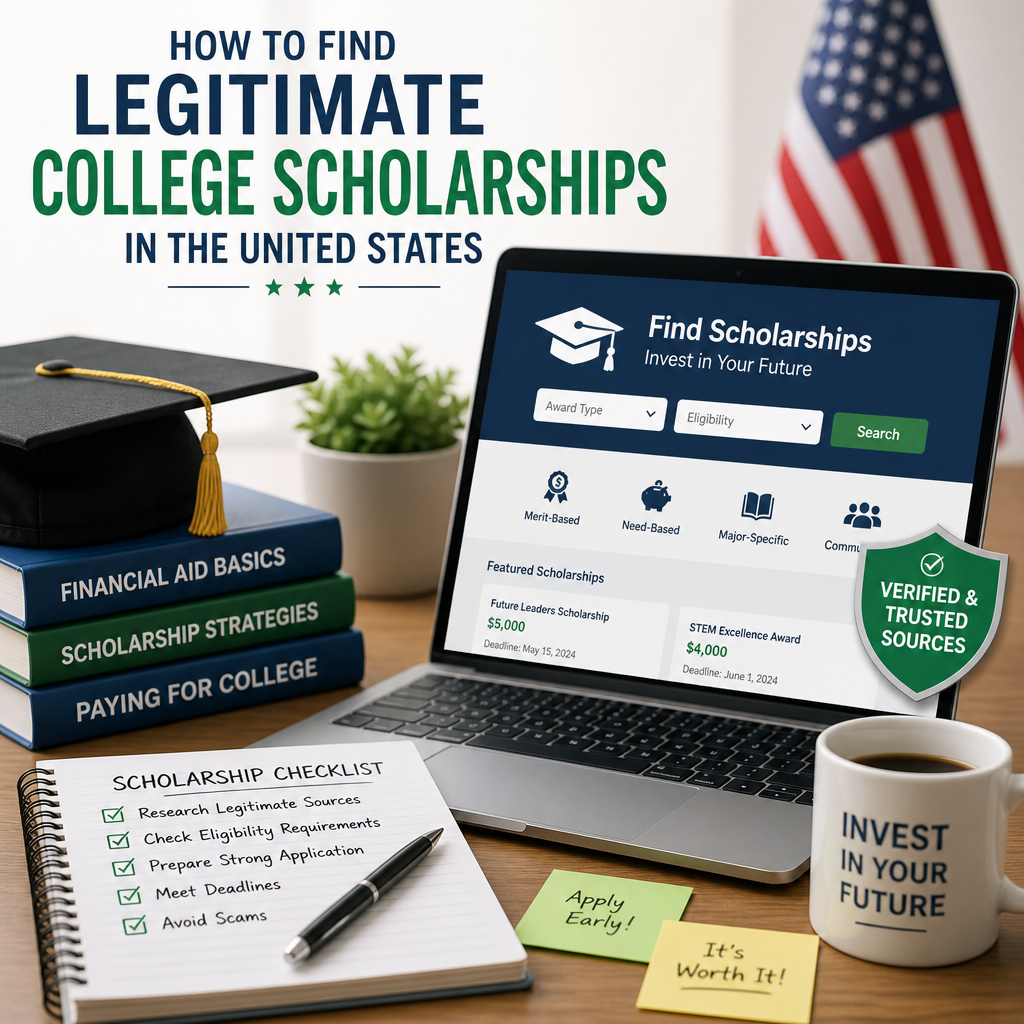
The best way to find legitimate college scholarships in the United States is to start with trusted sources and verify every opportunity before applying. Scholarships should never require you to pay to apply, promise guaranteed money, or pressure you to act immediately. Real awards are usually connected to schools, nonprofit organizations, government agencies, businesses, or professional associations.
Start with your college’s financial aid office
Your school’s financial aid office is one of the most reliable places to begin. Many colleges maintain internal scholarship lists, department-specific awards, and donor-funded scholarships that are only available to enrolled or admitted students.
Ask about:
- Merit-based scholarships
- Need-based grants and scholarships
- Departmental awards
- Transfer student scholarships
- Scholarships for specific majors, backgrounds, or talents
College websites often include deadlines, eligibility rules, and application steps. Because these awards come directly from the institution or its partners, they are usually among the safest and most relevant opportunities to pursue.
Use trusted scholarship search platforms carefully
Scholarship search engines can help you discover opportunities, but you should use them as a starting point, not the final word. A legitimate platform may connect you to many scholarships, yet you still need to verify each one individually.
When using scholarship databases, look for:
- Clear eligibility criteria
- Named sponsors or organizations
- Official application instructions
- Deadlines and award details
- Privacy policies that explain how your information is used
A useful rule: if a scholarship listing is vague, lacks contact information, or seems too easy to qualify for, do more research before applying.
Look at government and state scholarship programs
Federal and state agencies offer some of the most reliable aid sources. While many government programs are grants rather than scholarships, they often overlap in purpose and can significantly reduce college costs.
Good places to check include:
- Your state’s higher education agency
- State grant portals
- Federal aid information sites
- Workforce development programs
- Military and public service scholarship programs
These programs often have strict eligibility requirements, but they are typically transparent and trustworthy. If you are a resident of a particular state, you may find scholarships reserved for local students, community college transfers, teachers, healthcare majors, or first-generation college students.
What Makes a Scholarship Legitimate?
Before you spend time on an application, it helps to understand the traits that separate real scholarships from questionable offers. Legitimate scholarships are usually clear, specific, and professionally managed.
Signs of a real scholarship
A legitimate scholarship usually has:
- A known sponsor, such as a college, nonprofit, employer, or association
- A public application process
- Clear criteria for eligibility
- A realistic award amount
- A defined deadline
- Contact information for questions
- A straightforward explanation of how winners are chosen
Real scholarship providers do not usually rely on pressure tactics. They give applicants time to review the details and apply on their own schedule.
Red flags to watch for
Be cautious if a scholarship:
- Charges an application fee
- Says you are “guaranteed” to win
- Requires you to provide bank information up front
- Demands a deposit or processing fee
- Uses urgency like “act now” or “limited time only”
- Has spelling errors, broken links, or a suspicious website
- Asks for unnecessary personal data
A common scam tactic is pretending that you have already been selected for an award. Another is asking for payment to “release” scholarship funds. A legitimate scholarship will not work that way.
Best Places to Search for Scholarships
Searching broadly can help, but the most efficient approach is to focus on sources that match your academic profile, financial situation, and goals.
1. Your high school counselor or college adviser
School counselors often know about local scholarships, county awards, and community opportunities that never show up on big databases. These smaller scholarships may have fewer applicants, which can improve your chances.
2. Community organizations
Local groups often sponsor scholarships for area students. Check with:
- Rotary clubs
- Lions clubs
- Chambers of commerce
- Faith-based organizations
- Community foundations
- Local nonprofits
These scholarships may support students based on residency, volunteer service, career plans, or family background.
3. Employers and unions
Some employers offer scholarships for employees or their children. Labor unions and trade associations may also provide educational funding for members and dependents. If your family has ties to a professional organization, ask whether scholarship opportunities exist.
4. Professional associations
If you already know your intended major or career path, associations related to that field may offer scholarships. For example, students pursuing nursing, engineering, journalism, teaching, or computer science can often find awards through professional organizations.
5. Colleges and universities
Many schools offer scholarships to incoming freshmen, transfer students, returning adults, and students in specialized programs. Some are automatic based on GPA or test scores, while others require separate applications.
How to Evaluate Scholarship Opportunities
Not every scholarship is worth the time it takes to apply. A thoughtful evaluation process can help you focus on the ones with the best fit and the highest credibility.
Check the sponsor
Look up the organization offering the scholarship. Ask:
- Is it a real nonprofit, school, company, or association?
- Does it have a professional website?
- Can you find outside references or contact information?
- Is the scholarship listed on the sponsor’s official site?
If you cannot confirm the sponsor’s identity, pause before submitting any personal details.
Read the eligibility requirements closely
Some students waste time applying for scholarships they do not qualify for. Avoid that by checking:
- Grade level
- GPA minimums
- Residency requirements
- Citizenship or enrollment status
- Intended major
- Financial need criteria
- Community service or leadership expectations
If you barely meet the requirements, you may still apply, but prioritize awards where you clearly fit the profile.
Compare effort to award amount
A $500 scholarship can still be worthwhile if the application is simple. But if a scholarship requires essays, recommendations, or portfolios, make sure the potential reward justifies the time.
A practical way to prioritize:
- Apply first to large awards with strong fit.
- Then focus on smaller local scholarships.
- Add medium-effort scholarships that align closely with your background or major.
- Skip opportunities that are hard to verify or poorly explained.
Build a Strong Scholarship Application
Even legitimate scholarships can be competitive. A polished application can help you stand out without pretending to be someone you are not.
Write a focused personal statement
Your essay should answer the prompt directly and show who you are. Keep it personal, specific, and organized.
A strong scholarship essay usually includes:
- A clear opening
- A relevant story or example
- Honest discussion of goals or challenges
- A connection between your experience and the scholarship’s purpose
- A concise, confident closing
Avoid generic statements like “I want to help people.” Instead, explain how your interests, experiences, or values connect to your future plans.
Gather strong recommendations
If a scholarship asks for letters of recommendation, choose people who know your work well. Good options include:
- Teachers
- Counselors
- Coaches
- Employers
- Volunteer supervisors
Give recommenders enough time and provide them with the scholarship details, your resume, and any specific points you want them to mention.
Keep your materials organized
Scholarship deadlines can come quickly. Use a spreadsheet or checklist to track:
- Scholarship name
- Deadline
- Requirements
- Documents needed
- Submission status
- Follow-up actions
Staying organized helps you avoid missed deadlines and repeated work.
Avoid Scholarship Scams
Scammers know students and families are looking for ways to cover tuition. Protect yourself by learning common scam patterns and staying skeptical.
Never pay to apply
Legitimate scholarships do not require application fees, “membership” fees, or payment to claim winnings. If money is requested before you receive anything, treat it as a warning sign.
Protect your personal information
Be careful about sharing:
- Social Security numbers
- Bank account details
- Driver’s license numbers
- Full birth dates
- Passwords or account logins
A scholarship application may request some personal data, but it should only ask for what is necessary and should explain why it is needed.
Verify before you click
Fake scholarship emails and websites often mimic real organizations. Before entering information:
- Check the URL carefully
- Confirm the sponsor through an official website
- Avoid clicking suspicious links in email or text messages
- Look for secure website indicators and consistent branding
If a message claims you won a scholarship you never applied for, that is a major red flag.
Smart Search Strategy for Students
A successful scholarship search is usually consistent, not lucky. The students who do best often treat it like a project.
Make a weekly routine
Set aside time each week to search, apply, and follow up. Even 30 to 60 minutes can make a difference if you stay consistent.
Mix broad and narrow searches
Use both general and targeted searches. For example:
- General: scholarships for college students
- Targeted: scholarships for biology majors in Texas
- Targeted: scholarships for first-generation students
- Targeted: scholarships for veterans’ dependents
Specific searches often lead to better matches and fewer irrelevant results.
Save your core application materials
Keep updated copies of:
- Transcript
- Resume
- Essays
- Activity list
- Recommendation contacts
- Financial aid documents
Having these ready reduces stress and helps you apply faster when new opportunities appear.
Frequently Asked Questions
How do I know if a scholarship is legitimate?
A legitimate scholarship will have a real sponsor, clear rules, a defined deadline, and official contact information. It should not charge a fee, promise guaranteed winnings, or pressure you to apply immediately. Always verify the opportunity on the sponsor’s official website before submitting personal information.
Where should I look first for college scholarships?
Start with your college’s financial aid office, your high school counselor, and official state or federal aid websites. Then expand to local nonprofits, employers, professional associations, and reputable scholarship search tools. These sources usually offer more trustworthy and relevant opportunities than random internet ads.
Are scholarship search websites safe to use?
Some are useful, but they should be treated as research tools, not final proof that a scholarship is real. A good search site will list sponsors, eligibility criteria, deadlines, and privacy information. Still, you should always confirm details through the official scholarship sponsor before applying.
Can I apply for scholarships after I start college?
Yes. Many scholarships are available to current college students, not just high school seniors. Some are designed for transfer students, upperclassmen, or students in specific majors. It is worth checking for scholarships every semester, since new opportunities appear throughout the year.
What should I do if I think a scholarship is a scam?
Stop communicating with the organization, avoid sharing more information, and do not send any money. Save the messages or website details, then report the scam to your school’s financial aid office, the Federal Trade Commission, or your state consumer protection agency if appropriate. Warning others can also help prevent similar fraud.
Official Resources
- Federal Student Aid (U.S. Department of Education)
- Federal Trade Commission: Scholarship and Financial Aid Scams
- CareerOneStop Scholarship Search
- National Association of Student Financial Aid Administrators
- State Higher Education Executive Officers Association
Conclusion
Finding legitimate college scholarships in the United States takes patience, organization, and a careful eye, but the effort is worth it. The best opportunities usually come from trusted sources like colleges, government programs, nonprofits, employers, and professional associations. When you focus on verified sponsors, clear eligibility rules, and realistic application requirements, you can avoid scams and spend your time on scholarships that truly matter.
A strong scholarship search is not about applying everywhere. It is about applying strategically. Start close to home with your school’s financial aid office, then expand to local groups and reputable national resources. Keep track of deadlines, tailor your essays, and use caution whenever a scholarship seems vague or too good to be true. The more organized and selective you are, the better your odds of finding awards that fit your needs.
If college costs are a major concern, now is the time to begin. Every legitimate scholarship you win can reduce debt, open academic doors, and give you more freedom to focus on your education.