Essential Financial Habits to Strengthen Your Budget
A strong budget does more than tell you where your money goes. It gives you control, reduces stress, and helps you make decisions with confidence. The good news is that you do not need a perfect income or advanced spreadsheet skills to improve your finances. You need a few consistent financial habits that support your goals and make your budget easier to follow.
When people think about budgeting, they often focus on cutting costs. But the real difference usually comes from everyday behavior. The right money habits help you track spending, avoid surprises, save automatically, and stay flexible when life changes. In other words, a budget works better when your habits work with it.
Why Financial Habits Matter for Your Budget
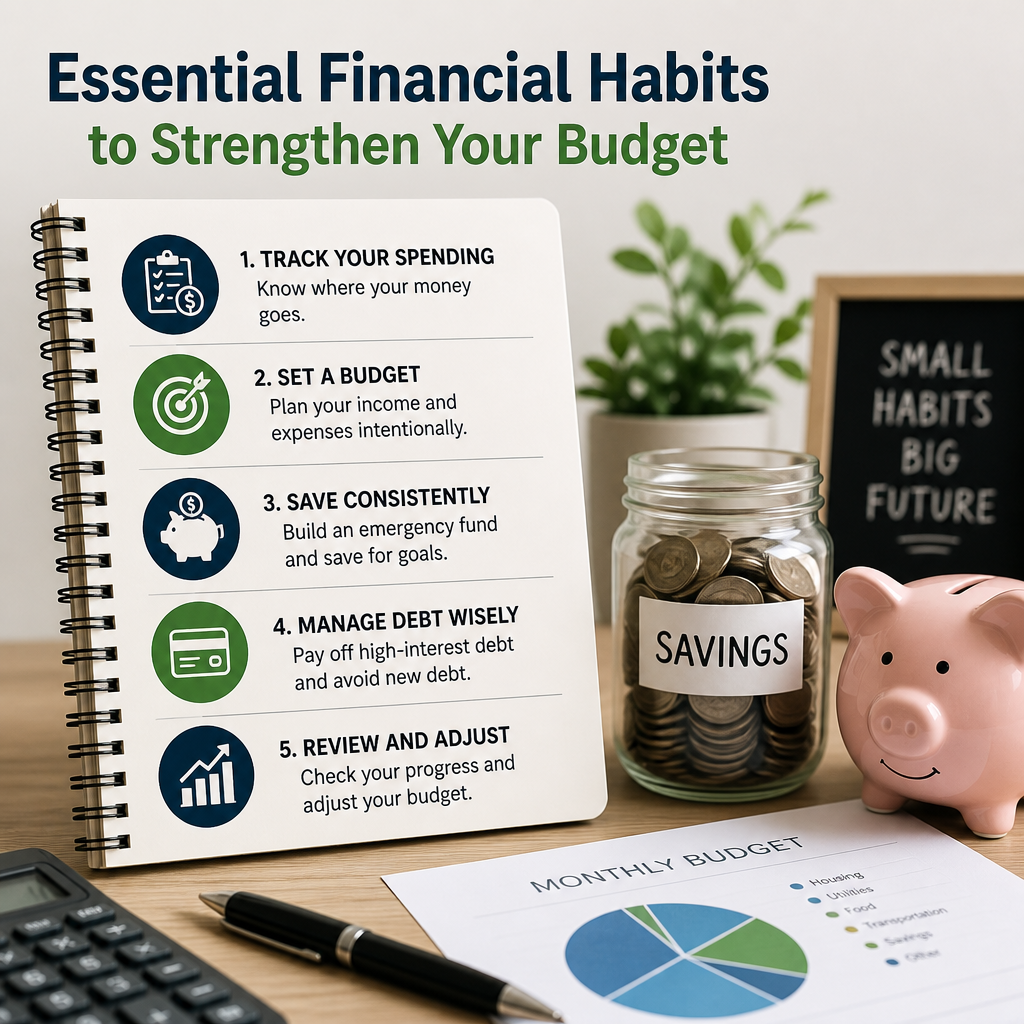
A budget is only as effective as the behavior behind it. You can create the most detailed plan in the world, but if your spending habits are inconsistent, the plan will break down quickly.
Healthy financial habits make budgeting feel more natural. They help you:
- Stay aware of your cash flow
- Reduce impulse spending
- Build savings over time
- Prepare for emergencies
- Make progress toward long-term goals
Instead of treating your budget as a restriction, think of it as a tool that becomes more powerful through repetition. Small actions done regularly can create a much stronger financial foundation.
Track Every Dollar You Spend
One of the most important financial habits is knowing exactly where your money goes. Many budgets fail because people underestimate small purchases. Coffee runs, delivery fees, app subscriptions, and convenience purchases can quietly add up.
Tracking your spending does not have to be complicated. You can use:
- A budgeting app
- A spreadsheet
- A notebook
- Your bank’s transaction history
Make Tracking a Daily or Weekly Habit
The key is consistency. Review your spending at least once a week so nothing slips through the cracks. If you wait until the end of the month, it becomes harder to spot patterns or correct course.
For example, if you notice that restaurant spending is consistently higher than expected, you can adjust before the problem grows. That kind of awareness strengthens your budget without forcing you to guess.
Pay Yourself First
A simple but powerful financial habit is to save before you spend. “Pay yourself first” means moving money into savings as soon as you get paid, rather than waiting to see what is left over.
This approach works because it removes decision fatigue. If savings happens automatically, you are less likely to spend money that should have gone toward your future.
Ways to Put This Habit Into Practice
- Set up automatic transfers to savings
- Split your direct deposit between checking and savings
- Create separate accounts for emergency funds and goals
- Increase your transfer amount gradually as your income grows
Even a modest automatic savings habit can strengthen your budget by creating a buffer. That buffer helps you avoid relying on credit cards when unexpected expenses show up.
Build a Realistic Monthly Spending Plan
A budget should reflect your real life, not an ideal version of it. One of the most useful financial habits is building a spending plan you can actually follow.
That means accounting for irregular expenses such as:
- Car maintenance
- Annual subscriptions
- Holiday gifts
- School supplies
- Medical copays
If your budget only covers rent, groceries, and bills, you will likely feel thrown off every time something unusual comes up.
Review Past Spending Before Planning Forward
Look at at least two or three months of previous transactions. This helps you estimate how much you truly spend in different categories. A realistic plan creates fewer surprises and makes it easier to stay on track.
A good budget should feel slightly challenging but still doable. If it is too tight, you may abandon it. If it is too loose, you may not notice overspending until it is too late.
Separate Wants From Needs
One of the clearest financial habits you can develop is pausing before every non-essential purchase. This does not mean eliminating all fun spending. It means making deliberate choices.
Needs are the essentials you must cover to maintain your household and well-being. Wants are the extras that improve comfort or enjoyment.
Ask These Questions Before Buying
- Do I need this right now?
- Is there a cheaper alternative?
- Will I still value this purchase next week?
- Does this fit my current financial goal?
This habit helps you avoid emotional spending, especially when shopping is tied to stress, boredom, or social pressure. Over time, separating wants from needs makes it easier to protect your budget without feeling deprived.
Use a Sinking Fund for Predictable Expenses
A sinking fund is money set aside for planned future costs. This is one of the most effective financial habits for people who want fewer budget surprises.
Examples of sinking funds include:
- Car repairs
- Annual insurance premiums
- Travel
- Back-to-school expenses
- Home maintenance
Why This Habit Works
Instead of being hit with a large bill all at once, you save a little each month. That turns a big expense into a manageable one.
For example, if you know a holiday trip will cost several hundred dollars, saving a set amount each month makes the expense much less disruptive. Your budget stays balanced because the expense was already planned for.
Review Subscriptions and Recurring Charges
Recurring charges are easy to forget because they happen automatically. That is exactly why they deserve regular attention. A smart budgeting habit is reviewing all subscriptions and recurring payments every month or quarter.
This includes:
- Streaming services
- Gym memberships
- Mobile apps
- Cloud storage
- Membership renewals
Cancel What You Do Not Use
Many people continue paying for services they rarely use. Even small monthly charges can weaken your budget over time.
A quick review can reveal opportunities to save without making major sacrifices. If you keep a service, make sure it still provides enough value to justify the cost.
Create a Buffer in Your Checking Account
A checking account cushion can prevent overdrafts and reduce money stress. This habit involves keeping a small amount of extra money in your account rather than spending your balance down to zero.
That buffer can help cover:
- Timing gaps between bills and paychecks
- Small unexpected purchases
- Delayed deposits
- Bank holds or pending charges
Keep the Cushion Separate From Spending Money
It helps to think of this amount as off-limits unless there is an emergency. Even a modest buffer can protect your budget from small disruptions that might otherwise snowball into fees or missed payments.
Plan for Irregular Income or Variable Expenses
If your income changes from month to month, budgeting becomes even more important. A strong financial habit is building a plan based on your lowest reliable income level, not your best month.
This is especially useful for freelancers, commission-based workers, seasonal employees, and gig workers.
Focus on the Essentials First
When income varies, prioritize:
- Housing
- Utilities
- Food
- Transportation
- Minimum debt payments
- Savings when possible
If extra money comes in, assign it strategically. You can put it toward savings, debt reduction, or upcoming irregular expenses. This prevents lifestyle inflation from undermining your budget during high-income months.
Automate What You Can
Automation can make your financial habits easier to maintain. When bills, savings transfers, and debt payments happen automatically, you are less likely to forget them or spend the money elsewhere.
Good Candidates for Automation
- Savings transfers
- Credit card payments
- Retirement contributions
- Utility bills
- Loan payments
Automation does not replace awareness, but it reduces the chance of missing important financial tasks. It also supports consistency, which is one of the biggest strengths a budget can have.
Check Your Progress Regularly
A budget should evolve as your life changes. One of the most valuable financial habits is reviewing your progress often enough to make adjustments before problems grow.
Set a Regular Budget Check-In
Choose a weekly or monthly time to ask:
- Did I stay within my spending limits?
- Which categories went over budget?
- Did I save what I planned to save?
- Are any expenses likely to change soon?
- Do I need to revise my budget?
This habit turns budgeting into a practical process rather than a one-time setup. It also helps you notice wins, which keeps motivation high.
Reduce High-Interest Debt as Part of Your Budget Habit
Debt payments can consume a large part of your income if you are not careful. A strong financial habit is treating high-interest debt reduction as a budget priority.
This might mean paying more than the minimum when possible or using a structured payoff strategy.
Two Common Approaches
- Avalanche method: Focus on the debt with the highest interest rate first
- Snowball method: Focus on the smallest balance first for quick wins
Either approach can work if you stick with it. The important part is making debt repayment intentional instead of leaving it to chance.
Protect Your Budget With an Emergency Fund
Unexpected expenses are one of the biggest threats to any budget. A well-built emergency fund helps you handle those surprises without throwing your entire plan off track.
Emergency funds are useful for:
- Medical bills
- Job loss
- Car repairs
- Urgent home repairs
- Emergency travel
Start Small and Stay Consistent
You do not need to build a large fund overnight. Begin with a small goal, then grow it over time. Even a starter emergency fund can give your budget more stability and help you avoid depending on credit for unplanned expenses.
Make Budgeting a Habit, Not a Chore
The strongest budgets are not built on perfect discipline. They are built on repeatable habits that fit your lifestyle.
To make budgeting easier to sustain:
- Keep your system simple
- Use tools you will actually check
- Tie money tasks to a regular routine
- Celebrate small wins
- Adjust when life changes
When you focus on habits rather than perfection, your budget becomes more resilient. You stop reacting to every money problem and start managing your finances with intention.
Frequently Asked Questions
1. What is the most important financial habit for strengthening a budget?
Tracking your spending is often the most important habit because it shows you where your money is actually going. Once you understand your spending patterns, you can make better decisions about savings, categories, and cutbacks.
2. How often should I review my budget?
A weekly check-in works well for many people, with a more detailed monthly review. Weekly reviews help you catch small issues early, while monthly reviews help you evaluate bigger trends and adjust your plan.
3. What if I keep overspending in certain categories?
Start by identifying the cause. Overspending may come from unrealistic limits, unplanned events, or emotional spending. Adjust the category based on real data, then look for habits that can reduce the pressure, such as meal planning or setting spending alerts.
4. How do I save money if my income is inconsistent?
Use your lowest predictable income as the base for your budget and focus first on essentials. Build a buffer in good months, save for irregular expenses, and automate transfers when possible so you can stay prepared during slower periods.
5. Is it better to pay off debt or build savings first?
In many cases, it helps to do both. A small emergency fund can prevent new debt when surprises happen, while extra debt payments reduce long-term costs. The right balance depends on your situation, but having some savings and a debt plan usually strengthens your budget more than focusing on only one.
Official Resources
- Consumer Financial Protection Bureau – Budgeting
- Federal Trade Commission – Managing Money
- FDIC – Money Smart
- USA.gov – Budgeting and Saving
- National Endowment for Financial Education
Conclusion
Strong budgeting does not come from one big financial breakthrough. It comes from consistent habits that make your money easier to manage month after month. When you track spending, save automatically, plan for irregular costs, and review your progress regularly, your budget becomes much more stable and far less stressful.
The best part is that you can start small. Choose one or two habits that fit your current situation and build from there. Maybe you begin by checking your transactions each week. Maybe you automate a transfer to savings or review subscriptions that no longer serve you. Each practical step adds more structure to your finances.
Over time, these financial habits can help you spend with more intention, prepare for the unexpected, and make steady progress toward your goals. A budget is not just about limiting expenses. It is about creating a plan that supports the life you want. If you stay consistent, your budget will become a tool for confidence, not just control.