FAFSA 2026: Everything Students Need to Know Before Applying
Applying for college financial aid can feel overwhelming, but understanding FAFSA 2026 can make the process much easier. The Free Application for Federal Student Aid is the main gateway to federal grants, work-study, and student loans, and many states and colleges use it to award their own aid as well. If you are planning to attend college in the 2026–2027 academic year, preparing early for FAFSA 2026 can help you avoid delays, reduce stress, and improve your chances of receiving the aid you qualify for.
This guide breaks down what FAFSA 2026 is, who should apply, what documents you need, how the process works, and how to avoid common mistakes. Whether you are a first-time applicant, a parent helping a dependent student, or an adult learner returning to school, this article will help you navigate the FAFSA with confidence.
What Is FAFSA 2026?
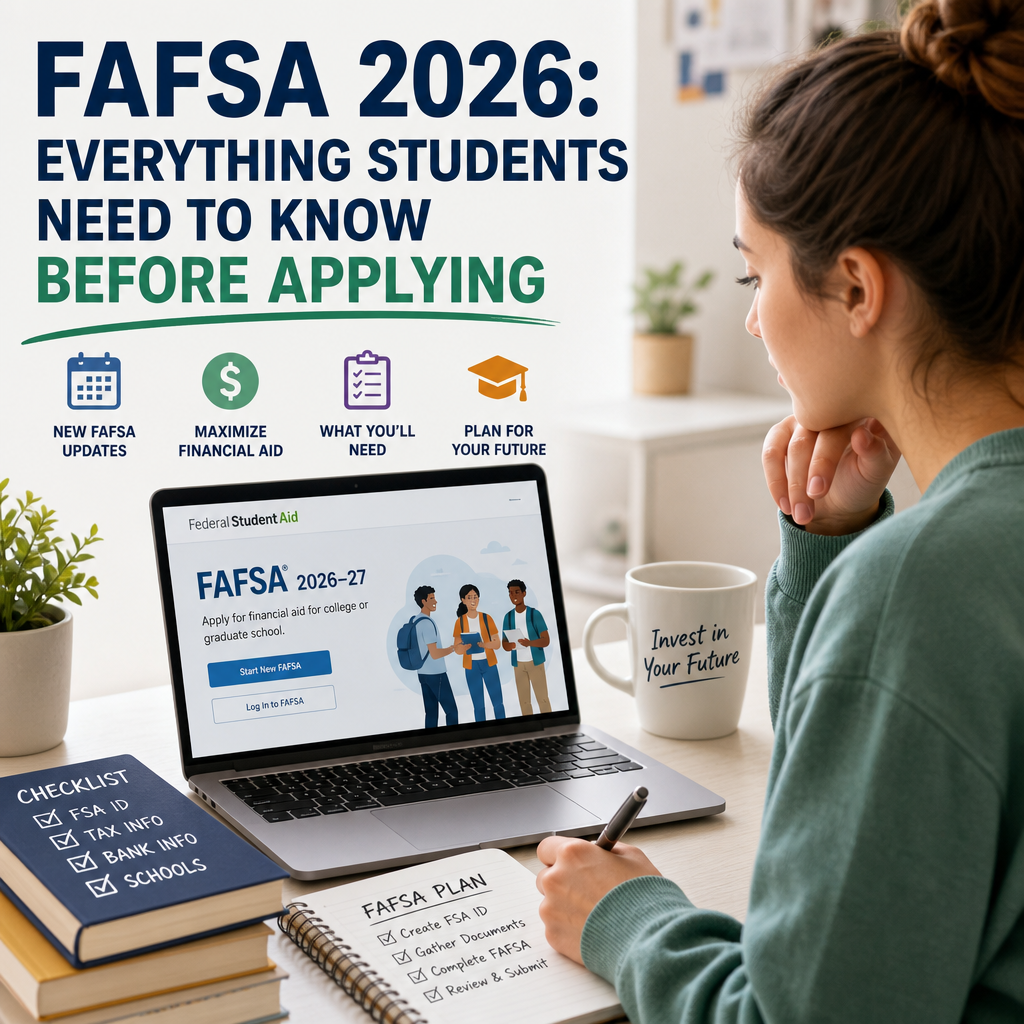
FAFSA stands for the Free Application for Federal Student Aid. It is the official form students complete to determine eligibility for federal financial aid. That aid may include:
- Federal Pell Grants
- Federal Supplemental Educational Opportunity Grants (FSEOG)
- Federal Work-Study
- Direct Subsidized Loans
- Direct Unsubsidized Loans
- Direct PLUS Loans for eligible parents and graduate students
FAFSA 2026 refers to the application for the 2026–2027 academic year. In most cases, the form becomes available before that school year begins, and students should submit it as early as possible.
The FAFSA is not only for federal aid. Many states, colleges, and scholarship programs also use it to decide how much financial assistance to offer.
Why FAFSA 2026 Matters
Submitting FAFSA 2026 is one of the most important steps in paying for college. Even if you think your family earns too much to qualify for need-based aid, it is still worth applying.
Here’s why:
- Some aid is based on more than income alone.
- Many schools require the FAFSA for merit scholarships and institutional grants.
- Some state aid programs have early deadlines.
- You may qualify for low-interest loans or work-study opportunities.
- Completing the form helps colleges create a full financial aid package.
In short, FAFSA 2026 opens the door to multiple funding sources that can lower your out-of-pocket cost.
Who Should Apply for FAFSA 2026?
Most students planning to attend an eligible college, university, or career school should complete FAFSA 2026. This includes:
- High school seniors entering college for the first time
- Current college students renewing aid
- Transfer students
- Graduate and professional students
- Adult learners returning to school
- Students attending community colleges or trade schools
Dependent vs. Independent Students
FAFSA asks whether you are a dependent or independent student. This matters because it determines whose financial information is reported.
You may be considered independent if you meet certain criteria, such as being:
- At least 24 years old
- Married
- A graduate or professional student
- A veteran or active-duty service member
- A parent or legal guardian supporting children
- An emancipated minor or homeless youth, in some cases
If you are a dependent student, you will usually need to include parent information on FAFSA 2026.
When Does FAFSA 2026 Open?
The FAFSA usually opens in advance of the school year it covers. For FAFSA 2026, students should watch for the official opening date and apply as soon as the form is available.
Why timing matters:
- Some aid is awarded on a first-come, first-served basis.
- State and institutional deadlines can be much earlier than the federal deadline.
- Early submission helps prevent delays if corrections are needed.
A smart approach is to prepare your documents before the form opens so you can complete it quickly.
What You Need Before Filling Out FAFSA 2026
Preparing ahead can save time and reduce mistakes. Before starting FAFSA 2026, gather the following:
Personal Information
You will need basic identifying details, such as:
- Full legal name
- Date of birth
- Social Security number, if applicable
- Citizenship or eligible noncitizen status
- Marital status
Financial Information
FAFSA uses tax and income data to estimate your aid eligibility. Depending on your situation, you may need:
- Federal tax returns
- W-2 forms
- Records of untaxed income
- Bank account balances
- Information about investments or assets
Parent Financial Information
If you are a dependent student, your parent or guardian may need to provide:
- Tax return information
- Income details
- Asset information
- Their own FSA ID
FSA ID
Students and contributors should create an FSA ID, which is a username and password used to log in and sign the FAFSA electronically. Parents or other contributors may also need one.
How FAFSA 2026 Works
The FAFSA 2026 process is designed to collect financial information and determine your Student Aid Index, or SAI. This number helps schools understand your financial need.
Step 1: Create or Log In to Your Account
Start by visiting the official FAFSA website and signing in. If you do not already have an FSA ID, create one first.
Step 2: Add Your School Choices
You can list the schools you may attend. Each school receives your FAFSA information so they can build your aid package.
Step 3: Enter Student Information
You will answer questions about your personal background, education plans, and dependency status.
Step 4: Report Financial Information
FAFSA uses tax data and other financial details to estimate your eligibility. In many cases, the form can pull tax information directly through secure data transfer tools.
Step 5: Review and Sign
Once everything is complete, carefully review the form for accuracy and submit it. If you are a dependent student, a parent must also sign.
Step 6: Track Your Submission
After submission, you should receive a confirmation. Later, you may be asked to make corrections or provide additional documents to your school’s financial aid office.
Common Changes and Updates Students Should Know
Financial aid rules can change from year to year, so students should always check the current guidance for FAFSA 2026. Some updates may involve:
- Changes to how family income is measured
- Adjustments in dependency rules
- Updates to school deadlines
- Changes in grant or loan eligibility formulas
The safest strategy is to rely on the official FAFSA site and your school’s financial aid office for the latest instructions.
How to Avoid FAFSA 2026 Mistakes
Small mistakes can lead to delays or reduce the accuracy of your aid estimate. Watch out for these common errors:
1. Missing Deadlines
Some students focus only on the federal deadline and forget that state and college deadlines may come much earlier.
2. Entering Incorrect Information
Double-check:
- Names
- Social Security numbers
- Tax figures
- Household size
- School codes
3. Forgetting Required Signatures
Your FAFSA is incomplete until all required signatures are submitted.
4. Leaving Fields Blank
If a question does not apply, follow the instructions carefully. Do not assume blank is always acceptable.
5. Not Responding to Verification Requests
If your school asks for extra documents, respond promptly. Verification delays can slow down your financial aid package.
How Financial Aid Packages Are Built
Once your FAFSA 2026 is processed, each school uses your information to create a financial aid offer. That offer may include a mix of grants, loans, and work-study.
A typical package may include:
- Grants: Money that usually does not need to be repaid
- Scholarships: Often based on merit, need, or special criteria
- Work-study: Part-time campus or community employment
- Loans: Borrowed money that must be repaid later
Not all aid packages are the same. Two schools may offer very different combinations of aid, so comparing award letters is important.
Tips for a Smooth FAFSA 2026 Experience
A little preparation goes a long way. Here are practical steps to make the process easier:
- Start early
Do not wait until the deadline is near. - Use official websites only
Avoid third-party sites that may charge unnecessary fees. - Keep documents organized
Save tax records, usernames, and school codes in one place. - Ask for help when needed
High school counselors and financial aid offices can answer many common questions. - Check email regularly
Schools may send important requests or updates after you submit the FAFSA.
Example: A First-Time College Student
Imagine a high school senior applying to three colleges. She completes FAFSA 2026 as soon as it opens, lists all three schools, and submits parent information right away. A few weeks later, one college requests verification documents. Because she kept tax records ready, she responds quickly and avoids a delay in her aid offer. That early action could help her compare financial aid packages before making a final enrollment decision.
FAFSA 2026 for Transfer, Graduate, and Adult Students
FAFSA is not just for new freshmen. Other students can benefit too.
Transfer Students
If you are transferring to a new college, submit FAFSA 2026 and list the new school so it can receive your information.
Graduate Students
Graduate students may qualify for federal loans and some forms of institutional aid. FAFSA 2026 remains an essential step for financial planning.
Adult Learners
If you are returning to college after time away, FAFSA 2026 can help you access grants, loans, or work-study even if you are balancing school with work or family responsibilities.
Frequently Asked Questions
1. Is FAFSA 2026 free to submit?
Yes. The FAFSA is free. You should never pay a company to submit it for you. The official form is available through the federal student aid website.
2. Do I have to complete FAFSA 2026 if I don’t think I’ll qualify for aid?
Yes, it is still a good idea. Many schools require it for scholarships or institutional aid, and some students qualify for assistance even if they do not expect to.
3. What if my family’s income changed recently?
If your current financial situation is different from the tax year used on the FAFSA, contact your school’s financial aid office. They may review special circumstances and adjust your aid package if appropriate.
4. Can I correct FAFSA 2026 after I submit it?
Yes. If you notice an error or your information changes, you can usually log in and make corrections. Schools may also request updates if needed.
5. What happens after I submit FAFSA 2026?
After submission, you will receive confirmation and possibly a Student Aid Report or similar summary. Schools will then use your FAFSA data to create financial aid offers. In some cases, they may ask for additional documentation.
Official Resources
- Federal Student Aid – FAFSA Application
- Federal Student Aid – Complete the FAFSA Form
- Federal Student Aid – Dependency Status
- IRS – Get Your Tax Record
- U.S. Department of Education – Federal Student Aid
Conclusion
FAFSA 2026 is more than a financial aid form. It is a critical step toward making college more affordable and manageable. By understanding who should apply, what documents to gather, and how the process works, you can avoid common mistakes and submit a stronger application with less stress.
The biggest advantage of FAFSA 2026 is simple: it gives you access to federal aid, and it can also unlock state, school, and scholarship funding. That means one form can significantly influence what you pay for college. The key is to prepare early, use official resources, and respond quickly if your school asks for more information.
If college is part of your 2026 plans, do not put FAFSA on the back burner. Get your documents ready, mark important deadlines, and complete the form as soon as it becomes available. A few organized steps now can make a meaningful difference in your educational options later.