Choosing Between Public and Private Colleges in the United States
Choosing between public and private colleges in the United States is one of the biggest decisions a student and family can make. The right choice can shape not only the college experience, but also affordability, academic opportunities, campus culture, and long-term goals. While there is no single “best” option for everyone, understanding how public and private colleges differ can make the decision much easier.
Many students focus first on tuition, but the real answer is more nuanced. Public and private colleges each offer distinct advantages, and the best fit depends on a student’s priorities, learning style, financial situation, and career plans. In this guide, we’ll break down the major differences, explain what to consider, and help you make a smarter decision.
Public and Private Colleges in the United States: What’s the Difference?
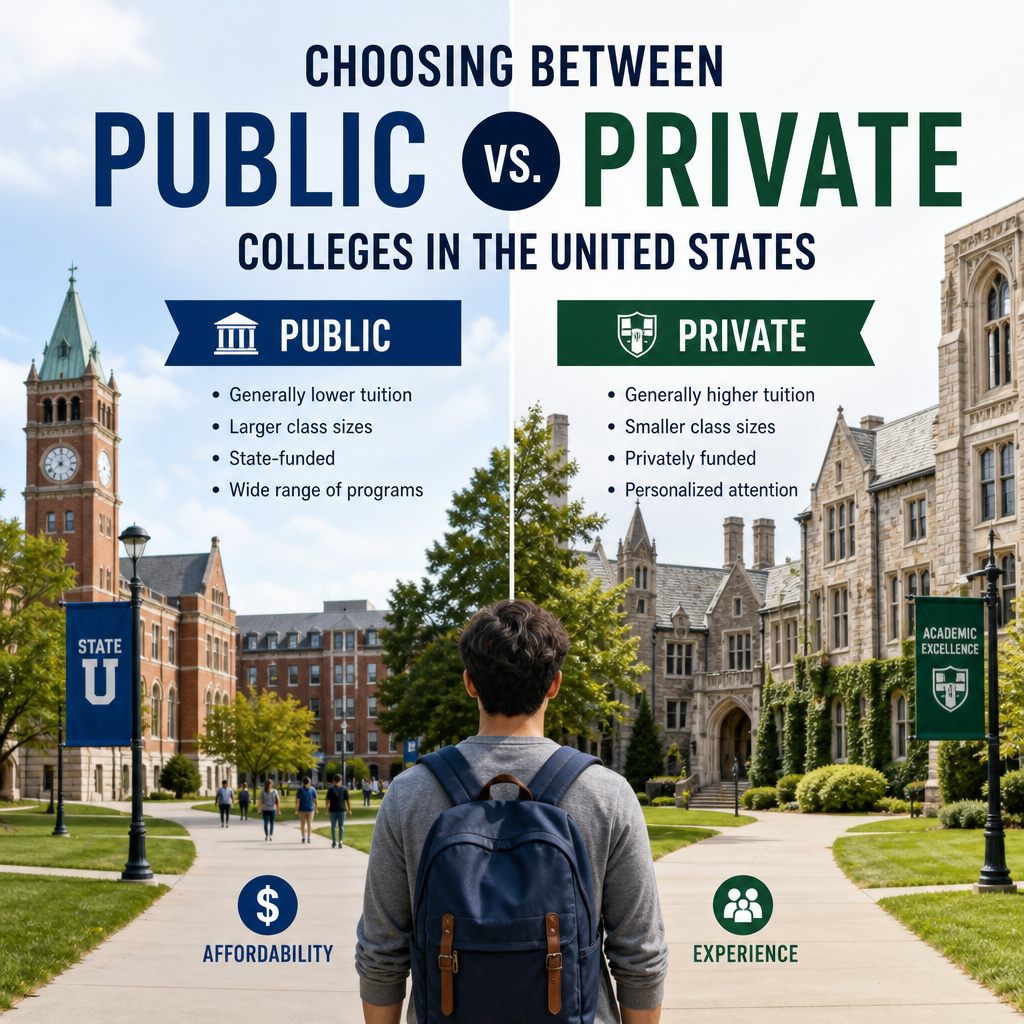
At a basic level, public colleges are funded primarily by state governments, while private colleges rely more heavily on tuition, endowments, donations, and other private funding sources. That funding structure affects everything from tuition pricing to campus size and student services.
Public Colleges
Public colleges are typically larger and often have lower tuition for in-state students. They include state universities and community colleges. Because they receive government support, they often aim to serve a broad population of students within the state and beyond.
Common features include:
- Larger class sizes, especially in introductory courses
- Wide range of academic programs
- Strong athletic and school spirit culture at many campuses
- Lower tuition for residents of the state
- More commuter and transfer students in some regions
Private Colleges
Private colleges are not funded by state governments in the same way, though many still receive federal aid and private scholarships. These schools can range from small liberal arts colleges to large universities with national reputations.
Common features include:
- Smaller class sizes on average
- More personalized academic attention
- Often higher sticker prices
- Generous institutional scholarships at some schools
- Distinctive campus cultures and mission-driven programs
How to Compare Public and Private Colleges in the United States
When comparing public and private colleges in the United States, it helps to look beyond the published tuition figure. A college that seems expensive at first may actually be more affordable after financial aid, while a lower-cost school may still leave a large out-of-pocket bill.
1. Look at the Total Cost of Attendance
Tuition is only one part of the equation. The full cost of attendance may include:
- Room and board
- Fees
- Books and supplies
- Transportation
- Personal expenses
A public college may have a lower sticker price, especially for in-state students, but living on campus, commuting, or taking longer to graduate can change the overall cost. Some private colleges, meanwhile, offer substantial need-based or merit-based aid that reduces the actual amount a family pays.
2. Compare Financial Aid Packages
This is one of the most important steps. Two schools with very different tuition prices can end up costing about the same after aid.
When reviewing financial aid offers, look at:
- Grants and scholarships that do not need to be repaid
- Work-study opportunities
- Federal student loans
- Institutional aid from the college
- Any conditions tied to renewable scholarships
A useful rule: compare the net price, not just the sticker price. The net price is what you actually pay after grants and scholarships.
3. Consider Academic Fit
Some students thrive in a large university environment with thousands of classmates, while others do best in a smaller, close-knit setting. Neither is better overall; the right fit depends on personality and learning preferences.
Ask questions such as:
- Will I get the academic support I need?
- Do I want smaller seminars or large lectures?
- How accessible are professors?
- Are there research, internship, or study abroad opportunities?
4. Think About Campus Culture
Campus culture matters more than many families realize. A school can have strong academics but still feel like the wrong environment for a student.
You might prefer a public college if you want:
- Big-school energy
- Major Division I sports
- A diverse and large student body
- A wide range of clubs and activities
You might prefer a private college if you value:
- A tighter campus community
- More direct interaction with faculty
- A mission-driven or values-based environment
- A quieter or more intimate setting
5. Review Career and Networking Opportunities
Both public and private colleges can lead to excellent jobs and graduate school placements. The key is how well the school supports career development in your chosen field.
Look for:
- Internship pipelines
- Alumni networks
- Career services
- Employer recruiting on campus
- Outcomes for your major
In some fields, a university’s reputation and alumni network may matter more than whether it is public or private. For example, engineering, nursing, business, and computer science programs often have strong employer connections at both types of schools.
When a Public College May Be the Better Choice
A public college often makes sense for students who want a strong value, a broad range of academic options, and a traditional university experience.
Strong Value for In-State Students
For residents, public colleges frequently offer the most affordable path to a bachelor’s degree. That can make a major difference for students who want to limit borrowing or preserve savings for graduate school.
Large Selection of Majors and Programs
Big public universities often offer hundreds of majors, minors, and certificate options. This can help students who are still exploring interests or who want room to change direction.
Big Campus Experience
Public colleges can offer:
- Major athletics and school traditions
- Extensive student organizations
- Diverse student populations
- Larger research facilities
For students who want a full campus life, this environment can be a great match.
Strong Graduate and Professional Programs
Many public universities have respected law, medical, business, and engineering schools. For students thinking ahead to graduate study, a public institution can offer a clear path from undergraduate education to advanced degrees.
When a Private College May Be the Better Choice
Private colleges may be the right fit for students who want a more personalized experience or who benefit from smaller classes and close mentoring.
Smaller Class Sizes
One of the biggest selling points of many private colleges is the academic environment. Smaller classes can mean more discussion, more feedback, and more time with faculty.
This can help students who:
- Learn best through conversation and interaction
- Want stronger professor relationships
- Need extra guidance and encouragement
Specialized or Distinctive Programs
Some private colleges have very focused academic strengths, such as the liberal arts, pre-med advising, business leadership, or arts programs. Others offer unique missions or religious affiliations that shape student life.
Generous Aid at Certain Schools
Although private colleges often have high sticker prices, some provide substantial financial aid. For students with strong academic records or financial need, a private college may cost less than expected.
Strong Alumni Networks
Certain private institutions are known for active alumni communities that help with internships, job placement, and mentorship. That network can be especially helpful in competitive industries.
Questions to Ask Before Making Your Decision
To move from general comparison to real choice, ask specific questions based on your needs.
Academic Questions
- Does the school offer my intended major?
- How easy is it to switch majors?
- What is the student-to-faculty ratio?
- What kinds of academic support are available?
Financial Questions
- What is the total net cost after aid?
- Are scholarships renewable every year?
- Will I need loans, and if so, how much?
- Can I afford this school without heavy debt?
Personal Questions
- Do I want a large or small community?
- Do I prefer a commuter campus or residential campus?
- Will I feel comfortable and supported here?
- Can I imagine myself thriving on this campus for four years?
Career Questions
- What are the employment or graduate school outcomes?
- Are internships built into the program?
- Does the school have strong connections in my field?
- How active is the alumni network?
Common Myths About Public and Private Colleges
Some common assumptions about public and private colleges can lead students in the wrong direction.
Myth 1: Private Colleges Are Always Better
This is not true. A private college may offer smaller classes or more personalized support, but that does not automatically make it a better academic or career choice. Many public universities have outstanding programs and national reputations.
Myth 2: Public Colleges Are Too Large to Feel Personal
Large public universities can seem intimidating, but many students find strong communities through honors programs, residential colleges, academic cohorts, and student organizations.
Myth 3: Private Colleges Are Always Too Expensive
Private colleges often cost more before aid, but actual price after scholarships and grants can be surprisingly competitive. Never rule out a school without checking the financial aid package.
Myth 4: Employers Care Only About Prestige
Most employers care more about skills, internships, experience, communication, and performance than whether a school is public or private. The right college can help you build those strengths, but personal effort matters just as much.
How Families Can Make the Decision Together
Parents and students often approach the process differently. Families may focus on cost and long-term financial stability, while students may care more about campus life, independence, and academic vibe. A good decision balances both.
A Simple Decision-Making Process
- Make a list of priorities
Rank what matters most: cost, location, major, campus size, support, and culture. - Compare net price, not just tuition
Review aid letters side by side and calculate the real annual cost. - Visit campuses if possible
A visit can reveal whether a school feels energizing or overwhelming. - Talk to current students and alumni
Their experiences can highlight what brochures leave out. - Think about the next four years, not just year one
Consider graduation time, likely debt, and long-term opportunities.
Making a Smart Choice for the Long Term
When choosing between public and private colleges in the United States, the best decision is the one that fits the student as a whole person. A school that is affordable, supportive, and aligned with academic goals is often the best option, even if it is not the most famous.
It also helps to remember that college success comes from more than the type of institution. Motivation, engagement, relationships, and persistence play a major role. Students who use office hours, pursue internships, join activities, and take ownership of their education can thrive at both public and private colleges.
Frequently Asked Questions
1. Is a public college better than a private college?
Not necessarily. Public colleges often provide lower tuition for in-state students and large program offerings, while private colleges may offer smaller classes and more personalized support. The better choice depends on your goals, budget, and preferred learning environment.
2. Are private colleges worth the higher cost?
They can be, especially if the school offers strong financial aid, a good fit for your major, and excellent mentoring or career support. Always compare the actual net cost and expected outcomes before deciding.
3. Do public colleges have good academics?
Yes. Many public colleges and universities are highly respected and offer rigorous academics, research opportunities, and strong career outcomes. The quality of the program often matters more than whether the school is public or private.
4. Which type of college gives more financial aid?
Both public and private colleges offer financial aid, but private colleges sometimes have larger institutional scholarships or grants. Public colleges may be more affordable for in-state students even before aid. The best way to know is to compare official aid packages.
5. How should I choose if I’m undecided on a major?
If you are undecided, a large public university may offer more flexibility and more majors to explore. However, a private college with strong advising and a broad liberal arts curriculum can also be a good choice. Look for schools that support exploration rather than forcing an early commitment.
Official Resources
- Federal Student Aid: College Cost Calculator
- National Center for Education Statistics
- College Scorecard
- U.S. Department of Education
- Common App
Conclusion
Choosing between public and private colleges in the United States comes down to finding the best overall match, not chasing a label. Public colleges often provide affordability, a wide range of majors, and the energy of a large campus. Private colleges may offer smaller classes, more individualized attention, and distinctive academic communities. Both can deliver an excellent education and open doors after graduation.
The most important step is to look beyond surface impressions. Compare net costs, financial aid, academic programs, student support, and campus culture. Visit schools when possible, ask thoughtful questions, and think carefully about where you will thrive for four years. A smart choice is not just about where you get in or where the sticker price looks lowest—it is about where you can grow, stay engaged, and graduate with confidence.
If you take the time to evaluate your options honestly, you can choose a college that fits your goals, your budget, and your future. That kind of decision creates a stronger foundation for everything that comes next.