Best College Majors for Long-Term Career Opportunities in the U.S.
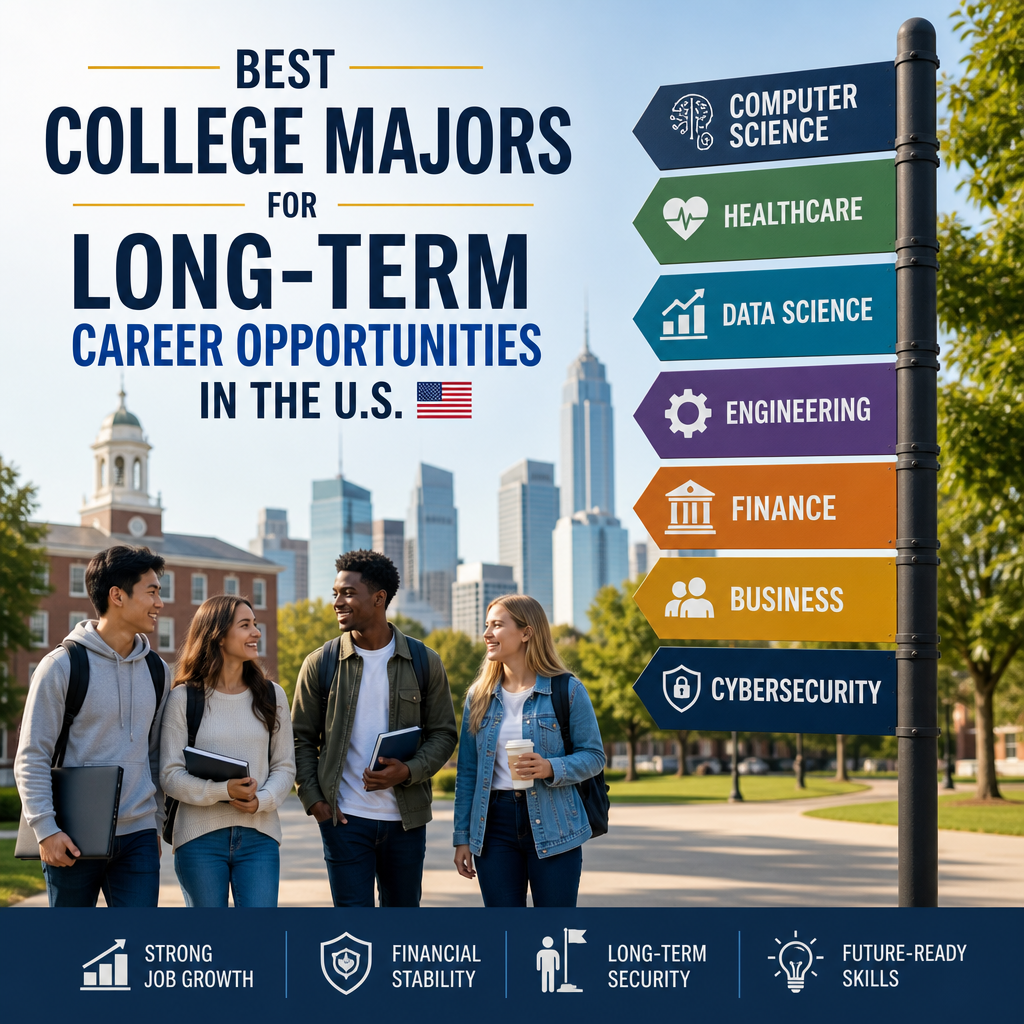
Choosing a college major is one of the biggest decisions students make, and it can shape career options for years to come. While no major guarantees success, some fields offer stronger long-term career opportunities in the U.S. because they align with growing industries, adaptable skills, and clear career pathways. If you are trying to balance passion with practicality, it helps to understand which majors tend to lead to stable, flexible, and rewarding futures.
The best college majors for long-term career opportunities in the U.S. are not always the most “popular” ones. In many cases, they are the majors that build technical knowledge, critical thinking, communication, and problem-solving skills that employers need across industries. Below, we’ll look at majors with strong career potential, why they stand out, and how students can think strategically when planning their academic path.
What Makes a College Major Strong for Long-Term Career Opportunities?
Before diving into specific majors, it helps to define what “good” looks like in the long run. A strong major for long-term career opportunities usually offers more than just an immediate first job.
Key factors to consider
- Job demand across multiple industries
- Transferable skills that remain useful as technology and the economy change
- Clear career pathways or graduate study options
- Strong earning potential over time
- Room for growth, specialization, or licensure
- Practical experience opportunities such as internships, labs, or co-ops
A major that seems narrow at first can still be a great choice if it leads to in-demand credentials or flexible career paths. Likewise, a broad major can be valuable if it helps students develop skills employers consistently need.
Best College Majors for Long-Term Career Opportunities in the U.S.
1. Computer Science
Computer science remains one of the strongest majors for long-term career opportunities in the U.S. because nearly every industry now depends on technology. Graduates can work in software development, cybersecurity, data engineering, systems analysis, artificial intelligence, and more.
Why it stands out
- High demand across tech, finance, healthcare, education, and government
- Strong salary potential
- Opportunities for remote, hybrid, and freelance work
- Constant need for updated skills, which creates long-term relevance
Best for students who
- Enjoy logic and problem-solving
- Like building systems or writing code
- Want career flexibility in a changing economy
A student with a computer science degree can often move between industries without starting over. For example, a software engineer could later specialize in health tech, cloud computing, or cybersecurity.
2. Nursing
Nursing offers one of the clearest and most stable career paths in the U.S. The healthcare industry continues to need qualified nurses in hospitals, clinics, schools, long-term care facilities, and home health settings.
Why it stands out
- Strong and ongoing demand
- Multiple levels of advancement
- Options to specialize in areas like pediatrics, ICU, oncology, or emergency care
- Pathways to advanced practice roles such as nurse practitioner
Best for students who
- Want hands-on work with people
- Value job stability and purpose
- Are comfortable with a demanding but meaningful profession
Nursing is also a strong long-term choice because it offers upward mobility. Many nurses go on to earn advanced degrees and move into leadership, education, or specialized clinical roles.
3. Engineering
Engineering is one of the most reliable majors for long-term career opportunities in the U.S. because it combines technical skill with real-world problem solving. Common branches include mechanical, electrical, civil, chemical, industrial, and biomedical engineering.
Why it stands out
- Broad applicability in manufacturing, infrastructure, energy, technology, and healthcare
- Often tied to licensure and professional credentials
- Strong earning potential
- Skills that remain valuable even as industries evolve
Best for students who
- Enjoy math, science, and structured problem-solving
- Want a challenging but practical education
- Like designing, building, or improving systems
For example, civil engineers may help design bridges and transportation systems, while biomedical engineers work on medical devices and healthcare technologies. The field offers both stability and innovation.
4. Data Science or Statistics
As businesses rely more on data-driven decisions, data science and statistics have become increasingly valuable majors. These fields prepare graduates to analyze information, spot trends, and help organizations make smarter choices.
Why it stands out
- High demand in business, healthcare, tech, marketing, government, and research
- Transferable analytical skills
- Strong growth potential as data becomes central to decision-making
- Opportunities to specialize in machine learning, analytics, or business intelligence
Best for students who
- Enjoy math, analysis, and pattern recognition
- Want a career that combines technical and business insight
- Like solving practical problems with evidence
A student with this background might help a hospital improve patient outcomes, a retailer optimize inventory, or a bank detect fraud. That broad usefulness makes the major especially resilient.
5. Business Administration
Business administration is one of the most versatile majors for long-term career opportunities in the U.S. While it may not lead to one single job title, it prepares students for roles in operations, management, sales, marketing, finance, and entrepreneurship.
Why it stands out
- Flexibility across industries
- Strong foundation in communication, management, and decision-making
- Good preparation for graduate school or specialized certifications
- Useful for students who want to start their own business
Best for students who
- Want broad career options
- Enjoy leadership, planning, or working with teams
- Are interested in how organizations run
To get the most from a business major, students should build a focus area such as finance, supply chain, analytics, or marketing. That combination often makes the degree more competitive and practical.
6. Accounting
Accounting is a strong long-term choice because businesses, nonprofits, government agencies, and individuals all need financial expertise. Accountants help organizations track performance, meet regulations, and make informed decisions.
Why it stands out
- Consistent demand
- Clear career ladder
- Opportunities in tax, audit, corporate finance, and forensic accounting
- Strong preparation for professional certification such as CPA
Best for students who
- Like detail-oriented work
- Enjoy numbers and organization
- Want a career with structure and advancement potential
Accounting is especially attractive because it stays relevant even during economic shifts. Companies need financial records, compliance, and reporting regardless of the market.
7. Healthcare Administration
Healthcare administration is a smart major for students interested in the business side of medicine. As the healthcare system grows more complex, hospitals, clinics, and healthcare networks need professionals who can manage operations, policy, finance, and patient services.
Why it stands out
- Tied to a large and essential industry
- Offers leadership and management opportunities
- Can lead to roles in hospital operations, compliance, and practice management
- Often pairs well with graduate education
Best for students who
- Want to work in healthcare without direct clinical care
- Like organization, systems, and leadership
- Are interested in improving patient services behind the scenes
This major can be especially appealing for students who want a meaningful career with stable demand and room to grow into management.
8. Cybersecurity
Cybersecurity has become a top choice for students seeking long-term career opportunities in the U.S. Because cyber threats continue to affect businesses, schools, hospitals, and government systems, skilled professionals are essential.
Why it stands out
- Strong need across public and private sectors
- Constantly evolving field with room to grow
- Critical role in protecting data and infrastructure
- Often accessible through internships, certifications, and degree programs
Best for students who
- Like technology and problem-solving
- Enjoy investigating and protecting systems
- Want work that stays relevant as threats change
Cybersecurity professionals may work as analysts, engineers, consultants, or incident responders. Because the field evolves quickly, it rewards professionals who keep learning.
9. Education
Education remains a meaningful major for students who want to shape future generations. While salaries vary by region and role, education offers stable career paths and opportunities for growth in teaching, administration, curriculum development, and specialized instruction.
Why it stands out
- Clear career path
- Opportunities for licensure and advancement
- Strong public service value
- Can lead to leadership roles in schools and districts
Best for students who
- Enjoy mentoring and communication
- Want work with a clear purpose
- Are patient, adaptable, and organized
Education is also a field where specialization matters. Teachers who focus on special education, STEM, bilingual instruction, or educational technology may find expanded opportunities.
10. Supply Chain Management
Supply chain management has gained major attention in recent years because companies need skilled professionals to move products efficiently and respond to disruptions. This major can lead to careers in logistics, procurement, operations, and inventory management.
Why it stands out
- Important in manufacturing, retail, healthcare, and e-commerce
- Strong need for analytical and organizational skills
- Useful in both domestic and global business settings
- Offers room for advancement into operations leadership
Best for students who
- Like systems and process improvement
- Enjoy business with a practical focus
- Want to work in a field that connects strategy and execution
Supply chain professionals help businesses reduce delays, control costs, and improve service. That makes the major especially valuable in a changing economy.

How to Choose the Right Major for Your Goals
The best college major for long-term career opportunities is not always the one with the highest starting salary. It is the one that fits your strengths, interests, and long-term plans.
Ask yourself these questions
- What subjects do I naturally enjoy and perform well in?
- Do I want a direct career path or a flexible degree?
- Am I open to graduate school, licensure, or certification?
- Do I want to work with people, data, systems, or technology?
- How important are stability, salary, and work-life balance?
Practical ways to evaluate a major
- Review job descriptions for roles you might want
- Talk to professionals in the field
- Look for internship or co-op opportunities
- Check whether the field requires licensing or graduate study
- Consider double majors, minors, or certificates to strengthen your profile
A student interested in marketing, for example, may benefit from pairing business with data analytics. Someone in biology may improve career options by adding healthcare administration or lab experience.
Majors That Pair Well With Long-Term Career Flexibility
Some students want to keep their options open. In that case, majors that develop broad, transferable skills can be especially useful.
Examples of flexible majors and add-ons
- Psychology paired with human resources, counseling, or data analysis
- English paired with technical writing, publishing, or communications
- Economics paired with finance, policy, or analytics
- Information Systems paired with cybersecurity or business
- Public Health paired with healthcare administration or policy
These combinations can help students stand out in competitive job markets by blending broad knowledge with practical specialization.
Final Thoughts on Career Value
A strong college major should do more than help you get a first job. It should support growth, adaptability, and long-term career opportunities in the U.S. Fields like computer science, nursing, engineering, data science, accounting, cybersecurity, and supply chain management continue to offer solid prospects because they address real labor market needs and build durable skills.
That said, the “best” major depends on the person choosing it. A major that matches your interests and strengths is more likely to keep you motivated, help you build experience, and lead to a sustainable career. The smartest approach is to think beyond the degree title and focus on the skills, credentials, and experiences you can build along the way.
Frequently Asked Questions
1. What college major has the best long-term career opportunities in the U.S.?
There is no single best major for everyone, but computer science, nursing, engineering, accounting, and cybersecurity are among the strongest choices for long-term career opportunities in the U.S. These majors tend to offer steady demand, transferable skills, and room for advancement.
2. Is it better to choose a major based on salary or interest?
You should consider both. A major with strong salary potential can be valuable, but long-term success usually depends on whether you can stay engaged and perform well in the field. The best choice often sits at the intersection of interest, ability, and market demand.
3. Are liberal arts majors a bad choice for career opportunities?
No. Liberal arts majors can lead to strong careers when students build practical skills through internships, certifications, writing, research, communication, or graduate study. Majors like English, history, or psychology can also pair well with fields such as marketing, law, education, and public service.
4. Do I need a graduate degree to have a stable career?
Not always. Many careers in nursing, engineering, accounting, business, and technology can begin with a bachelor’s degree. However, some professions do require advanced education or certification. It depends on the field and the role you want.
5. How can I make my major more useful in the job market?
You can strengthen any major by gaining internships, building technical skills, completing relevant projects, networking, and earning certifications. Choosing a minor or concentration that complements your major can also improve your career prospects.
Official Resources
- U.S. Bureau of Labor Statistics: Occupational Outlook Handbook
- National Center for Education Statistics
- National Association of Colleges and Employers
- National Council of State Boards of Nursing
- National Society of Professional Engineers
Conclusion
The best college majors for long-term career opportunities in the U.S. are the ones that combine demand, adaptability, and real-world value. Majors like computer science, nursing, engineering, data science, accounting, cybersecurity, healthcare administration, education, and supply chain management consistently stand out because they prepare students for industries that need skilled workers now and in the future. But the right major is not just about trends. It should also match your strengths, interests, and willingness to build experience outside the classroom.
As you make your decision, think beyond the degree title. Look at internships, certifications, graduate pathways, and the kinds of problems you want to solve in your career. A smart college choice can open doors, but the habits you build during school will matter just as much. If you focus on skills, flexibility, and practical experience, you will be in a stronger position to create a career that lasts.