Understanding Credit Scores: Factors Affecting Your Financial Health
Your credit score plays a big role in your financial health, affecting everything from loan approvals to the interest rates you pay. The good news is that it’s shaped by everyday habits, which means you can improve it with consistent, smart financial choices.
By: Mary Mitchell on July 30, 2026
A credit score is one of the most important numbers in your financial life. It can affect whether you qualify for a loan, the interest rate you receive, and even your ability to rent an apartment or open certain accounts. If you want stronger financial health, understanding how a credit score works is a smart place to start.
Many people think credit scores are mysterious or fixed, but they are actually shaped by specific habits and financial behaviors over time. The good news is that most of the factors that influence your credit score are within your control. By learning what matters most, you can make better decisions and avoid costly mistakes.
What Is a Credit Score?
A credit score is a three-digit number that helps lenders estimate how likely you are to repay borrowed money. It is based on information in your credit report, such as how much debt you carry, whether you pay bills on time, and how long you have used credit.
In the United States, two of the best-known scoring models are FICO and VantageScore. While the formulas differ slightly, both generally look at similar types of financial behavior. That means the same habits that help one score often help the other as well.
Your credit score is not just about borrowing. It can influence:
Mortgage approval
Auto loans
Credit card offers
Rental applications
Insurance pricing in some cases
Utility deposits and mobile phone contracts
Because credit scores can affect both access and cost, they are closely tied to overall financial health.
Why Credit Scores Matter for Financial Health
A healthy credit score can save you money and create more options. For example, someone with strong credit may qualify for lower interest rates, which can reduce the total cost of a car loan or mortgage. A weak score, on the other hand, may lead to higher rates, stricter terms, or denial.
Your credit score also reflects broader financial habits. It often signals whether you:
Pay bills on time
Keep balances under control
Manage debt responsibly
Maintain long-term financial stability
That makes credit score management an important part of long-term planning, not just short-term borrowing.
The Main Factors That Influence Your Credit Score
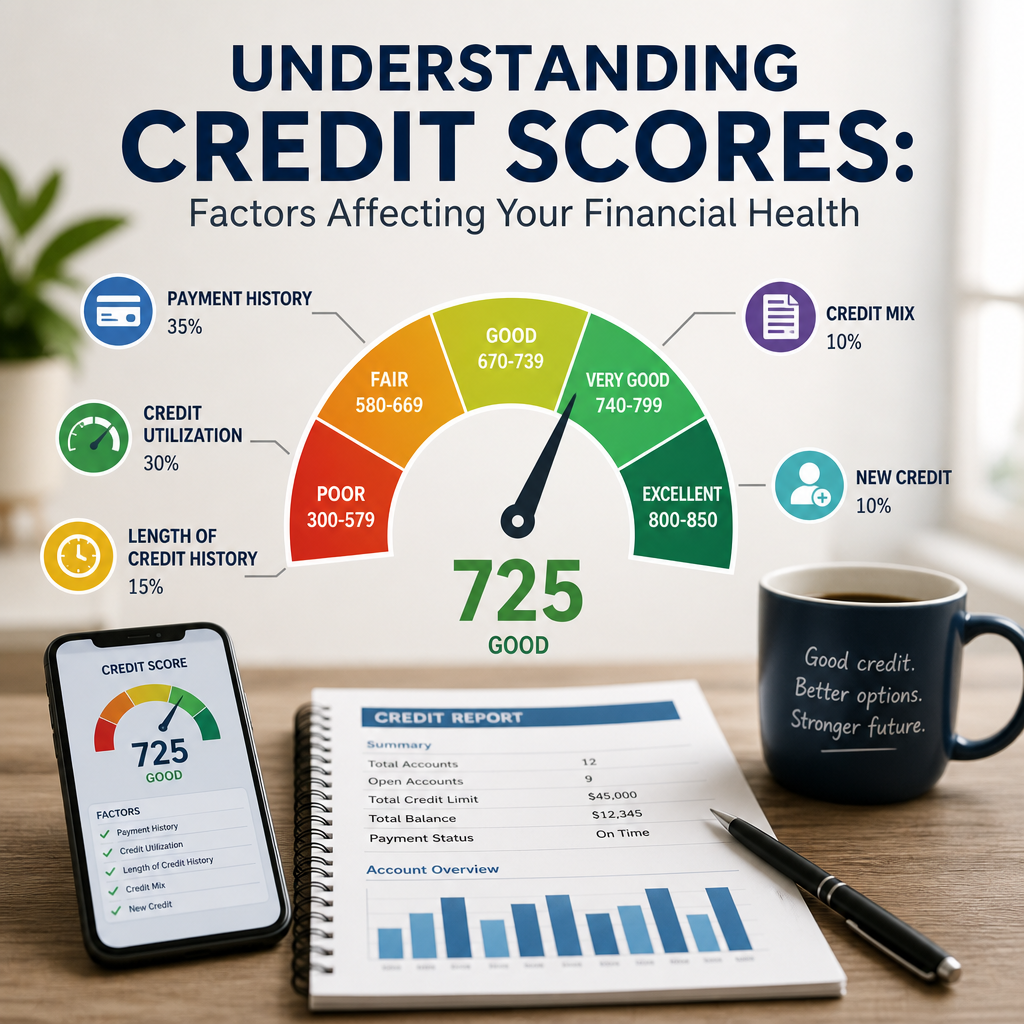
Credit scoring models weigh several factors, and each one contributes differently. Understanding these categories can help you focus on the behaviors that matter most.
1. Payment History
Payment history is usually the most influential factor in a credit score. If you pay your bills on time, you show lenders that you are dependable. Missed payments, late payments, collections, bankruptcies, and defaults can all hurt your score.
Even a single late payment can cause damage, especially if it is reported to the credit bureaus. The longer a bill goes unpaid, the more serious the effect can become.
How to improve payment history
Set up automatic payments for at least the minimum due
Use calendar reminders for due dates
Contact creditors early if you are struggling
Prioritize past-due accounts first
A consistent record of on-time payments is one of the strongest ways to build a better credit score.
2. Credit Utilization
Credit utilization measures how much of your available revolving credit you are using. This applies mainly to credit cards and similar accounts. For example, if you have a $10,000 total credit limit and carry a $3,000 balance, your utilization is 30%.
A lower utilization ratio is generally better because it suggests you are not relying too heavily on credit. High balances can make you appear financially stretched, even if you pay on time.
Practical ways to lower utilization
Pay down credit card balances faster
Make multiple payments during the month
Ask for a credit limit increase, if appropriate
Keep older cards open if they have no annual fee
Many consumers aim to keep utilization low, but there is no single magic number that works for everyone. Still, lower is usually better than higher.
3. Length of Credit History
The length of your credit history shows how long you have been using credit. Scoring models often consider:
The age of your oldest account
The age of your newest account
The average age of all your accounts
A longer history can help because it gives lenders more information about your habits. If you have managed credit responsibly for many years, that track record can strengthen your score.
This is why closing old accounts is not always a good idea. Even if you no longer use an old credit card, keeping it open may help preserve the age of your credit history.
4. Credit Mix
Credit mix refers to the different types of credit you manage. Examples include:
Credit cards
Auto loans
Mortgages
Student loans
Personal loans
Having a mix of credit accounts can sometimes help your score, especially if you have handled each type responsibly. That said, credit mix is usually less important than payment history or utilization.
You should never take on unnecessary debt just to improve your mix. A healthy credit profile should support your goals, not create extra financial stress.
5. New Credit and Inquiries
When you apply for credit, lenders may check your credit report. This is called a hard inquiry. A few inquiries over time are normal, but too many in a short period can temporarily lower your score.
Opening several new accounts at once can also reduce the average age of your credit history and make it look like you are taking on more risk.
When new credit may affect your score
Applying for multiple credit cards in a short time
Shopping for several loans without planning ahead
Opening new store cards for short-term discounts
Taking on more accounts than you can manage
If you are shopping for a mortgage, auto loan, or student loan, rate shopping within a short time frame may be treated more favorably by some scoring models. Still, it is wise to apply strategically.
Additional Factors That Can Influence Your Credit Score
While the five main categories drive most scoring decisions, a few other factors can still matter.
Public Records and Serious Negative Events
Bankruptcies, foreclosures, repossessions, and accounts in collections can significantly affect your credit score. These events often signal severe payment problems and may remain on your credit report for years, depending on the type of record.
If you have a negative item, focus on rebuilding with positive habits:
Pay current bills on time
Reduce revolving debt
Avoid opening unnecessary new accounts
Review your credit reports for accuracy
Errors on Your Credit Report
Sometimes your score drops because of reporting mistakes, not because of your behavior. Common credit report errors include:
Incorrect late payments
Accounts that do not belong to you
Duplicate debts
Wrong balances or credit limits
Outdated negative items
Checking your credit reports regularly can help you catch these issues early. If you find an error, dispute it with the credit bureau and keep records of your communication.
Identity Theft or Fraud
Fraudulent accounts or unauthorized activity can damage your credit quickly. If you suspect identity theft, act right away by contacting the fraud department of the credit bureaus and reviewing all three major credit reports.
You may also want to:
Place a fraud alert
Freeze your credit if needed
File a report with the appropriate authorities
Notify creditors about unauthorized activity
Common Myths About Credit Scores
Credit scores are often misunderstood. Clearing up these myths can help you make better choices.
Myth 1: Checking your own score hurts it
This is false. Checking your own credit score or pulling your own credit report is usually a soft inquiry and does not hurt your score.
Myth 2: You need to carry a balance to build credit
You do not need to pay interest to build credit. In many cases, paying your balance in full each month is the healthier approach. On-time payments and responsible card use matter more than carrying debt.
Myth 3: Closing a credit card always helps
Closing a card can sometimes hurt your credit by reducing available credit and raising utilization. It can also shorten the average age of your accounts. Before closing an account, consider whether it still helps your credit profile.
Myth 4: Income directly determines your credit score
Income is not part of your credit score. However, lenders may consider income when deciding whether to approve a loan. A high salary does not guarantee a good score, and a modest income does not automatically mean poor credit.
Myth 5: You only have one credit score
There are many versions of credit scores. Different lenders may use different models or even custom scoring formulas. That is why your scores may vary slightly across platforms.
How to Build and Protect a Strong Credit Score
Improving your credit score does not usually happen overnight, but steady habits can lead to meaningful progress.
Build positive habits
Pay every bill on time
Keep credit card balances low
Review credit reports regularly
Limit unnecessary applications
Keep older accounts in good standing
Stay organized
Financial health often improves when you make your system simple. Try using:
Automatic bill pay
Budgeting apps
Account alerts
Monthly credit check-ins
Be patient and consistent
A strong credit score reflects long-term behavior. If you have made mistakes in the past, do not assume your situation is permanent. Responsible habits can gradually improve your profile.
Example: How Small Choices Can Affect Credit
Imagine two people with similar incomes.
Person A pays every bill on time, keeps credit card balances low, and only applies for new credit when necessary.
Person B often pays late, maxes out cards, and opens several new accounts in a short period.
Over time, Person A is more likely to develop a stronger credit score and better borrowing options. Person B may face higher interest rates and more financial stress.
This example shows that credit scores are not random. They often reflect patterns of decision-making that either support or weaken financial health.
When to Check Your Credit Score
Checking your credit score regularly is a good habit, especially if you are planning a major purchase or trying to improve your finances.
You may want to check it:
Before applying for a mortgage
Before shopping for a car loan
After paying down debt
If you suspect fraud
At least a few times a year to stay informed
Monitoring your score does not mean obsessing over every small change. Instead, focus on trends and the factors behind them.
Frequently Asked Questions
1. What is considered a good credit score?
A “good” credit score depends on the scoring model, but generally, higher scores represent lower risk to lenders. In many common scoring models, scores in the upper ranges are viewed more favorably. What matters most is how your score compares with the lender’s standards for the product you want.
2. How long does a missed payment affect a credit score?
A missed payment can affect your credit score quickly, especially if it is reported as late. The impact often lessens over time if you return to on-time payments, but the negative mark can remain on your credit report for years depending on the severity of the delinquency.
3. Does paying off debt improve your credit score right away?
Sometimes it helps quickly, especially if paying down credit card balances lowers your credit utilization. Other improvements may take longer because lenders and scoring models need updated reporting cycles to reflect the change.
4. Should I close old credit cards I no longer use?
Not always. Closing an old card can reduce your available credit and affect your credit history length. If the card has no annual fee and does not encourage overspending, keeping it open may be better for your score.
5. How often should I check my credit report?
It is a good idea to review your credit reports regularly, especially before applying for major credit. Checking at least once a year is a common baseline, but more frequent reviews can help you catch errors or suspicious activity sooner.
Official Resources
AnnualCreditReport.com — Free access to your credit reports from the three major bureaus
Understanding credit scores is an important step toward stronger financial health. Your score is shaped by everyday behaviors such as paying bills on time, keeping balances manageable, maintaining older accounts, and applying for new credit carefully. It is also influenced by what appears on your credit report, which means checking for errors and responding quickly to fraud can make a real difference.
The most encouraging part is that credit scores are not set in stone. If your score is lower than you want, you can improve it with steady, responsible habits. If your score is already strong, you can protect it by staying organized and avoiding common mistakes. Over time, these choices can open the door to better loan terms, lower borrowing costs, and more financial flexibility.
If you want to strengthen your financial future, start with the basics: know your numbers, review your credit reports, and build habits that support long-term stability. Small decisions today can lead to bigger opportunities tomorrow.
Mary S, CFP®, is a Certified Financial Planner with over 12 years of experience in personal finance, retirement planning, and wealth management. She writes educational content that helps readers understand financial concepts and make informed decisions based on reliable information.