Federal Student Aid 2026: Updated Programs and Eligibility Requirements
Paying for college remains one of the biggest financial challenges for students and families, and Federal Student Aid 2026 will continue to play a central role in making higher education more accessible. Whether you’re applying for the first time, returning to school, or helping a dependent student plan ahead, understanding the latest programs and eligibility requirements can help you avoid missed deadlines, unnecessary debt, and funding gaps.
In 2026, the federal aid system is still built around familiar tools like grants, loans, and work-study, but students should pay close attention to changing rules, application details, and school participation requirements. The Free Application for Federal Student Aid, or FAFSA, remains the gateway to most federal aid opportunities, and completing it correctly is more important than ever.
What Federal Student Aid 2026 Includes
Federal Student Aid 2026 refers to the collection of financial assistance programs offered by the U.S. Department of Education to help eligible students pay for college, career school, or graduate education. These programs are designed to support students based on financial need, enrollment status, citizenship or eligible noncitizen status, and academic program requirements.
The main federal aid categories
Here are the core types of aid students may receive:
- Grants: Typically need-based funds that usually do not need to be repaid.
- Loans: Borrowed money that must be repaid, usually with interest.
- Federal Work-Study: Part-time jobs for students with financial need.
- Scholarships and institutional aid: Not federal programs, but often awarded based on FAFSA information.
The most common federal aid programs include:
- Pell Grants
- Federal Supplemental Educational Opportunity Grants (FSEOG)
- Direct Subsidized Loans
- Direct Unsubsidized Loans
- Direct PLUS Loans
- Federal Work-Study
Some programs remain especially important for students with limited family income, while others help cover remaining costs after grants and scholarships are applied.
Federal Student Aid 2026: Updated Programs to Know
Federal aid does not stay static. Application systems, award formulas, and loan rules can shift from year to year. For Federal Student Aid 2026, students should understand the programs most likely to affect their financial planning.
Pell Grants
Pell Grants remain one of the most valuable forms of federal aid because they are generally reserved for undergraduate students with exceptional financial need. Since these grants do not have to be repaid, they are often the first program students look at when estimating aid.
To qualify, students must:
- Complete the FAFSA
- Show financial need
- Be enrolled in an eligible program
- Maintain satisfactory academic progress
Pell Grant amounts can vary depending on enrollment status, cost of attendance, and financial need. Students attending part time may receive reduced amounts.
Federal Supplemental Educational Opportunity Grants
FSEOG funds are awarded to undergraduates with the highest financial need. These grants are limited because they depend on school participation and available campus funding.
Not all schools offer FSEOG, and awards are often made on a first-come, first-served basis. That makes early FAFSA filing especially important.
Federal Direct Loans
Federal Direct Loans continue to be a core part of Federal Student Aid 2026. These loans are available to eligible students attending participating schools.
Subsidized loans
These are available to undergraduates with financial need. The government pays the interest while the student is enrolled at least half time, during the grace period, and during approved deferment periods.
Unsubsidized loans
These are available to both undergraduate and graduate students, and financial need is not required. Interest begins accruing as soon as the loan is disbursed.
Direct PLUS Loans
Direct PLUS Loans help graduate or professional students and parents of dependent undergraduates pay education costs not covered by other aid. These loans generally require a credit check, and borrowers must meet federal eligibility requirements.
Federal Work-Study
Federal Work-Study allows eligible students to earn money through part-time jobs, often on campus or with approved community employers. The benefit is flexibility: students can earn income while building experience without taking on additional loan debt.
Work-study does not guarantee a job placement, so students should apply early and follow up with the financial aid office after receiving an award offer.
Federal Student Aid 2026 Eligibility Requirements
Eligibility rules remain one of the most important parts of the process. A student may qualify for some federal aid but not all aid programs. Understanding the requirements early can prevent surprises later.
Basic eligibility criteria
To receive federal student aid, students generally must:
- Be a U.S. citizen or an eligible noncitizen
- Have a valid Social Security number, if required
- Be enrolled or accepted for enrollment in an eligible degree or certificate program
- Maintain satisfactory academic progress
- Have a high school diploma, GED, or approved equivalent
- Sign the FAFSA and the required certifications
- Not be in default on a federal student loan or owe a refund on a federal grant
Enrollment requirements
Most federal aid is tied to enrollment at an eligible school. That school must participate in federal student aid programs and must offer approved academic programs.
Students should also know that aid amounts often depend on enrollment status:
- Full-time
- Three-quarter time
- Half-time
- Less than half-time
Some aid, such as certain grants and loans, may be reduced if a student attends less than full time.
Academic progress rules
Students must maintain satisfactory academic progress to keep receiving federal aid. While each school sets its own standards within federal guidelines, common requirements include:
- Meeting a minimum GPA
- Completing a percentage of attempted coursework
- Staying within a maximum timeframe for the program
If a student falls behind, they may lose eligibility until they appeal or improve academic standing.
Dependency status matters
A student’s dependency status affects how FAFSA information is evaluated. Dependent students usually must report parent information, while independent students do not.
Independent status may apply if the student:
- Is 24 or older
- Is married
- Has dependents of their own
- Is a veteran or active-duty service member
- Is an orphan or ward of the court
- Meets other federal criteria
Because dependency rules can be complex, students should review them carefully rather than assume they qualify as independent.
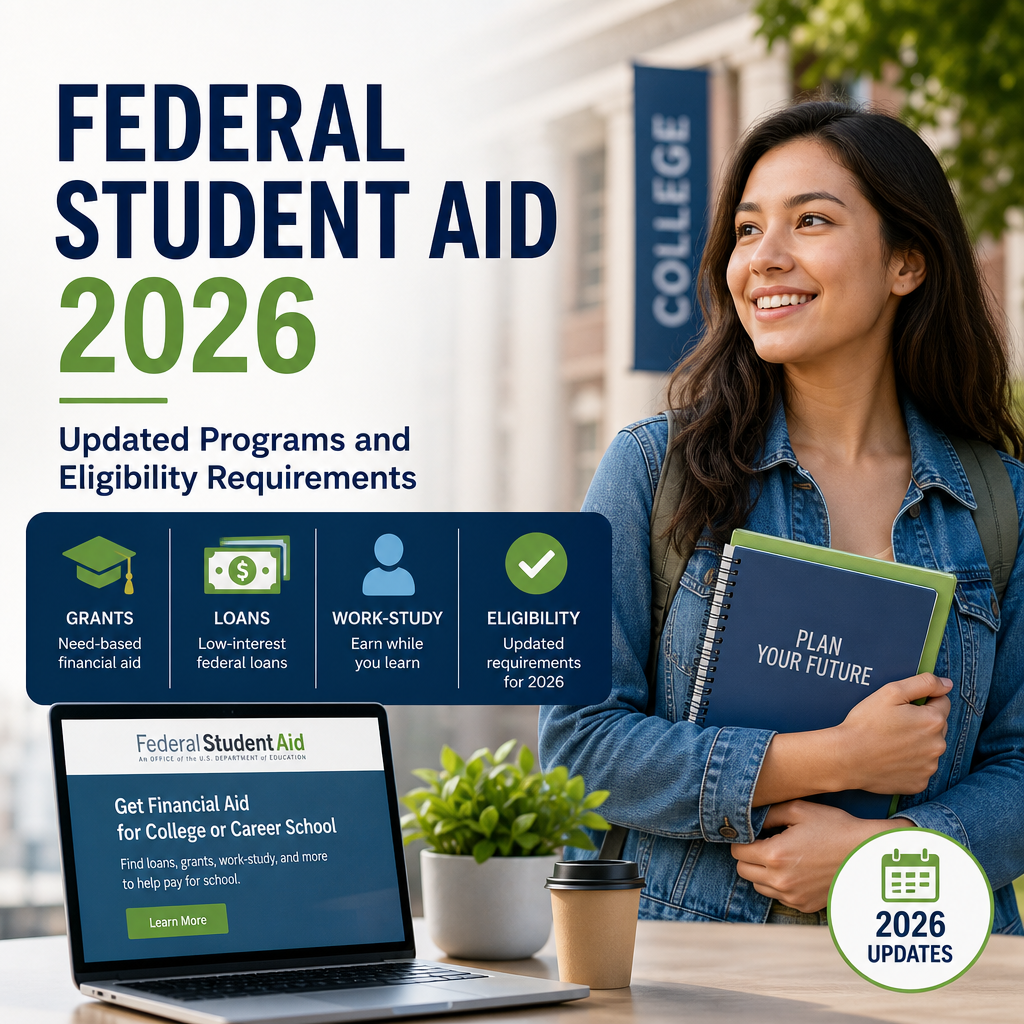
How the FAFSA Shapes Federal Student Aid 2026
The FAFSA is the foundation of federal student aid eligibility. Even if a student only wants loans, filling out the FAFSA is still the first step.
Why the FAFSA matters
The FAFSA helps determine eligibility for:
- Pell Grants
- FSEOG
- Federal Work-Study
- Direct Subsidized Loans
- Some state and institutional aid
Many schools also use FAFSA data to award their own scholarships and grants.
Information typically required
Students and parents may need:
- Social Security numbers
- Federal tax information
- Records of untaxed income
- Bank account balances
- Investment details
- School information
Using the FAFSA accurately and submitting it on time is essential. Mistakes can delay aid or reduce eligibility.
Filing tips for 2026 applicants
To make the process easier:
- Gather documents before starting
- Use the official FAFSA website
- Double-check names, dates, and Social Security numbers
- List all schools you’re considering
- Submit the FAFSA as soon as possible after it opens
Even if you think you won’t qualify for much aid, filing may still open doors to lower-cost loans or school-based assistance.
Common Changes Students Should Watch in 2026
While the federal aid framework remains familiar, students should stay alert to updates that affect awards, repayment, and application timing.
Program updates and award adjustments
Students may see changes in:
- Pell Grant eligibility calculations
- Loan limits or annual borrowing rules
- Cost-of-attendance estimates
- FAFSA processing timelines
- School participation in specific aid programs
These changes can influence how much aid a student receives and when funds are disbursed.
Loan repayment awareness
Even though repayment begins later, students should already understand the long-term impact of borrowing. Federal loans offer protections such as income-driven repayment options, deferment, and forbearance in certain situations, but borrowed money still has to be paid back.
A smart approach is to borrow only what you need and compare all available aid before accepting loans.
Practical Ways to Maximize Federal Student Aid 2026
Students often leave money on the table because they miss deadlines or misunderstand eligibility. A few simple steps can make a big difference.
1. Apply early
Some programs, especially FSEOG and work-study, have limited funds. Filing the FAFSA early improves your chances of receiving need-based aid.
2. Review your Student Aid Report
After filing, review your Student Aid Report for errors. If anything looks wrong, correct it promptly.
3. Compare your financial aid offers
Schools may package aid differently. Compare:
- Grants and scholarships
- Work-study offers
- Loan amounts
- Net cost after aid
The cheapest sticker price is not always the best deal if aid packaging differs.
4. Ask about special circumstances
If your family has experienced a loss of income, medical expenses, or another major financial change, contact the school’s financial aid office. They may be able to review your case and adjust your aid estimate.
5. Keep your academic standing strong
Good grades and steady progress protect your eligibility. If you begin struggling, seek tutoring, advising, or academic support before your aid is affected.
Who Benefits Most from Federal Student Aid 2026?
Federal aid is valuable for many students, but it is especially helpful for:
- First-generation college students
- Low- and moderate-income families
- Students attending public colleges and community colleges
- Working adults returning to school
- Graduate students needing loans for remaining costs
- Families looking for predictable repayment options
For many households, federal aid makes the difference between attending school now and delaying education for years.
Frequently Asked Questions
1. What is the first step to apply for Federal Student Aid 2026?
The first step is completing the FAFSA through the official federal application system. You’ll need personal, financial, and school information. Filing early is important because some aid is limited and awarded on a first-come, first-served basis.
2. Do I have to repay federal grants?
No, federal grants such as Pell Grants typically do not need to be repaid, as long as you meet the program requirements. However, if you withdraw early or do not complete the enrollment period under certain conditions, you may owe part of the grant back.
3. Can graduate students receive Federal Student Aid 2026?
Yes. Graduate and professional students may qualify for Direct Unsubsidized Loans and Direct PLUS Loans. Some grants, such as Pell Grants, are generally reserved for undergraduate students.
4. What if my family income changed after I filed the FAFSA?
If your family’s financial situation changed significantly, contact your school’s financial aid office right away. Schools can sometimes review special circumstances and consider updating your aid calculation using professional judgment, depending on the situation and federal rules.
5. Does applying for federal aid affect my chances of getting scholarships?
In most cases, no. In fact, many schools and scholarship programs use FAFSA data to determine eligibility for their own awards. Filing the FAFSA can actually improve your access to additional funding opportunities.
Official Resources
- Federal Student Aid – U.S. Department of Education
- FAFSA Application Information
- Federal Student Aid Grants Overview
- Federal Student Aid Loans Overview
- Consumer Financial Protection Bureau: Paying for College
Conclusion
Understanding Federal Student Aid 2026 can make the college financing process far less overwhelming. The key is to know what programs are available, who qualifies, and how the FAFSA influences nearly every major type of aid. Grants can reduce the amount you need to borrow, work-study can help you earn while studying, and federal loans can fill important gaps when used carefully.
The most successful students approach aid planning early and treat it like part of their overall college strategy. That means filing the FAFSA on time, reviewing awards carefully, staying in good academic standing, and comparing aid offers before making a final decision. It also means thinking beyond the first year and considering how borrowing today may affect your finances later.
If you’re preparing for college in 2026, start with the official federal aid resources, gather your documents, and build a clear funding plan. A little preparation now can lead to better choices, less stress, and a stronger financial future.