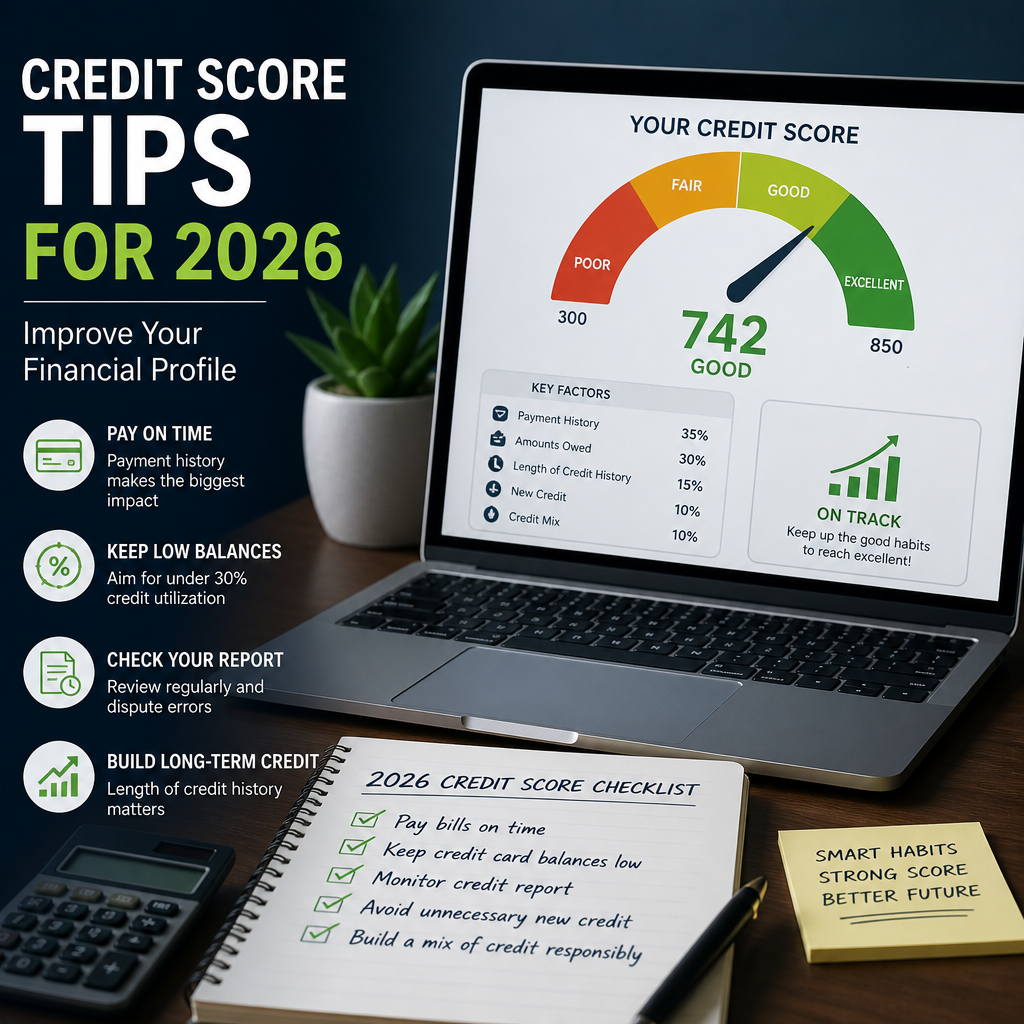
Credit Score Tips for 2026: Improve Your Financial Profile
Looking for practical credit score tips in 2026? This guide breaks down simple, effective ways to strengthen your financial profile, from managing utilization and payment history to avoiding common mistakes that can hold your score back.
By: Mary Mitchell on July 30, 2026
Your credit score still matters in 2026, but the way lenders evaluate financial health continues to evolve. That makes it more important than ever to use smart, practical credit score tips that strengthen your profile over time. Whether you’re planning to buy a home, refinance a loan, qualify for a better credit card, or simply feel more in control of your finances, improving your credit starts with understanding what affects your score and building habits that support long-term progress.
The good news is that most credit score improvements come from consistent behavior, not complicated tricks. If you focus on payment history, credit utilization, account management, and accurate reporting, you can create a stronger financial profile without taking on unnecessary risk. Below, you’ll find clear, actionable ways to improve your credit in 2026 and keep it moving in the right direction.
Credit Score Tips for 2026: Start With the Basics
Before you can improve your credit, it helps to know what drives it. While scoring models can vary, the core factors are familiar:
Payment history
Credit utilization
Length of credit history
Credit mix
New credit activity
These categories appear in different scoring models, including widely used FICO and VantageScore systems. The exact formula can differ, but the overall principle stays the same: lenders want to see that you manage debt responsibly and consistently.
Why credit scores matter more than ever
A stronger credit profile can help you:
Qualify for lower interest rates
Get approved for loans and credit cards more easily
Reduce security deposits on some services
Improve your chances of favorable rental applications
Build confidence in your overall financial health
In 2026, with lenders relying heavily on digital underwriting and automated risk checks, small improvements in your score may have a meaningful impact.
Pay Every Bill on Time
If you only focus on one credit habit, make it this one. Payment history is one of the most important parts of your score, and late payments can hurt for a long time.
Practical ways to stay current
Set up autopay for at least the minimum payment
Use calendar reminders a few days before due dates
Consolidate due dates when possible
Keep a small emergency buffer for bill coverage
Contact creditors early if you expect a problem
Even one missed payment can become expensive quickly. It may trigger late fees, interest charges, and a negative mark on your report if the account becomes seriously delinquent.
Example
If your credit card is due on the 15th and your paycheck arrives on the 14th, scheduling autopay for the minimum amount can protect your account from accidental late payment. Then you can make an extra manual payment later if you want to reduce the balance faster.
Keep Credit Utilization Low
Credit utilization is the percentage of available revolving credit you’re using. For example, if you have a $10,000 total credit limit and carry a $3,000 balance, your utilization is 30%.
This factor is one of the most powerful credit score tips because it often responds quickly to changes in balances.
Best practices for utilization
Aim to keep utilization below 30%
Many consumers benefit from staying well below 10%
Pay balances before statement closing dates when possible
Ask for a credit limit increase only if you can avoid overspending
Spread spending across cards if needed, but avoid carrying unnecessary debt
Why this works
High utilization can signal that you’re relying heavily on credit. Lower utilization often suggests better financial control. If you’re trying to improve your score in 2026, this is one of the fastest areas to address.
A simple example
If your card limit is $2,000 and you charge $1,600, your utilization is 80%. Even if you pay the card off later, the balance reported at statement time may still affect your score. Paying before the statement closes can help reduce what gets reported.
Review Your Credit Reports Regularly
Errors on credit reports are more common than many people realize. A wrong late payment, duplicated account, outdated balance, or account that doesn’t belong to you can drag down your score.
What to look for
Incorrect personal information
Accounts you don’t recognize
Duplicate debts
Incorrect payment statuses
Closed accounts listed as open
Incorrect balances or credit limits
Outdated negative items
How to stay proactive
In 2026, it’s wise to review your credit reports from all three major bureaus periodically. You can request free reports through official channels and compare them carefully.
If you spot a mistake, dispute it quickly with the bureau and include supporting documentation. Accuracy matters, and correcting an error can sometimes improve your profile faster than waiting for old data to age off naturally.
Build a Stronger Credit Mix Over Time
A healthy credit profile often includes more than one type of credit. Revolving credit, such as credit cards, and installment credit, such as auto loans or personal loans, can both appear in your report.
That said, you should never open accounts you don’t need just to diversify your credit mix. Responsible management matters more than variety.
When credit mix helps
You may benefit from a balanced mix if you already have:
One or more credit cards managed responsibly
A student loan, auto loan, or mortgage paid on time
A long history of low-risk account use
What not to do
Don’t take on debt just to “improve your mix”
Don’t open multiple accounts at once
Don’t use expensive financing unless it fits your budget
A credit mix can support your score, but it should be a byproduct of good financial planning—not the goal itself.
Limit Hard Inquiries and New Credit Applications
Every time you apply for certain credit products, a hard inquiry may appear on your report. A single inquiry usually has a small effect, but too many applications in a short time can raise concerns.
Smart application habits
Apply only when you genuinely need credit
Research eligibility before submitting applications
Avoid opening several accounts at once
Space out applications when possible
Be cautious with store cards and promotional offers
Good example
If you’re shopping for an auto loan, try to complete all rate comparisons within a focused window. Many scoring models treat multiple inquiries for the same type of loan as a single event when they occur within a reasonable timeframe. That helps you shop for a better rate without damaging your score more than necessary.
Keep Old Accounts Open When It Makes Sense
Length of credit history is another important factor. Older accounts can help demonstrate stability and long-term responsible use.
Why this matters
Closing an old credit card may:
Reduce your available credit
Increase your utilization ratio
Shorten the average age of your accounts over time
When to keep an account open
If an older card has no annual fee and you can manage it responsibly, it may be worth keeping open. Use it occasionally for a small purchase and pay it off promptly to keep it active.
When closing may still make sense
You might close an account if:
It has high fees
It encourages overspending
It creates a security or management concern
The key is to think strategically, not emotionally. A dormant account isn’t always harmful, but an account that tempts bad financial habits can be.
Pay Down Revolving Debt Strategically
If you’re carrying balances, reducing them can help both your score and your monthly cash flow. The method you choose should fit your budget and personality.
Two popular repayment methods
Avalanche method
Focus on the highest interest rate debt first while making minimum payments on the rest.
Snowball method
Pay off the smallest balance first to build momentum and motivation.
Both methods can work. The best one is the one you’ll actually stick with.
Extra tips for faster progress
Use tax refunds or bonuses to make lump-sum payments
Pause nonessential spending temporarily
Set automatic extra payments after each paycheck
Avoid replacing old debt with new debt
If revolving balances are high, paying them down can make a noticeable difference in your utilization and financial stress.
Use Credit-Building Tools Carefully
If you’re rebuilding or starting from scratch, you may need tools designed to help establish credit history.
Options to consider
Secured credit cards
Credit-builder loans
Becoming an authorized user on a well-managed account
Reporting on-time rent or utility payments where available
Important caution
Not every product is a good fit. Watch for:
High fees
Unclear terms
Products that don’t report to major bureaus
Offers that pressure you into unnecessary borrowing
A good credit-building tool should be simple, transparent, and affordable. It should support your long-term financial profile rather than create new problems.
Avoid Common Credit Mistakes
Some of the most useful credit score tips are actually about what not to do. Preventing damage is often easier than fixing it later.
Mistakes to avoid
Missing due dates
Maxing out cards
Closing old accounts without a clear reason
Applying for too many accounts at once
Ignoring collection notices
Co-signing loans without understanding the risk
Carrying balances on high-interest cards longer than necessary
A practical mindset
Think of credit as a reputation system. Every action sends a signal. Consistent, low-risk behavior usually helps you more than short-term hacks ever could.
Create a Credit Routine for 2026
Improvement works best when it becomes a habit. Instead of randomly checking your score once in a while, build a simple credit routine.
A monthly routine
Review all bills and due dates
Check current card balances
Track utilization
Confirm automatic payments posted correctly
Watch for unusual account activity
A quarterly routine
Review your credit reports
Check for score changes and investigate major shifts
Reassess debt payoff progress
Update goals for the next quarter
A yearly routine
Recheck your full financial picture
Compare loan and credit card offers before applying
Review authorized user accounts and old cards
Confirm personal information is accurate with creditors
This routine can keep your financial profile healthy and reduce surprises.
When to Seek Extra Help
Sometimes credit issues go beyond basic habits. If you’re dealing with repeated denials, major debt, or reporting errors that don’t get resolved, it may help to talk with a nonprofit credit counselor or a financial professional.
Consider getting help if:
You’re struggling to make minimum payments
You’re facing debt collection
You’ve had identity theft or account fraud
You don’t know where to start rebuilding
A trustworthy counselor can help you create a realistic plan without pushing unnecessary products.
Frequently Asked Questions
1. What is the fastest way to improve a credit score in 2026?
The fastest improvements often come from lowering credit card balances and correcting reporting errors. If your utilization is high, paying down revolving debt can help relatively quickly. Also, reviewing your credit reports for mistakes and disputing them can remove inaccurate negative information.
2. How often should I check my credit report?
Checking your credit report regularly is a smart habit. Many people review it several times per year, especially before applying for major credit, such as a mortgage or auto loan. Regular checks help you catch errors, fraud, or unwanted changes early.
3. Does paying off a credit card every month help my score?
Yes, paying your credit card in full each month is generally a strong habit. It helps you avoid interest charges and keeps balances low. Just be aware that the balance reported to credit bureaus is often based on your statement closing date, not your payment due date.
4. Should I close old credit cards I never use?
Not always. Keeping an old card open can help your credit history and available credit, especially if it has no annual fee. However, if the card creates fees or encourages overspending, closing it may be reasonable. The right choice depends on your financial habits and goals.
5. Can I build credit without taking on a lot of debt?
Yes. You can build credit responsibly with a secured card, a credit-builder loan, or by becoming an authorized user on a well-managed account. The goal is to show on-time payments and low utilization, not to borrow more than you can handle.
Improving your credit in 2026 doesn’t require gimmicks or risky shortcuts. The most effective credit score tips still come down to the same fundamentals: pay on time, keep balances low, monitor your reports, and manage new credit carefully. When you combine those habits with a thoughtful repayment plan and regular account reviews, you give yourself a much better chance of building a stronger financial profile.
The best part is that credit improvement is usually within reach if you stay consistent. Small actions—like setting up autopay, reducing utilization, disputing errors, and keeping older accounts in good standing—can add up over time. Instead of chasing quick fixes, focus on steady progress and smarter decision-making. Over the next year, those choices can help you qualify for better financial opportunities and build more confidence in your money management.
Mary S, CFP®, is a Certified Financial Planner with over 12 years of experience in personal finance, retirement planning, and wealth management. She writes educational content that helps readers understand financial concepts and make informed decisions based on reliable information.