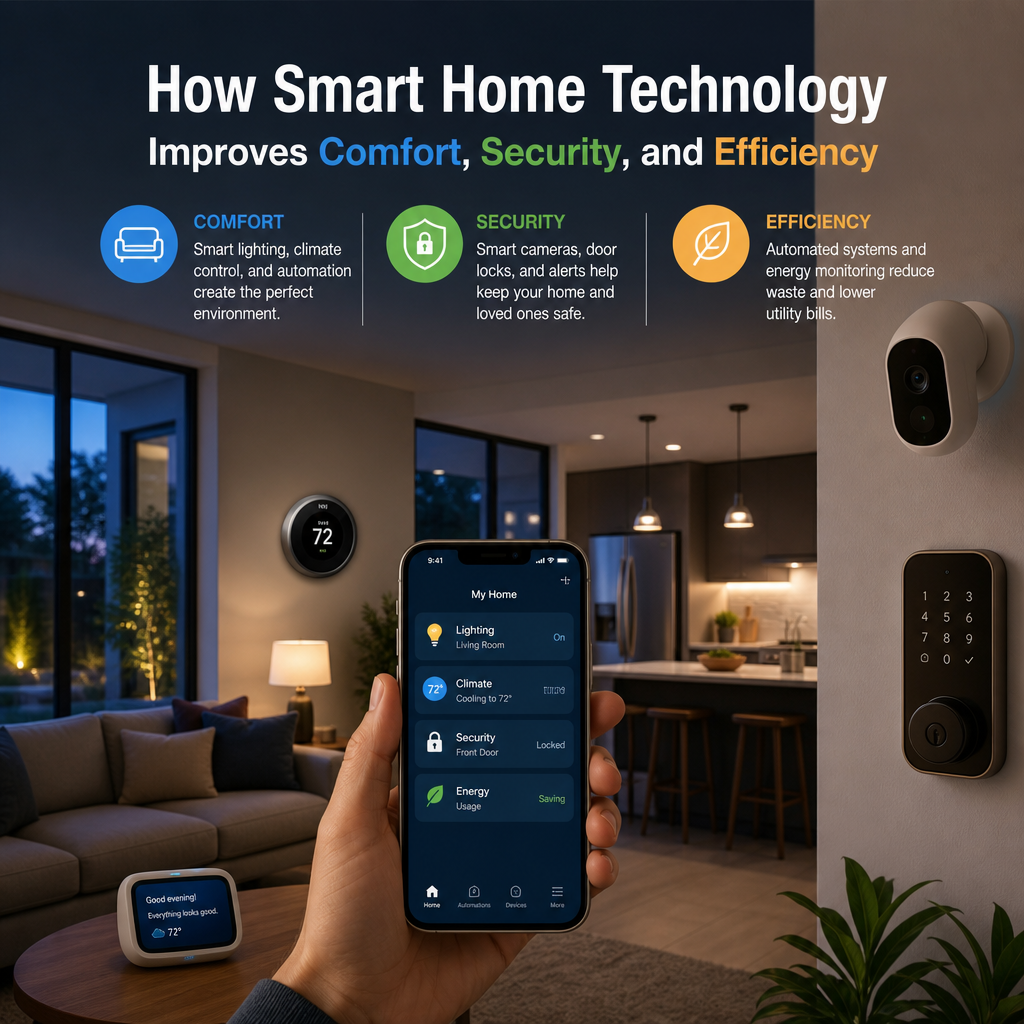
How Smart Home Technology Improves Comfort, Security, and Efficiency
Smart home technology makes everyday living easier by helping your home adapt to your routines, protect what matters, and use energy more wisely. From personalized climate control to better security and automation, it offers practical benefits that can improve comfort and efficiency throughout the day.
By: Peter on July 30, 2026
Smart home technology has moved well beyond novelty gadgets and voice assistants. Today, it helps homeowners create spaces that feel more comfortable, stay more secure, and run more efficiently. Whether you want lights that adjust automatically, a thermostat that learns your schedule, or security cameras you can check from anywhere, smart home technology can make daily life easier in practical ways.
The best part is that these tools are no longer limited to luxury homes or tech enthusiasts. With more affordable devices and easier setup options, smart home technology is now accessible to many households. When used thoughtfully, it can reduce wasted energy, simplify routines, and give you better control over your home environment.
What Is Smart Home Technology?
Smart home technology refers to connected devices and systems that can be monitored, automated, or controlled remotely. These devices often work through a smartphone app, voice assistant, or centralized hub.
Common examples include:
Smart thermostats
Smart lighting
Video doorbells
Security cameras
Smart locks
Leak sensors
Smart plugs and outlets
Automated blinds or shades
Many smart home devices use Wi-Fi, Bluetooth, Zigbee, or Z-Wave to communicate. Some can work independently, while others are part of a broader home automation system.
How Smart Home Technology Improves Comfort
Comfort is one of the most immediate benefits of smart home technology. Instead of adjusting settings manually throughout the day, you can create a home that responds to your habits and preferences.
Personalized Climate Control
A smart thermostat can learn when you’re home, asleep, or away and adjust temperatures accordingly. That means you can wake up to a warm house in winter or walk into a cooler home on a hot afternoon.
Practical ways this helps:
Keeps rooms at more consistent temperatures
Lets you adjust settings remotely before arriving home
Creates temperature schedules for different times of day
Reduces the need to constantly touch the thermostat
For households with different routines, smart temperature control can also help balance comfort for everyone.
Lighting That Matches Your Routine
Smart lighting can improve both convenience and atmosphere. You can dim lights for movie night, brighten your kitchen for meal prep, or set lights to turn on gradually in the morning.
Popular features include:
Scheduling lights to turn on or off automatically
Using motion sensors in hallways, closets, or bathrooms
Adjusting brightness and color temperature
Creating preset scenes for work, relaxation, or entertaining
This kind of automation makes your home feel more responsive and less dependent on manual adjustments.
Hands-Free Convenience
Voice control can be especially useful when your hands are full or you’re moving around the house. You can ask a smart speaker to turn on lights, lock doors, play music, or set the thermostat.
That kind of convenience is valuable for:
Parents managing busy routines
People with mobility limitations
Older adults who prefer simpler controls
Anyone who wants fewer small tasks during the day
Smart home technology can remove friction from ordinary moments, which adds up over time.
How Smart Home Technology Strengthens Security
Home security is another major reason people invest in smart home technology. These devices can help you monitor your property, deter unwanted visitors, and respond faster when something seems off.
Better Awareness at the Front Door
Video doorbells and smart cameras let you see who’s outside without opening the door. Many systems send alerts when motion is detected or when someone rings the bell.
This can help you:
Check on package deliveries
Speak to visitors remotely
Review footage after an incident
Monitor activity while you’re away
For busy households, this kind of visibility can be especially useful. It gives you more awareness without requiring you to constantly watch the door.
Smart Locks for Flexible Access
Smart locks let you lock and unlock doors using an app, keypad, fingerprint, or access code. They can also create temporary entry codes for guests, house sitters, or service providers.
Benefits include:
No more worrying about lost keys
Remote locking and unlocking
Activity logs that show when the door was used
Temporary access without sharing a physical key
For families, this can simplify daily life. For example, you can let a child in after school without leaving a key under the mat or giving out a permanent code.
Sensors That Help Catch Problems Early
Smart home technology isn’t just about theft prevention. It can also help detect issues like smoke, carbon monoxide, leaks, or unusual motion.
Useful devices include:
Water leak sensors near appliances, sinks, or basements
Smart smoke and carbon monoxide detectors
Window and door sensors
Motion sensors for entry points or garages
Early alerts can help reduce damage and give you time to act before a small issue becomes a bigger one.
Remote Monitoring While You’re Away
One of the biggest advantages of connected home security is the ability to check your home from anywhere. Whether you’re at work or on vacation, you can review camera feeds, receive alerts, and confirm that doors are locked.
That level of awareness can provide peace of mind, especially when you travel often or keep irregular hours.
How Smart Home Technology Increases Efficiency
Efficiency is where smart home technology can have a lasting impact. By reducing wasted energy and helping your systems run more intelligently, these devices can support both convenience and sustainability.
Energy Savings Through Automation
Smart thermostats, lights, and plugs can reduce energy use by operating only when needed. For example, lights can shut off when no one is in the room, and connected devices can power down on a schedule.
Simple ways to improve efficiency:
Set lights to turn off automatically at bedtime.
Use occupancy sensors in low-traffic rooms.
Schedule your thermostat for different times of day.
Turn off idle electronics with smart plugs.
Track energy use through device dashboards or apps.
These small adjustments may not feel dramatic on their own, but together they can make your home more efficient.
Smarter Use of Appliances
Smart plugs and connected appliances can help you avoid unnecessary power use. For instance, you can schedule a coffee maker to start shortly before you wake up or set a fan to run only during certain hours.
This is especially helpful for:
Holiday lighting
Home office equipment
Media centers
Small kitchen appliances
A more efficient home often comes from managing the little things well.
Water Management and Leak Prevention
Smart water sensors and connected shutoff systems can help detect leaks early, which can save water and help prevent costly property damage. In some homes, smart irrigation systems also adjust watering schedules based on weather or soil conditions.
That means you can:
Avoid watering lawns during rain
Catch leaks before they spread
Monitor moisture in vulnerable areas
Reduce unnecessary water use
For homeowners who want a more responsible approach to resource use, this is a strong reason to explore smart home technology.
Choosing the Right Smart Home Devices
Not every smart device is necessary for every household. The best setup depends on your goals, budget, and comfort level with technology.
Start With Your Biggest Pain Points
Before buying devices, think about what you want to improve most:
Do you want lower utility bills?
Are you more concerned about security?
Do you want more convenience in daily routines?
Are you trying to make aging in place easier?
Starting with one clear goal helps you avoid buying gadgets you won’t use.
Look for Compatibility
Some devices work best within the same ecosystem. Before buying, check whether your phone, voice assistant, Wi-Fi network, and existing devices will work together smoothly.
Helpful compatibility questions include:
Does the device work with Alexa, Google Home, or Apple Home?
Does it require a hub?
Will it connect to your current Wi-Fi setup?
Can it integrate with other smart devices you already own?
A well-connected system is usually easier to manage than a collection of unrelated gadgets.
Prioritize Security and Privacy
Because smart home technology connects to your network, it’s important to think about digital security. Choose trusted brands, update firmware regularly, and use strong passwords.
Good habits include:
Enabling two-factor authentication when available
Changing default passwords
Keeping apps and device software updated
Buying from reputable manufacturers
Reviewing privacy settings before setup
Security matters just as much online as it does at the front door.
Real-Life Examples of Smart Home Technology in Action
Smart home technology becomes easier to understand when you see how it fits into everyday life.
Example 1: The Busy Family
A family with different work and school schedules uses a smart thermostat, video doorbell, and smart locks. The thermostat adjusts when the house is empty, the doorbell shows who’s delivering packages, and the smart locks let older kids get inside without carrying keys.
Example 2: The Frequent Traveler
A homeowner who travels for work uses indoor cameras, water leak sensors, and smart lighting. Lights turn on at evening hours to make the home look occupied, and alerts notify them if a door opens unexpectedly or if a leak is detected under the sink.
Example 3: The Energy-Conscious Household
A couple wants to reduce waste, so they install smart plugs, motion-sensing lights, and a learning thermostat. Their devices turn off automatically when not in use, and they can track usage patterns through their app.
These examples show that smart home technology is most effective when it solves specific problems.
Common Mistakes to Avoid
Smart home upgrades can be very helpful, but a few missteps can limit their value.
Buying Too Much Too Soon
It’s tempting to buy several devices at once, but a phased approach usually works better. Start with one or two useful upgrades and expand as needed.
Ignoring Network Strength
If your Wi-Fi signal is weak in certain areas, devices may lag or disconnect. Before expanding your setup, make sure your network can handle the load.
Overcomplicating Automation
Automation should make life simpler, not harder. If routines become confusing or inconsistent, scale them back and focus on the basics.
Forgetting About Maintenance
Smart devices still need updates, battery changes, and occasional troubleshooting. A little maintenance goes a long way.
Frequently Asked Questions
1. What is the best way to start with smart home technology?
The best way is to begin with one high-impact device that solves a real problem. A smart thermostat, video doorbell, or smart lighting system is often a good first step. Choose something easy to use and compatible with your existing setup.
2. Do smart home devices really help save energy?
They can, especially when used strategically. Smart thermostats, automated lighting, and smart plugs can reduce wasted energy by running only when needed. The key is to use schedules, sensors, and automation consistently.
3. Is smart home technology secure?
It can be secure if you take the right precautions. Use strong passwords, enable two-factor authentication, keep firmware updated, and buy devices from reputable brands. Just like any internet-connected product, smart home devices need proper security settings.
4. Can smart home technology work for older adults?
Yes. In fact, many devices can make daily life easier for older adults by reducing manual tasks and improving safety. Voice commands, smart locks, fall-related emergency systems, and automated lighting can all support independence.
5. What devices are most useful for home security?
Popular options include video doorbells, smart locks, motion sensors, and security cameras. Leak detectors and smart smoke alarms are also valuable because they help protect against damage, not just intruders.
Smart home technology can do far more than add convenience. When chosen carefully, it can make your home more comfortable, improve security, and support better energy and resource efficiency. From smart thermostats and lighting to doorbells, locks, and leak sensors, these tools give you more control over how your home works every day.
The real value of smart home technology comes from using it with purpose. Start with the areas that matter most to you, whether that’s lowering energy waste, making routines easier, or keeping a closer eye on security. Focus on compatibility, privacy, and reliability so your system works smoothly over time.
A smart home does not need to be complicated to be effective. Even a few well-chosen devices can create a noticeable difference in how your home feels and functions. If you’re ready to make your living space safer, more efficient, and more responsive to your needs, smart home technology is a practical place to begin.
Peter B holds a degree in Journalism and has 5 years of experience covering U.S. economic policy, labor markets, and financial news. He writes data-driven news content on topics like inflation, interest rates, and employment trends.