How Wearable Technology Is Changing Health and Fitness Tracking
Wearable technology is making it easier than ever to understand your health in real time, turning everyday movement, sleep, and recovery into useful insights. From smartwatches to smart rings, these devices help people build better habits, track fitness goals, and stay more informed about their well-being.
By: Peter on July 30, 2026
Wearable technology has moved far beyond counting steps. Today, smartwatches, fitness bands, smart rings, and health-focused sensors help people monitor everything from heart rate and sleep quality to activity levels and recovery trends. As a result, wearable technology is reshaping how people understand their bodies, build healthier routines, and make more informed decisions about wellness.
What makes wearables so useful is not just the data they collect, but how they turn everyday habits into clear, actionable insights. Whether someone wants to move more, improve sleep, train for a race, or keep an eye on heart health, wearable technology makes personal health and fitness tracking more accessible than ever.
What Is Wearable Technology in Health and Fitness?
Wearable technology refers to electronic devices designed to be worn on the body that collect, process, and often display health or activity data. In the fitness and wellness space, these devices typically connect to mobile apps or cloud platforms, giving users a detailed look at patterns over time.
Common examples include:
Smartwatches
Fitness trackers
Smart rings
Heart rate monitors
ECG-enabled devices
Sleep tracking devices
Connected blood pressure or glucose monitors
These tools track different metrics depending on the device and purpose. Some focus on movement and exercise, while others monitor recovery, stress, oxygen saturation, or heart rhythm.
Why people use wearables
People rely on wearable technology for many reasons:
To stay motivated
To build healthier habits
To measure workout performance
To monitor sleep and recovery
To track progress toward fitness goals
To spot trends that may warrant medical attention
The biggest advantage is convenience. Unlike occasional checkups or manual logs, wearables provide continuous or frequent data in real time.
How Wearable Technology Is Changing Personal Health and Fitness Tracking
The biggest shift in health tracking is from guesswork to personalization. Instead of relying only on how someone feels, wearable technology gives a more complete picture of daily activity, recovery, and wellness patterns.
Wearable Technology Makes Health Data More Accessible
Before wearables became mainstream, detailed fitness tracking often required expensive equipment or structured lab testing. Now, consumers can access useful health information with a device they wear every day.
Real-time feedback helps users adjust faster
If a workout pushes heart rate too high, a smartwatch can alert the user immediately. If sleep quality drops after late-night screen time, a wearable may reveal that pattern over several days. This kind of feedback helps people make small changes before problems become habits.
Data is easier to understand
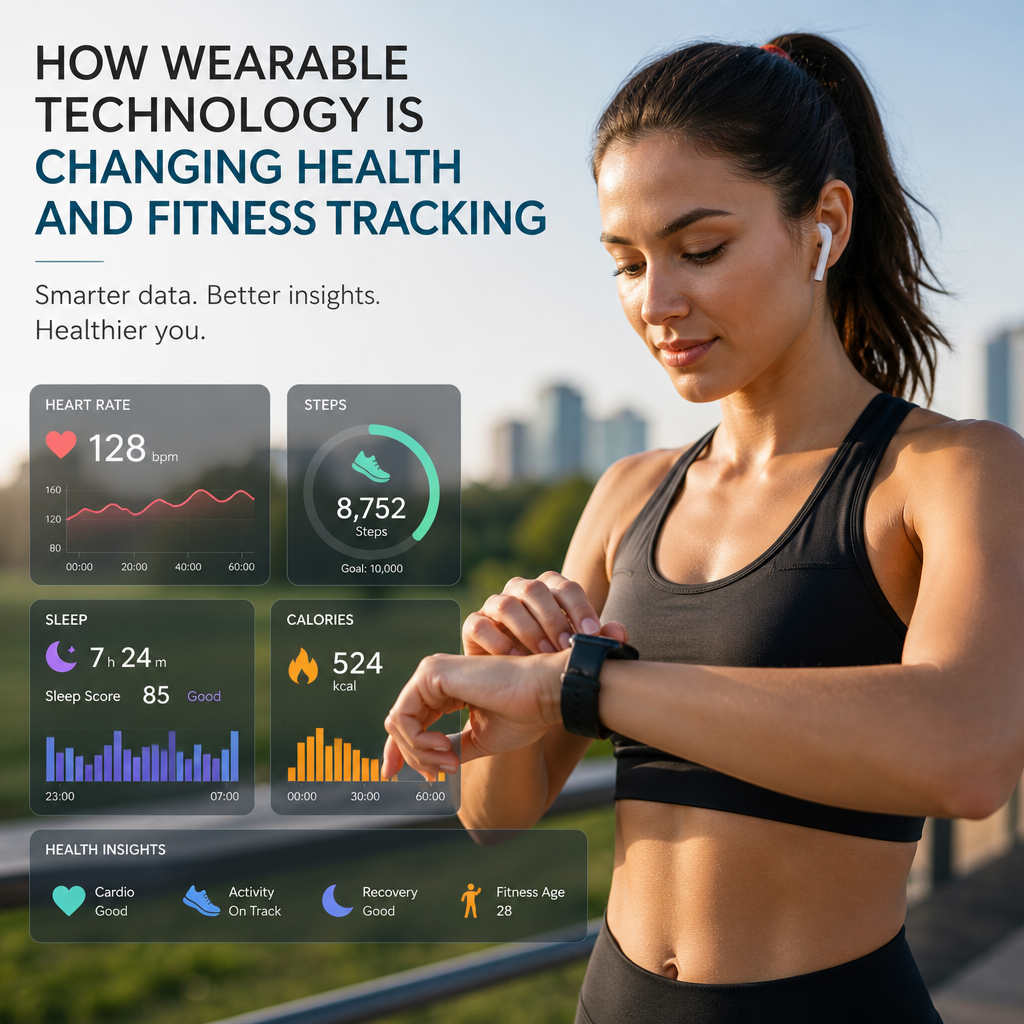
Most wearable apps present data in simple charts, scores, or trend lines. Instead of sorting through complicated numbers, users can quickly see:
Daily step counts
Active minutes
Resting heart rate
Sleep duration
Workout intensity
Recovery readiness
Stress levels
This accessibility makes wearable technology helpful for beginners and experienced athletes alike.
Wearable Technology Supports More Personalized Fitness
One-size-fits-all fitness advice does not work for everyone. Wearable technology helps tailor workouts to the individual.
Training can adapt to your body
Many wearables estimate exertion, track heart rate zones, and monitor recovery. That information can help someone decide whether to train hard, take a rest day, or focus on light movement.
For example:
A runner may use heart rate zones to improve endurance.
A strength-training enthusiast may track recovery to avoid overtraining.
A beginner may use step goals to build consistency gradually.
Progress becomes more visible
When people see their daily movement, average resting heart rate, or sleep consistency improve, they often stay more engaged. Wearable technology turns vague goals like “get healthier” into measurable progress.
Motivation improves through feedback loops
A simple vibration reminder to stand up, close an activity ring, or complete a daily goal can encourage behavior change. These small prompts can make healthy habits easier to repeat.
Wearable Technology Is Expanding Beyond Fitness
Although fitness tracking remains a major use case, many wearables now support broader health monitoring.
Health monitoring features are becoming more advanced
Modern wearable technology can include functions such as:
Sleep stage tracking
Blood oxygen estimation
Irregular heart rhythm notifications
ECG readings on select devices
Temperature trend tracking
Menstrual cycle tracking
Stress and mindfulness prompts
These features do not replace medical care, but they can help users notice patterns that are worth discussing with a healthcare professional.
A practical example
Imagine someone who feels unusually tired for several weeks. Their wearable shows:
Lower sleep duration
Increased resting heart rate
Reduced daily movement
That combination does not diagnose a condition, but it can encourage the person to review their routine or seek medical advice sooner rather than later.
Wearable Technology and Better Sleep Awareness
Sleep is one of the most important areas where wearable technology has changed personal health tracking. Many people underestimate how much sleep affects energy, focus, workout performance, and mood.
What wearables can show about sleep
Wearables may estimate:
Time asleep
Sleep consistency
Sleep stages
Heart rate during sleep
Wake times
Sleep quality trends
These insights help users understand whether they are getting enough rest and whether sleep habits are stable.
Why sleep data matters
A person who sleeps seven hours one night and five the next may not notice a major difference right away. But over time, a wearable can show patterns linked to late caffeine use, stress, travel, or inconsistent bedtimes.
That awareness can lead to simple improvements such as:
Setting a regular bedtime
Reducing late-night screen exposure
Avoiding heavy meals too close to sleep
Creating a calmer evening routine
Wearable Technology Helps People Stay Accountable
Accountability is one of the strongest reasons wearable technology works for many users. A device on the wrist or finger becomes a daily reminder of wellness goals.
Small reminders build consistency
Wearables often encourage behavior through:
Move reminders
Goal progress notifications
Workout prompts
Hydration reminders on some platforms
Breathing or mindfulness alerts
These nudges may seem minor, but repeated over time they can reinforce positive habits.
Goal tracking creates structure
Some people do better when they can see a target. For instance:
8,000 steps per day
30 active minutes
Three workouts per week
Consistent sleep schedule
Heart rate zone targets during cardio
Wearable technology makes these goals visible and measurable, which often improves follow-through.
Limitations of Wearable Technology You Should Know
Wearable technology can be useful, but it is not perfect. Understanding its limitations helps users interpret data more wisely.
Wearables are not medical diagnoses
A health tracker can suggest patterns, but it cannot replace a doctor’s evaluation. If a wearable alerts a user to a possible issue, the next step should be professional medical guidance.
Accuracy can vary
Measurements may be affected by:
Device placement
Skin contact
Movement during exercise
Battery level
Sensor quality
Different algorithms across brands
For example, a wearable may estimate calories burned or sleep stages, but those numbers should be viewed as estimates rather than exact truth.
Data can become overwhelming
Too much information can create stress instead of clarity. Some users become overly focused on every metric and start second-guessing natural body changes.
A healthy approach is to focus on a few meaningful trends, such as:
Daily movement
Sleep consistency
Resting heart rate
Workout recovery
General energy levels
How to Use Wearable Technology More Effectively
To get the most value from wearable technology, users should treat it as a tool for awareness, not a judge of personal worth.
1. Choose the right device for your goals
Different devices emphasize different features. Someone focused on running may want advanced GPS and heart rate tracking. Someone focused on sleep may want a lightweight device with strong overnight tracking. Someone interested in subtle health monitoring may prefer a smart ring.
2. Track a few key metrics
Instead of monitoring every available number, start with the basics:
Steps or active minutes
Heart rate
Sleep duration
Workout sessions
Recovery trends
This keeps the data useful and manageable.
3. Compare trends, not single days
One bad night of sleep or one low-energy workout does not tell the full story. Wearable technology is most helpful when you look at patterns over time.
4. Use the insights to take action
Data only matters if it leads to better choices. For example:
Low sleep scores may mean you need an earlier bedtime.
High resting heart rate may suggest extra recovery.
Low activity may mean you should build more movement into the day.
5. Keep expectations realistic
Wearables can support healthy change, but they do not do the work for you. The best results come from combining data with consistent habits.
The Future of Wearable Technology in Personal Health
Wearable technology continues to evolve quickly. Future devices will likely become even more integrated into daily life, with better sensors, longer battery life, and smarter health insights.
More personalized wellness insights
As algorithms improve, wearables may offer more precise suggestions based on a user’s typical patterns. That could mean better coaching for exercise, recovery, stress management, and sleep routines.
Stronger connections with healthcare
Some wearables already share data with health platforms or clinicians. In the future, that connection may become more seamless, helping people and healthcare providers spot changes earlier.
More comfortable and discreet designs
As adoption grows, companies are making wearables lighter, less intrusive, and more stylish. That makes it easier for people to wear them consistently, which improves the quality of the data.
Frequently Asked Questions
1. What is the main benefit of wearable technology for health tracking?
The main benefit is convenience. Wearable technology collects health and fitness data continuously or frequently, helping users spot patterns in activity, sleep, recovery, and heart rate without manual tracking.
2. Are wearable health trackers accurate?
Wearables can be helpful, but their accuracy varies by device, sensor quality, and how they are worn. They are best used for trends and general awareness rather than as exact medical measurements.
3. Can wearable technology help with weight loss?
Yes, wearable technology can support weight loss by encouraging more movement, improving workout consistency, and increasing awareness of daily habits. However, lasting results still depend on nutrition, activity, sleep, and behavior changes.
4. Do wearables improve sleep?
Wearables do not directly improve sleep, but they can help users identify patterns that affect sleep quality. That awareness can lead to better habits, such as more consistent bedtimes and reduced late-night stimulation.
5. Should I rely on wearable data instead of a doctor?
No. Wearable technology is useful for monitoring trends and encouraging healthy habits, but it does not replace professional medical advice, diagnosis, or treatment. If a device flags something concerning, speak with a healthcare professional.
Wearable technology has changed personal health and fitness tracking by making wellness data more immediate, more personal, and easier to act on. Instead of relying on memory or occasional check-ins, people can now monitor daily movement, heart rate, sleep, recovery, and more in real time. That shift has helped many users build stronger habits, train more intelligently, and become more aware of how everyday choices affect their health.
The real value of wearable technology is not in collecting the most data, but in using the right data well. When people focus on trends, stay realistic about accuracy, and use insights to guide practical changes, wearables can become powerful tools for long-term wellness. They are not a replacement for medical care, but they can support better decisions and earlier awareness.
If you are considering a wearable device, start with your goals. Whether you want to move more, sleep better, or understand your body more clearly, the right device can help you take the next step with confidence.
Peter B holds a degree in Journalism and has 5 years of experience covering U.S. economic policy, labor markets, and financial news. He writes data-driven news content on topics like inflation, interest rates, and employment trends.