Personal Finance Trends 2026: Smart Money Strategies for Americans
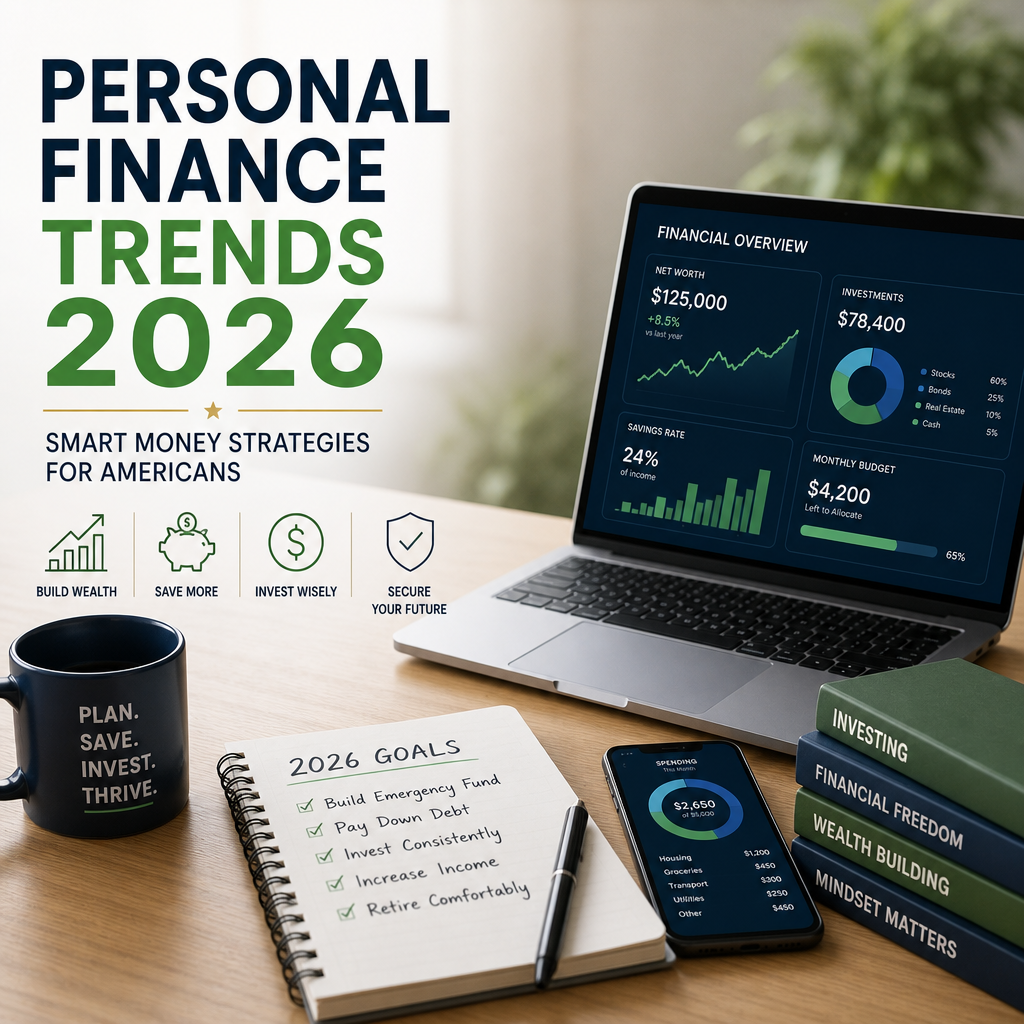
Personal finance trends in 2026 are being shaped by a mix of higher living costs, rapid technology changes, evolving workplace benefits, and a growing focus on financial resilience. For many Americans, the challenge is no longer just making a budget—it’s building a money plan that can adapt to uncertainty while still supporting long-term goals. Whether you’re trying to pay down debt, save more consistently, or make better use of financial apps and tools, understanding these trends can help you stay ahead.
The good news is that smart money strategies in 2026 are less about perfection and more about consistency, flexibility, and informed decision-making. If you can align your habits with where personal finance is headed, you’ll be better prepared to handle the unexpected and take advantage of opportunities.
Why Personal Finance Trends 2026 Matter
Personal finance trends 2026 reflect how Americans are responding to real-world pressures. Rising everyday expenses, interest rate changes, an expanding gig economy, and the increasing role of automation all influence how people save, spend, invest, and borrow.
The biggest shift: financial adaptability
In the past, a solid paycheck and a simple savings account may have been enough for many households to feel secure. Today, financial stability often depends on a broader strategy, including:
- Emergency savings
- Debt management
- Retirement planning
- Digital banking tools
- Income diversification
- Ongoing financial education
This shift is important because it shows that money management is becoming more dynamic. A strong financial plan in 2026 has to work in both calm and uncertain times.
Smart Money Strategy #1: Build Cash Flow Flexibility
One of the clearest personal finance trends in 2026 is the emphasis on cash flow flexibility. Americans are paying more attention to how money moves through their accounts, not just how much they earn.
Track your spending in real time
Budgeting is still essential, but many people now prefer tracking expenses weekly—or even daily—using apps that sync with bank accounts and credit cards. This helps you spot problems early, such as:
- Subscription creep
- Impulse spending
- Rising utility bills
- Dining and delivery costs adding up faster than expected
Use a variable budget
A rigid budget can break down quickly when life changes. A variable budget allows for seasonal costs, irregular income, and unexpected expenses. For example:
- Increase travel or holiday spending categories during certain months
- Lower discretionary spending when utility bills rise
- Set aside extra income from side work for savings or debt payoff
This approach works especially well for freelancers, commission-based workers, and households with changing monthly expenses.
Smart Money Strategy #2: Prioritize High-Interest Debt
Debt management remains a major concern in 2026, especially for households carrying credit card balances or variable-rate loans. When interest costs rise, even manageable debt can become expensive.
Focus on debt with the highest cost
A practical debt strategy is to target the most expensive balances first. Many Americans use either:
- The avalanche method: Pay extra toward the highest interest rate debt first.
- The snowball method: Pay off the smallest balance first to build momentum.
Both methods can work. The right choice depends on whether you value saving more on interest or gaining quick psychological wins.
Watch for hidden debt risks
Not all debt feels obvious. In 2026, smart money strategies also include paying attention to:
- Buy now, pay later plans
- Variable interest personal loans
- Minimum payments that extend payoff timelines
- Credit card promotions that expire
Reading the terms before borrowing is just as important as comparing rates.
Smart Money Strategy #3: Strengthen Emergency Savings
Emergency savings continue to be one of the most important parts of personal finance trends 2026. Unexpected costs can come from job changes, medical bills, home repairs, car trouble, or family needs.
Start with a realistic goal
Many people get overwhelmed by the idea of saving three to six months of expenses. If that feels out of reach, begin with a smaller target, such as:
- $500
- $1,000
- One month of essential bills
Once you hit that mark, keep building from there.
Keep savings accessible but separate
Your emergency fund should be easy to reach in a true emergency, but not so convenient that you spend it casually. A high-yield savings account can help you keep the money separate while still earning interest.
Automate the habit
One of the best smart money strategies is automation. Set up automatic transfers after each paycheck, even if the amount is small. Consistency matters more than starting big.
Smart Money Strategy #4: Use Technology Without Letting It Control You
Digital tools are playing a bigger role in how Americans manage money. From budgeting apps to AI-powered financial insights, technology can simplify money management—but it can also make spending easier if you’re not careful.
Helpful tools to consider
Modern personal finance tools can help you:
- Categorize spending
- Monitor credit scores
- Set savings goals
- Track investments
- Identify unused subscriptions
- Receive bill reminders
These tools save time and make patterns easier to spot.
Use technology with intention
The most effective approach is to use financial tech as a support system, not a substitute for judgment. Before acting on app recommendations or alerts, ask:
- Does this fit my long-term goals?
- Is this a need or a convenience?
- Am I reacting emotionally?
This mindset helps you avoid the trap of making money decisions too quickly.
Smart Money Strategy #5: Make Retirement Planning More Flexible
Retirement planning in 2026 is increasingly about flexibility. Americans are living longer, changing jobs more often, and relying on a mix of retirement accounts, taxable investments, and workplace benefits.
Maximize employer benefits when possible
If your employer offers a 401(k) match, that match is often one of the most valuable parts of your compensation. At a minimum, contributing enough to capture the full match can help you make faster progress.
Consider multiple retirement “buckets”
A diversified retirement strategy may include:
- Traditional 401(k) or IRA accounts
- Roth 401(k) or Roth IRA accounts
- Brokerage investments
- Health savings accounts, when eligible
This mix can provide more tax flexibility later, especially if tax laws or income levels change.
Revisit your assumptions yearly
Retirement planning should not be a one-time task. Review your contribution rate, investment mix, and target retirement age at least once a year. Small adjustments now can make a meaningful difference over time.
Smart Money Strategy #6: Pay Attention to Income Diversity
Another important personal finance trend in 2026 is income diversification. More Americans are earning from side gigs, freelance work, digital products, part-time consulting, or project-based work.
Why income diversity matters
Relying on a single income stream can be risky. A second source of income can help you:
- Cover rising expenses
- Build emergency savings faster
- Pay down debt
- Increase retirement contributions
- Test a business idea without quitting your job
Protect your side income
If you earn extra money, keep good records and set aside money for taxes if needed. Separate business and personal spending when possible, and treat side income like part of a real financial plan—not just extra fun money.
Smart Money Strategy #7: Shop With More Intent
Consumer behavior is changing, and personal finance trends 2026 show that more Americans are trying to spend more intentionally. That doesn’t mean eliminating enjoyment. It means making purchases that truly align with values and goals.
Use the 24-hour rule for nonessential purchases
If something isn’t urgent, wait at least a day before buying it. This simple pause can reduce impulse purchases and help you tell the difference between a want and a real need.
Compare total cost, not just price
A smart purchase isn’t always the cheapest one. Consider:
- Durability
- Maintenance costs
- Energy efficiency
- Return policies
- Subscription requirements
For example, a slightly more expensive appliance that lasts longer may be a better financial choice than a cheaper option that needs frequent repairs.
Smart Money Strategy #8: Improve Financial Literacy on Purpose
One of the most valuable personal finance trends 2026 is the growing recognition that financial literacy is a lifelong skill. Americans who understand money basics are better equipped to make informed decisions.
Focus on practical knowledge
You don’t need to become a financial expert overnight. Start with topics that directly affect your life, such as:
- How credit scores work
- The difference between good debt and expensive debt
- Roth vs. traditional retirement accounts
- Health insurance basics
- Investment risk and time horizon
- How compound interest works
Learn from trusted sources
Be cautious about social media finance advice. Viral content can be entertaining, but it is not always accurate or personalized. Use trusted educational sources, official agencies, and qualified professionals when making major decisions.
How to Put These Strategies Into Action
Knowing the trends is useful. Acting on them is what changes your financial future.
A simple 30-day plan
If you want to apply personal finance trends 2026 in a practical way, start here:
- Review your last 30 days of spending.
- Identify one category where you can reduce waste.
- Set up or increase automatic savings.
- Make an extra payment on high-interest debt.
- Check your retirement contribution rate.
- Cancel one unused subscription.
- Choose one financial topic to learn this month.
Small improvements add up
You do not need a perfect system. Even modest changes—like saving an extra $25 per week or redirecting one unnecessary expense—can create real momentum over time.
Common Mistakes to Avoid
As you work through your money plan, avoid these common setbacks:
- Ignoring small recurring charges
- Carrying credit card balances month after month
- Keeping all savings in one account without a purpose
- Overcommitting to risky investments based on trends
- Delaying retirement contributions because “there’s time later”
- Making financial choices based only on emotions or headlines
A strong plan is built on steady action, not reaction.
Frequently Asked Questions
1. What are the biggest personal finance trends in 2026?
The biggest trends include increased use of financial technology, more focus on cash flow flexibility, stronger interest in emergency savings, income diversification through side work, and more intentional spending habits. Americans are also paying closer attention to debt management and retirement planning.
2. How can I improve my finances if I’m living paycheck to paycheck?
Start with the basics: track every expense, reduce one recurring cost, and build a small emergency fund. Even a modest buffer can prevent new debt when surprise expenses happen. Automating savings and paying down high-interest debt can also improve stability over time.
3. Is it better to save or pay off debt first in 2026?
In many cases, it makes sense to do both. Build a small emergency fund first so you can avoid relying on credit for unexpected costs, then focus on high-interest debt. If your employer offers a retirement match, try to contribute enough to receive it while you work on debt.
4. Are budgeting apps worth using?
Yes, budgeting apps can be very helpful if they make it easier to track spending, set goals, and notice patterns. The key is to choose a tool you’ll actually use. An app is only useful if it supports better decisions rather than encouraging more spending.
5. What is the best smart money strategy for beginners?
For beginners, the best strategy is to automate good habits. Start by tracking spending, setting up a small automatic transfer to savings, and making one extra payment on debt each month if possible. These simple steps create a strong foundation without requiring advanced financial knowledge.
Official Resources
- Consumer Financial Protection Bureau (CFPB)
- Investor.gov by the U.S. Securities and Exchange Commission
- Internal Revenue Service (IRS) retirement and tax resources
- Federal Trade Commission (FTC) consumer advice
- National Endowment for Financial Education (NEFE)
Conclusion
Personal finance trends 2026 point to a simple truth: Americans need money strategies that are flexible, informed, and easy to sustain. The most effective approach is not chasing every new financial idea, but building habits that support stability and growth over time. That means managing cash flow carefully, reducing expensive debt, strengthening emergency savings, using financial technology wisely, and planning for retirement with more than one possible path.
The best smart money strategies are often the ones you can repeat. Small changes such as automating savings, reviewing subscriptions, or contributing a little more to retirement can create meaningful progress when practiced consistently. Even if your finances feel tight right now, you still have room to make better choices and build momentum.
Start with one area that needs attention most, and make it easier to succeed by keeping the process simple. In 2026, smart money management is less about doing everything at once and more about doing the right things consistently. That’s how you create lasting financial confidence and move closer to your goals.