Future of Electric Vehicles and Charging Technology in the United States
Electric vehicles are no longer a niche choice for early adopters. Across the United States, drivers, automakers, utilities, and policymakers are all shaping the future of electric vehicles and charging technology. What was once a conversation about range anxiety and limited charging access has become a broader discussion about convenience, grid reliability, battery innovation, and the everyday reality of owning an EV.
As more Americans consider switching from gasoline-powered cars to battery-powered models, the question is no longer whether electric vehicles will matter. The real question is how quickly the country can build the charging network, manufacturing capacity, and energy infrastructure needed to support them.
Why Electric Vehicles Are Gaining Momentum
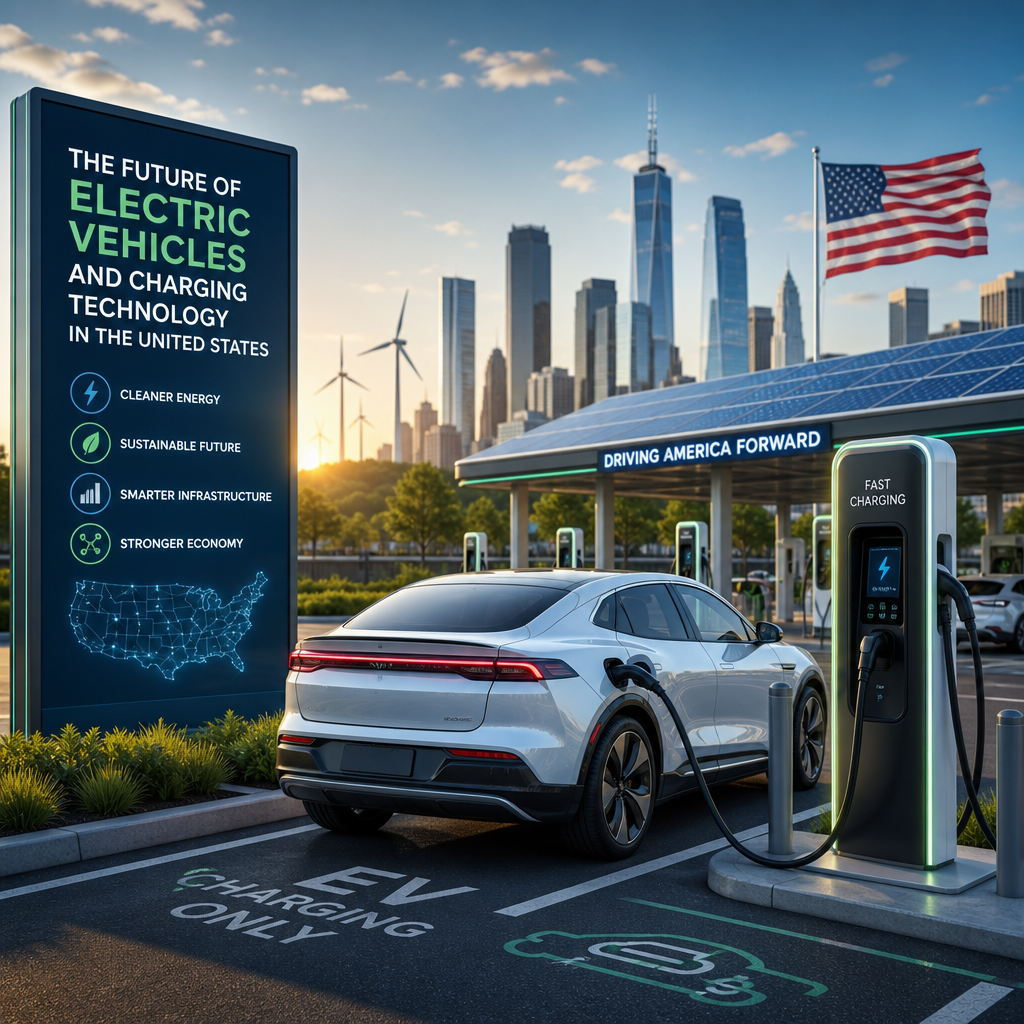
The growth of EVs in the United States comes from a combination of consumer demand, automaker investment, and public policy. Drivers are increasingly interested in lower operating costs, reduced tailpipe emissions, and a quieter driving experience. At the same time, more models are entering the market, from compact sedans to pickup trucks and SUVs.
Several forces are driving this shift:
- More choices for buyers: Nearly every major automaker now offers or plans to offer electric models.
- Improved battery range: Many newer EVs can travel well over 200 miles on a single charge, with some offering much more.
- Lower maintenance needs: EVs typically have fewer moving parts than internal combustion vehicles.
- Supportive infrastructure investment: Public and private funding is expanding charging access nationwide.
The result is a market that looks very different from just a few years ago. Electric mobility is moving from a premium, limited option to a mainstream transportation category.
The Future of Electric Vehicles Depends on Charging Access
A strong charging network is essential to the future of electric vehicles and charging technology in the United States. Without reliable access to charging, many drivers hesitate to make the switch, especially those who live in apartments, travel frequently, or depend on public charging.
Home Charging Will Remain the Foundation
For many EV owners, home charging is the most convenient and cost-effective option. Plugging in overnight allows drivers to wake up with a “full tank” each morning. This works especially well for people with garages, driveways, or dedicated parking spaces.
Home charging is likely to remain the backbone of EV ownership because it offers:
- Predictable daily convenience
- Lower charging costs than many public stations
- Less dependence on fast chargers for routine use
That said, not every American can install a charger at home. Multi-unit housing, older buildings, and rental properties often make it difficult. That challenge is pushing cities, landlords, utilities, and manufacturers to develop better solutions for shared and curbside charging.
Public Charging Will Become More Visible and More Important
Public charging is evolving quickly. Today, chargers appear at shopping centers, workplaces, hotels, rest areas, and gas stations. In the future, charging stations will likely become more integrated into everyday destinations, so drivers can charge while they shop, work, or travel.
Public charging must solve several practical issues:
- Availability: Drivers need enough stations in the right locations.
- Reliability: A charger that is out of service creates frustration and undermines trust.
- Speed: Fast charging matters most on road trips and for drivers without home access.
- Payment simplicity: Users want easy, consistent payment across networks.
These are not just technical issues. They are user-experience issues. A charging network that is easy to find, use, and trust will encourage wider EV adoption.
Charging Technology Is Getting Smarter
The future of electric vehicles and charging technology is not only about adding more plugs. It is also about making charging faster, more efficient, and more intelligent.
Faster Charging Is a Major Priority
DC fast charging has already changed the road trip experience for EV drivers. Instead of waiting many hours, drivers can often add meaningful range in a short stop, depending on the vehicle, charger, and battery conditions.
As technology improves, we can expect:
- Higher charging speeds for compatible vehicles
- Better thermal management in batteries
- Improved charger standards and software
- Greater station uptime and coordination
Still, faster charging is not the same as better charging in every situation. Extremely fast charging can place more stress on batteries if systems are poorly managed. The future will depend on balancing speed with long-term battery health.
Smart Charging Will Help Balance the Grid
Smart charging uses software, connectivity, and data to manage when and how vehicles charge. This matters because millions of EVs plugged in at the wrong time could strain the electric grid.
With smart charging, utilities and drivers can benefit from:
- Off-peak charging that reduces strain on the grid
- Lower electricity costs during certain hours
- Better load management at workplaces and apartment buildings
- More efficient use of renewable energy
This is one of the most important developments in the future of EV infrastructure. Charging will increasingly become a managed energy service rather than just a simple plug-in event.
Vehicle-to-Grid and Vehicle-to-Home Capabilities
Another emerging trend is bidirectional charging, often called vehicle-to-grid (V2G) or vehicle-to-home (V2H). In these systems, a vehicle battery can send electricity back to a home or, in some cases, the utility grid.
This technology could one day help:
- Power homes during outages
- Support the grid during peak demand
- Reduce energy costs through demand management
- Increase resilience in areas prone to storms or outages
The concept is promising, but widespread adoption depends on standards, equipment costs, utility rules, and vehicle compatibility. Even so, bidirectional charging represents a major step toward making EVs part of the broader energy system.
The Role of Battery Innovation
Battery technology sits at the center of the EV transition. Better batteries mean longer range, lower costs, faster charging, and fewer concerns for drivers.
Range Is Improving, But It’s Not the Only Metric
Consumers often focus on range, and for good reason. Drivers want enough battery capacity for commuting, errands, and travel without constant charging stops. However, range is only one piece of the ownership experience.
Other factors matter just as much:
- How quickly a vehicle charges
- How well it performs in extreme temperatures
- How long the battery lasts
- How affordable the vehicle is overall
In many cases, a reliable 250-mile EV with strong fast-charging support may be more practical than a vehicle with a longer range but weaker charging performance.
New Battery Chemistries May Change the Market
Automakers and suppliers continue to explore different battery chemistries and manufacturing methods. Some aim to reduce reliance on expensive or constrained materials. Others focus on improving safety, longevity, or charging performance.
The most promising advances may lead to:
- Lower battery costs
- More stable supply chains
- Better energy density
- Faster charging with less degradation
Solid-state batteries often get attention as a possible next-generation option, but commercialization timelines can be uncertain. For now, the real progress in the market comes from steady improvements in today’s lithium-ion systems, vehicle software, and charging integration.
Manufacturing and Supply Chains Will Shape the Next Decade
The future of electric vehicles in the United States is also a manufacturing story. Building more EVs means building more batteries, electric motors, power electronics, and charging hardware.
Domestic Production Is Becoming a Strategic Priority
The United States is working to expand domestic EV and battery manufacturing. This shift has several goals:
- Reduce dependence on overseas supply chains
- Create jobs in industrial and technology sectors
- Increase resilience during global disruptions
- Support broader clean energy and transportation goals
As more factories open and suppliers expand, the industry should become more stable and competitive. But scaling production takes time. Workforce training, raw material sourcing, and factory construction all matter.
Charging Hardware Needs Expansion Too
It is easy to focus on vehicles and overlook the chargers themselves. Yet charging equipment manufacturing, installation, maintenance, and software support are all part of the ecosystem.
This includes:
- Home chargers
- Workplace charging stations
- Public Level 2 chargers
- DC fast chargers
- Networking software and payment systems
The charging industry will need electricians, technicians, engineers, and service providers to keep pace with demand. In many ways, EV adoption is creating an entirely new service economy.
How Utilities and Local Governments Fit In
Electric vehicle growth affects more than drivers and automakers. It also changes the way cities, counties, and utilities plan for transportation and energy.
Utilities Must Prepare for New Demand Patterns
When EV adoption grows, electricity demand changes. The total impact depends on how and when people charge. Utilities can manage this better by encouraging off-peak charging and investing in grid upgrades where needed.
Practical utility strategies include:
- Incentives for nighttime charging
- Time-of-use pricing
- Support for managed charging programs
- Grid planning based on EV adoption forecasts
The goal is not to slow down EV growth. It is to make sure the grid can support it reliably and affordably.
Local Governments Can Speed Up Charging Access
Cities and counties play a critical role in permitting, zoning, street design, and public charging placement. Simple policy changes can make a big difference.
Local governments can help by:
- Streamlining charger permitting
- Allowing curbside charging where appropriate
- Requiring EV-ready wiring in new buildings
- Installing chargers at public facilities
- Coordinating with transit and parking strategies
These steps can make EV ownership more practical for apartment dwellers and urban residents who cannot charge at home.
Challenges That Still Need Solutions
Even with strong momentum, the future of electric vehicles and charging technology still faces real obstacles. Recognizing them is important because progress depends on solving practical problems, not just celebrating innovation.
Cost Remains a Barrier for Some Buyers
Although EV operating costs can be lower over time, the upfront purchase price of some models is still higher than comparable gasoline vehicles. Incentives help, but they are not a complete solution.
Making EVs more accessible will require:
- Lower battery costs
- More affordable vehicle options
- Better used-EV markets
- Clear and stable incentive policies
Charging Gaps Persist in Rural and Underserved Areas
Urban charging coverage has improved, but rural drivers still face long distances between stations in some regions. Lower-income neighborhoods and older apartment buildings may also lack convenient charging access.
A successful national transition must be inclusive. That means prioritizing:
- Corridor charging on highways
- Community charging in underserved areas
- Apartment and workplace charging
- Public funding where the market alone falls short
Driver Confidence Still Matters
Many people remain hesitant because they worry about finding a charger, waiting too long, or dealing with technical issues. That hesitation is understandable. The industry must continue improving reliability, customer support, and transparency.
Drivers need clear answers about:
- Real-world range
- Charging time under different conditions
- Battery performance in cold or hot weather
- Charging network compatibility
The easier it becomes to understand and trust the system, the faster EV adoption can grow.
What the Next Few Years May Look Like
The near future of electric mobility in the United States will likely bring better vehicles, stronger charging networks, and more integrated energy management. The experience of owning an EV should continue to improve as technology and infrastructure mature.
Expect to see:
- More affordable EV models
- Wider availability of fast chargers
- Better route planning and charger reliability
- Smarter home and fleet charging systems
- Growing interest in bidirectional energy use
In other words, the EV transition is moving from novelty to infrastructure. That shift is where real progress happens.
Frequently Asked Questions
1. Are electric vehicles ready for everyday use in the United States?
Yes, many electric vehicles are already suitable for daily commuting, errands, and even road trips. Drivers should still consider their driving habits, access to home charging, and local public charging availability before choosing a model.
2. Will charging an EV overload the electric grid?
Not if charging is managed properly. Utilities and policymakers are working on smart charging programs, off-peak pricing, and grid upgrades to handle increased demand. The timing of charging matters as much as the number of EVs on the road.
3. How long does it take to charge an electric vehicle?
Charging time depends on the vehicle, charger type, battery size, and current battery level. Home Level 2 charging is slower but convenient overnight, while DC fast charging can add significant range much faster during travel stops.
4. Is home charging always necessary to own an EV?
No, but it helps a lot. Many drivers rely on home charging because it is convenient and cost-effective. However, people who live in apartments or dense cities can still own EVs if public charging and workplace charging are available nearby.
5. What is the biggest challenge for the future of EV charging?
Reliability and access are among the biggest challenges. Drivers need chargers that work consistently, are located where they are needed, and are simple to use. Expanding access for apartment residents, rural drivers, and underserved communities is also critical.
Official Resources
- U.S. Department of Energy: Alternative Fuels Data Center
- U.S. Department of Energy: Vehicle Technologies Office
- U.S. Environmental Protection Agency: Electric Vehicles
- National Renewable Energy Laboratory
- U.S. Department of Transportation: Joint Office of Energy and Transportation
Conclusion
The future of electric vehicles and charging technology in the United States is being built right now through better batteries, smarter software, expanded charging access, and stronger coordination between the public and private sectors. EVs are becoming more practical for everyday drivers, but long-term success depends on more than vehicle sales alone. The country needs reliable home charging, visible public infrastructure, improved grid planning, and policies that make EV ownership realistic for more Americans.
For drivers, the most important takeaway is simple: the EV experience is improving quickly. Charging is becoming faster, more convenient, and more connected to the way people actually live and travel. For communities and businesses, this transition creates new opportunities in infrastructure, manufacturing, and energy management.
If you are considering an EV, now is a smart time to learn about your local charging options, home installation needs, and available vehicle models. The next phase of transportation in America will not be defined by one breakthrough alone. It will be shaped by steady progress across vehicles, charging networks, and the energy systems that support them.