Understanding 5G Technology and Its Impact on Everyday Connectivity
5G technology is transforming everyday connectivity with faster speeds, lower lag, and the capacity to keep more devices running smoothly at once. From seamless video calls to smarter homes and quicker downloads, it’s making daily digital life more responsive and reliable.
By: Peter on July 30, 2026
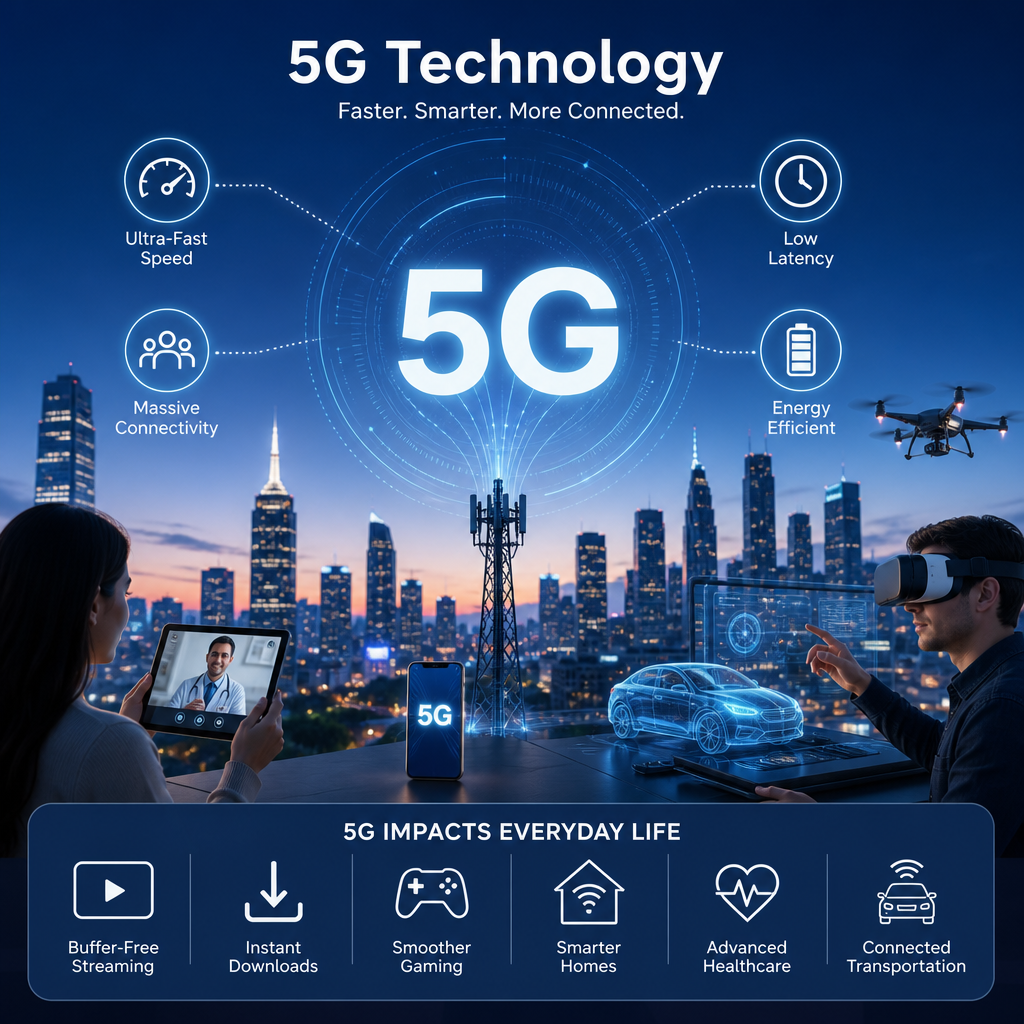
5G technology is reshaping how people connect, stream, work, shop, and communicate. As the fifth generation of wireless networks, 5G technology promises faster speeds, lower latency, and greater capacity than previous mobile networks. But its real value goes beyond technical upgrades. It affects everyday connectivity in practical ways—from smoother video calls and faster downloads to better support for smart homes, telehealth, and connected devices.
If you’ve noticed stronger mobile performance in certain areas or heard more businesses talking about next-generation wireless, you’re already seeing the influence of 5G technology. In this article, we’ll break down what 5G is, how it works, and why it matters for daily life.
What Is 5G Technology?
5G technology is the latest standard for wireless communication. It succeeds 4G LTE and is designed to handle more devices, transmit data faster, and respond more quickly than earlier networks.
At a basic level, 5G improves three main areas:
Speed: Faster data transfer for downloads, streaming, and uploads
Latency: Reduced delay between sending and receiving information
Capacity: Greater ability to support many connected devices at once
That combination makes 5G technology especially useful in places with dense populations, busy workplaces, smart buildings, and homes with multiple connected devices.
How 5G Differs from 4G
Many people think of 5G as just “faster internet on your phone,” but it is more than that. Compared with 4G, 5G technology is built for a wider range of applications and more demanding connectivity needs.
Here’s a simple comparison:
4G works well for mobile browsing, social media, and streaming
5G is designed to improve those tasks while also supporting more advanced uses like remote monitoring, connected vehicles, and industrial automation
In everyday use, that means your phone may load content faster, but the larger impact comes from a network that can support more connected experiences at the same time.
How 5G Technology Works
5G technology uses advanced wireless infrastructure, including small cell sites, improved antennas, and more efficient use of radio spectrum. These elements help the network move data more quickly and serve more users without as much congestion.
Key Technical Features
Low Latency
Latency is the time it takes for data to travel from one point to another and back. Lower latency is important for activities that need near real-time response, such as:
Video calls
Cloud gaming
Remote healthcare tools
Smart manufacturing systems
Higher Bandwidth
Bandwidth refers to how much data a network can carry at once. With greater bandwidth, 5G technology can support more devices and larger amounts of data without slowing down as much during peak use.
Network Slicing
In some deployments, 5G networks can be divided into “slices” for different uses. For example, one slice might support emergency communications, while another handles consumer internet traffic. This flexibility helps providers manage performance more efficiently.
Why 5G Technology Matters for Everyday Connectivity
For most people, the biggest benefit of 5G technology is not a complicated technical feature. It is better everyday connectivity.
That means fewer frustrating delays, stronger performance in crowded areas, and more reliable service for the growing number of devices people use every day.
Faster Streaming and Downloading
Whether you’re watching a movie, attending a webinar, or downloading a large app, 5G technology can reduce waiting time and improve the experience. This is especially noticeable when multiple people in the same household are online at once.
Better Video Calls
Clear video calls depend on stable data connections and low latency. With 5G technology, calls may feel more natural, with fewer freezes, delays, and audio drops—assuming coverage is strong and the device supports 5G.
Stronger Support for Remote Work
Remote work relies on dependable internet access. 5G technology can help workers stay connected when they are away from home Wi‑Fi, especially in areas where mobile coverage is better than fixed broadband access.
That can improve:
Access to cloud-based files
Mobile collaboration tools
Video conferencing
Secure app-based workflows
Improved Smart Home Performance
The modern home often includes smart speakers, cameras, thermostats, doorbells, and appliances. As more devices connect to the internet, the network has to manage more traffic.
5G technology can support these connected devices more efficiently, particularly in situations where a home internet connection is unavailable, limited, or overloaded.
Real-World Uses of 5G Technology
Beyond personal smartphones, 5G technology is already supporting new kinds of connectivity across industries. These uses may not always be visible to consumers, but they help shape the services people depend on.
Healthcare
5G technology can support telehealth, remote patient monitoring, and mobile health tools. While it does not replace medical professionals or core healthcare systems, it can help improve access and responsiveness in some settings.
Examples include:
Virtual consultations
Connected diagnostic devices
Remote follow-up monitoring
Faster transfer of medical data
Transportation
Transportation systems can use 5G technology to share information more quickly across vehicles, infrastructure, and traffic systems. This may support safer traffic management, better logistics, and more efficient transit services.
Education
Students and educators benefit from more reliable online access. 5G technology can help support virtual classrooms, interactive learning tools, and mobile access to educational resources, especially for people who do not always have access to fixed broadband.
Retail and Customer Service
Stores and service providers can use 5G technology to improve mobile checkout systems, real-time inventory tools, and customer support applications. For consumers, this can mean faster service and more seamless digital interactions.
Benefits of 5G Technology for Consumers
Consumers often notice 5G technology in small but meaningful ways. These improvements may seem subtle at first, but they add up during everyday use.
1. More Reliable Mobile Experience
In crowded places like stadiums, airports, or downtown districts, older networks can slow down as more people connect. 5G technology is designed to handle higher traffic more efficiently, which can improve reliability.
2. Better Performance for Connected Devices
As households add more smart devices, the need for a strong network grows. 5G technology can help support these devices without creating as much network strain.
3. New Services and Applications
As developers build for 5G technology, new apps and services can emerge. These may include immersive shopping experiences, advanced AR tools, and more responsive digital services.
4. Improved Access in Some Underserved Areas
In some cases, 5G wireless access can help expand connectivity where wired broadband is limited or expensive to deploy. That does not solve every access issue, but it can be part of a broader connectivity strategy.
Challenges and Limitations of 5G Technology
Like any technology, 5G technology has limits. Understanding those limitations helps set realistic expectations.
Coverage Is Not the Same Everywhere
5G coverage varies by carrier, location, and network type. In some areas, the signal may be excellent. In others, it may be inconsistent or unavailable.
Performance Depends on Many Factors
A 5G connection does not guarantee fast speeds in every situation. Performance depends on:
Distance from the tower or small cell
Network congestion
Device compatibility
Building materials and indoor signal strength
The specific type of 5G deployment
New Devices May Be Needed
To benefit from 5G technology, users usually need a compatible device and a supported plan. Older phones may not connect to the network’s 5G features.
Security and Privacy Still Matter
5G technology improves connectivity, but it does not eliminate digital risks. Users and organizations still need strong security practices, including software updates, authentication, and safe data handling.
How to Make the Most of 5G Technology
If you want to get better results from 5G technology, a few practical steps can help.
Check Coverage in Your Area
Before switching plans or upgrading a device, review your carrier’s coverage map and ask how 5G performance varies indoors and outdoors.
Use a Compatible Device
A 5G-capable phone or hotspot is necessary to access the network’s 5G features. Even then, not all devices support all types of 5G bands.
Keep Software Updated
Operating system and carrier updates often improve network compatibility, battery performance, and security.
Position Yourself for Better Signal
Signal strength can drop inside buildings or in areas with physical barriers. If you notice slow performance, moving closer to a window or open area may help.
Match the Plan to Your Needs
A user who mainly checks email may not need a premium data plan, while a household with heavy streaming and work-from-home demands may benefit from more robust service.
The Future of 5G Technology
5G technology is still evolving. As networks expand and devices become more capable, the impact on everyday connectivity will likely grow.
Future developments may include:
Broader rural and suburban coverage
More efficient smart-city infrastructure
Better support for remote services
Expanded use of connected devices in homes and workplaces
In time, 5G technology may feel less like a special feature and more like the default standard for digital life.
Frequently Asked Questions
1. What is 5G technology in simple terms?
5G technology is the fifth generation of wireless network service. It is designed to provide faster speeds, lower delay, and more capacity than 4G, which helps improve mobile internet and support more connected devices.
2. Is 5G technology always faster than 4G?
Not always. In ideal conditions, 5G technology can be much faster than 4G, but actual performance depends on signal strength, network congestion, device compatibility, and the type of 5G available in your area.
3. Do I need a new phone to use 5G technology?
Yes, you usually need a 5G-compatible phone, hotspot, or router to access 5G technology. Older devices that only support 4G will not connect to 5G networks.
4. How does 5G technology affect battery life?
Battery life can vary depending on the phone, signal strength, and usage. In some cases, a phone may use more power when switching between network types or searching for a weak signal. Software improvements have reduced this issue, but it can still happen.
5. Is 5G technology safe to use?
5G technology is widely deployed and regulated by national and international standards organizations. As with any wireless technology, the important concerns are proper device use, network security, and keeping software updated. For health or safety questions, rely on official public health and communications authorities.
5G technology is more than a faster wireless signal. It is a major step forward in how people and devices stay connected in daily life. From smoother streaming and quicker downloads to better support for smart homes, remote work, healthcare, and transportation, 5G technology is already influencing the way modern connectivity works.
Still, it helps to keep expectations realistic. Coverage, device support, and real-world performance all matter. For many users, the value of 5G technology comes from consistent improvements in convenience, responsiveness, and network capacity rather than dramatic changes all at once.
As adoption expands, the full impact of 5G technology will continue to grow. The best next step is to understand what your current devices and plans support, check coverage in your area, and stay informed as networks improve. Doing so will help you make smarter choices about connectivity today while preparing for the digital services of tomorrow.
Peter B holds a degree in Journalism and has 5 years of experience covering U.S. economic policy, labor markets, and financial news. He writes data-driven news content on topics like inflation, interest rates, and employment trends.